4 strategies for enterprise finance teams to drive down spend

- 1. Set granular card controls to prevent non-compliant spend
- 2. Eliminate expense reports to save thousands of hours
- 3. Automate approvals for low-risk transactions
- 4. Detect and reduce fraud with AI-powered tools
- See the true cost of legacy tools
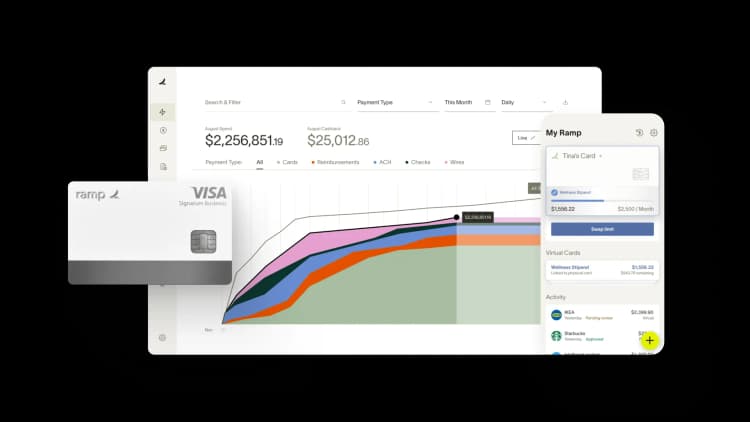
As businesses grow from midsize companies to large enterprises, controlling spend becomes much harder as the number of employees, transactions, and purchasing channels all increase. Legacy spend tools that were built for smaller teams or were the best solution available for a large company a decade ago can quietly bleed millions from the bottom line. What may seem like minor inconveniences turns into death by a thousand cuts: time-consuming workflows, delayed reimbursements, and approvals stuck in inbox limbo.
Leading enterprise finance teams are modernizing expense workflows with automation and smarter, tighter controls that free up time, reduce risk, and, above all, drive real savings. Below are four proven strategies to help large companies decrease spend.
1. Set granular card controls to prevent non-compliant spend
Large companies with thousands of employees could lose seven figures every year to corporate cards with no restrictions or reimbursement-based workflows. That’s why modern finance teams are embracing modern cards that offer granular, dynamic controls.
Cards that let admins set spend rules based on category, vendor, amount, or date give business the power to automatically preempt out-of-policy transactions. This prevents time-consuming headaches for managers and finance admins later by reducing non-compliant spend.
One enterprise saved $5.6 million in just one year with Ramp’s proactive card controls.
2. Eliminate expense reports to save thousands of hours
Employees dread expense reports. In legacy systems, it takes about 13 minutes to submit a single report, based on Ramp estimates.1 At scale, that adds up to more than 14,000 hours and $500,000 per year in wasted time for a large company.
Modern tools flip the model entirely. Instead of making employees manually cobble together receipts and expense details, expenses largely submit themselves. These platforms automatically match transactions to preapproved funds, collect receipts via integrations, and use AI to suggest accounting codes and memos.
Ramp can reduce expense submission time by 85%, saving up to $435,000 per year in employee wages, according to our new analysis.
3. Automate approvals for low-risk transactions
Not every transaction needs scrutiny from finance or department heads. In fact, forcing managers to sign off on every $30 charge is a recipe for delays and inefficiency.
Finance leaders are now implementing AI agents that can automatically review every expense and recommend whether to approve, reject, or review each transaction. These agents can even clear low-risk expenses so only a small percentage of transactions get escalated. This saves finance valuable time and translates to a much better experience for employees who make frequent purchases.
Even without agents, Ramp helped reduce expense processing time by over 90%, saving 2,400 workdays per year, our latest data shows.
4. Detect and reduce fraud with AI-powered tools
Legacy systems have few features in place to catch fraud, and the cost of this fraud only increases as the business scales. Businesses lose 5% of their annual revenue to fraud and the cost of losses is only increasing, according to an AFCE study.
But an intelligent system can instantly flag duplicate, blurry, AI-generated, or other atypical receipts. It can also pick up other unexpected activities such as an expense incurred over the weekend. These checks reduce risk by helping enterprises stay compliant and audit-ready without adding workload.
Enterprises using automated expense tools can reduce the cost of creating and processing reports by an estimated 90%, per our analysis.
See the true cost of legacy tools
Outdated expense tools don’t just create friction—they drain resources at every level. By modernizing spend management, enterprise finance teams can reclaim tens of thousands of hours and millions of dollars annually.
Want to dig into the data behind these numbers? Download the full white paper to see how top enterprises are transforming their approach to spend.
1. Concur estimates it reduces report handling and processing time by 36%, which translates to seven minutes faster, based on the Global Business Travel Association (GBTA) estimate that it takes 20 minutes to manually create a report.


“I assumed I would have to choose between speed and control. What I found is that you can have both. A well-designed system takes friction out, for the finance function and for everyone else.”
Justin Webster
CFO, Denver Broncos

“A well-run district should not have to choose between getting work done at the school site and keeping control of the dollars behind it. We're not hiring more people to do more jobs, so we have to be smarter about the process. With Ramp, the purchase, the receipt, and the record stay together from the start. ”
Nick Brizeno
Director of Purchasing, San Marcos Unified School District

“In senior living, scale only works if the communities still feel personal. We needed the back office to carry more of the complexity, not the people serving residents. Ramp helped us build that infrastructure, so the experience in the community could stay human.”
Ryan Cole
CFO, Agemark Senior Living

“AI is moving faster than the finance context around it. Prices change, models change, and the value is not always obvious from an invoice. We needed enough detail to know which bets deserved more investment — and which ones did not.”
Greg Cooley
Controller, AngelList

“Invoices, cards, tokens. The categories change but the principle doesn't: know where the money is going, remove the work around it, and make sure the spend is worth it.”
Maciej Mylik. Finance
ElevenLabs

“We weren’t trying to retrofit an old finance system. We had a blank canvas, and Ramp gave us the foundation to build a global finance function of the future.”
Justin Dourado
Director of Finance, Othership

“There's just no surprises anymore. No more waiting two months to find out how a job did. We know how it's doing as it's happening.”
Erich Kuss
Financial Systems Manager, Infinity Home Services

“More token spend isn’t proof that AI is working. Less isn’t proof that it isn’t. What matters is whether we’re buying the right level of intelligence for the work. Ramp lets us make that judgment in the same place we manage every other type of spend.”
Cody Nutt
Senior Director of Business Systems, Daxko
