How to improve cross-department finance collaboration

- Why collaboration between finance and other teams matters
- Common barriers to cross-department finance collaboration
- How to build a shared financial vision and unified goals
- How to pair finance with operations and procurement teams
- Key workflows every collaborative finance team owns
- How to communicate financial information without jargon
- Metrics and KPIs that prove finance collaboration works
- Tools that enable real-time finance collaboration
- Benefits of real-time collaboration for lean finance teams
- How to sustain momentum and scale success
- Improve financial collaboration with Ramp
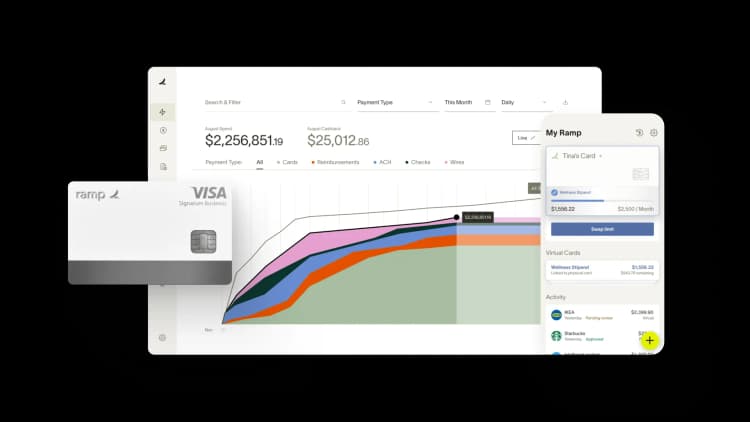
Cross-department finance collaboration improves when finance partners directly with teams like operations and procurement to plan budgets, approve spending, and align on shared goals. If you’re wondering how to improve finance collaboration, the fundamentals are simple: align incentives, embed finance in planning conversations, eliminate jargon, use shared real-time systems, and track joint performance metrics.
When finance is embedded in day-to-day operations, you make faster decisions, improve budget accuracy, and reduce friction across teams.
Why collaboration between finance and other teams matters
When your finance team collaborates closely with other departments, you unlock measurable improvements across your organization. Poor collaboration leads to duplicated work, missed deadlines, and budget overruns that compound over time.
The key benefits of cross-department finance collaboration include:
- Faster decision-making: Real-time spend data helps department leaders act without waiting for month-end reports. Shared visibility reduces back-and-forth and speeds approvals.
- Better budget accuracy: Collaborative forecasting blends financial discipline with operational context. Teams that help build budgets are more likely to follow them.
- Reduced friction: When finance and operations align on goals and timelines, you avoid last-minute fire drills and month-end surprises.
Common barriers to cross-department finance collaboration
Most collaboration breakdowns stem from structural and communication issues, not a lack of effort. Identifying these barriers helps you address root causes instead of surface symptoms.
Siloed data and disconnected systems
When financial data lives in spreadsheets or disconnected tools, other departments can’t access what they need. You end up dealing with delays, version control problems, and duplicate work as teams reconcile conflicting numbers.
Reactive instead of proactive finance involvement
If finance only engages at month-end or during approvals, decisions are already made by the time you weigh in. Proactive finance joins planning conversations early, flags cost implications before contracts are signed, and helps shape decisions instead of just approving them.
Financial jargon that creates communication gaps
Technical accounting language can alienate non-finance colleagues and slow collaboration. Saying “we need to accrue for this expense” may confuse a marketing lead, but explaining that “we need to record this cost now even though we haven’t paid yet” makes the impact clear.
Misaligned departmental goals and incentives
When departments operate under competing KPIs, collaboration naturally breaks down. If sales focuses only on revenue while finance prioritizes margin, tension follows. Shared objectives ensure teams work toward the same outcomes instead of pulling in different directions.
How to build a shared financial vision and unified goals
If you want to know how to improve finance business partnering in a lasting way, start with shared objectives, clear ownership, and transparent communication. Without deliberate alignment, departments default to siloed decision-making.
1. Align on company-level objectives
Start with leadership defining priorities that every department supports. These goals should connect financial targets to operational outcomes so teams understand how their work drives company performance.
Make objectives specific and measurable. Instead of “improve efficiency,” aim to “reduce procurement cycle time by 30% while maintaining budget compliance.” Clear targets reduce ambiguity and help teams align their efforts.
2. Define joint responsibilities between teams
Document which decisions require input from finance and other departments. A responsibility matrix clarifies who owns, contributes to, or approves each financial decision.
For example, purchases over $10,000 may require finance approval, new vendor contracts may need procurement and finance sign-off, and headcount changes may involve HR and finance planning. Clear ownership speeds decisions and reduces friction.
3. Publish a single source of truth
Give teams access to shared documentation that includes budgets, forecasts, expense policies, and approval workflows. When everyone works from the same data, confusion drops and trust improves.
Use cloud-based systems with real-time updates and version control. Eliminating conflicting spreadsheets is one of the fastest ways to improve collaboration.
4. Review and refine goals quarterly
Markets shift and priorities evolve, so alignment can’t be a one-time exercise. Schedule quarterly check-ins with finance and department leaders to review progress and adjust goals.
Use these sessions to address friction, realign on trade-offs, and reinforce shared accountability. Regular recalibration keeps collaboration from slipping back into silos.
How to pair finance with operations and procurement teams
Collaboration becomes sustainable when you formalize how finance works with operations and procurement. Clear roles and recurring touchpoints prevent collaboration from relying on personality alone.
Create finance-operations business partner roles
Assign specific finance team members to partner directly with operational leaders. These partners translate financial insight into operational decisions and bring business context back to finance.
Financial planning and analysis (FP&A) teams can expand beyond reporting to support day-to-day decision-making and long-term planning. When FP&A collaborates with marketing, operations, or product, you strengthen strategic financial management across the organization.
Launch monthly cross-functional steering committees
Establish regular cross-functional meetings to review performance and make strategic decisions. These committees should include finance, operations, procurement, and other stakeholders who influence financial outcomes.
Keep these meetings focused, with clear agendas, pre-read materials, and defined decision rights. Use them to review:
- Budget variance and spending trends
- Upcoming spending needs and major purchases
- Process improvement ideas that affect multiple departments
Embed finance staff in procurement workflows
Build finance into purchasing and vendor management workflows from the start instead of treating approval as a final gate. Early involvement prevents rework and speeds execution.
When procurement provides accurate purchase details upfront, finance processes invoices faster and avoids surprise spend. This improves budget control and strengthens vendor negotiations.
Key workflows every collaborative finance team owns
Certain processes deliver the most value when finance works closely with other departments. These workflows directly impact cash flow, reporting accuracy, and operational speed.
Budgeting and forecasting
Collaborative budgeting improves accuracy and accountability. Finance brings discipline and modeling expertise, while department leaders contribute operational context about real resource needs.
Key collaboration touchpoints include:
- Initial planning sessions where departments outline priorities and cost drivers
- Monthly variance reviews to explain gaps between actuals and projections
- Quarterly reforecasting based on operational changes
- Annual strategic planning that aligns capital with growth initiatives
When teams help build the budget, they’re more likely to follow it. This mirrors best practices in flexible budgeting, where plans adjust to real-world conditions.
Purchase requests and approvals
Joint evaluation speeds decisions and improves spending quality. Instead of finance reviewing requests in isolation, both sides align early on trade-offs and constraints.
| Traditional approval process | Collaborative approval process |
|---|---|
| Department submits request | Department discusses need with finance partner |
| Finance reviews in isolation | Joint evaluation of options and alternatives |
| Finance approves or denies request | Shared decision on best path forward |
| Limited context for decision | Full understanding of business impact |
| 5–7 day turnaround | 1–2 day turnaround |
Embedding finance earlier reduces rework and shortens approval cycles.
Vendor onboarding and contract renewal
Better vendor decisions combine financial and operational input. Finance evaluates cost structure and risk, while operations assess service quality and performance fit.
- Finance reviews payment terms, pricing, and total cost of ownership
- Operations evaluates reliability and business alignment
- Together, teams balance short-term cost with long-term value
This approach strengthens vendor relationships and protects margin without sacrificing operational quality.
Month-end close and reporting
Shared ownership accelerates close and improves accuracy. When departments contribute timely inputs, finance can consolidate faster and reduce last-minute corrections.
- Operations reconciles headcount
- Sales confirms revenue recognition
- Procurement validates outstanding purchase orders
- Finance consolidates and finalizes reporting
Clear deadlines and defined responsibilities can meaningfully reduce close time and reporting stress.
How to communicate financial information without jargon
Clear financial communication builds trust and speeds decisions. When you explain numbers in plain language, non-finance teams engage more confidently and act faster.
Lead with impact before detail. Instead of saying “Q3 EBITDA came in at $2.4M,” say “We generated $2.4M in operating profit last quarter, which puts us 8% ahead of plan.” Start with what it means, then provide the number.
Translate technical terms into language your colleagues already use:
- EBITDA: Operating profit before accounting adjustments
- Variance: The difference between what we planned and what actually happened
- Accrual: Recording a cost now even though we haven’t paid it yet
Use visuals whenever possible. A simple dashboard comparing budget to actual by department communicates faster than a dense spreadsheet. When teams can see financial impact clearly, collaboration becomes easier.
Metrics and KPIs that prove finance collaboration works
For CFOs and finance leaders, collaboration isn’t just cultural — it’s a performance lever. When finance and operating teams align, you protect margin, improve capital allocation, and reduce forecasting risk. The following metrics show whether collaboration is delivering measurable financial impact.
Forecast accuracy
Cross-functional forecasting reduces error by combining financial models with operational insight. Embedding finance early in planning conversations helps prevent unrealistic assumptions.
Aim for a single-digit forecast error rate. Track variance between forecast and actuals each month to identify recurring gaps and improve planning discipline.
Purchase cycle time
Stronger collaboration speeds procurement. The 2023 WorldCC Benchmark Study found low-complexity contracts averaged 4.4 weeks in 2023, while high-complexity contracts averaged 24 weeks.
When you embed finance into procurement workflows and automate approvals, routine purchases can move toward a 1–2 day turnaround.
Budget variance at month-end
Consistent collaboration reduces surprise overspending. When departments help shape budgets and review performance regularly, actuals stay closer to plan.
Use variance analysis to review deviations by department and category. Investigate variances over 10% to determine whether they signal execution issues or legitimate strategic shifts.
Time to close
A faster close improves more than reporting speed — it strengthens board confidence and decision quality. When departments deliver inputs on time and workflows are automated, consolidation moves faster and requires fewer corrections.
Shortening close cycles frees leadership to focus on forward-looking strategy instead of backward-looking reconciliation.
Tools that enable real-time finance collaboration
Technology removes many of the structural barriers that block collaboration. When teams share real-time data and automated workflows, coordination becomes faster and more reliable.
Integrated corporate cards and expense automation
Corporate cards with built-in expense management software reduce manual tracking and improve visibility from day one.
- Automate expense capture with built-in controls and receipt scanning
- Reduce policy violations and speed up reimbursements
- Get real-time visibility into company-wide spending
Instead of chasing receipts or reconciling spreadsheets, you and your stakeholders see spend as it happens.
AP automation and bill pay
Automating invoice processing cuts down on back-and-forth between departments and shortens approval cycles.
- Route invoices automatically based on vendor, category, or amount
- Match invoices and approvals without manual intervention
- Maintain compliance while reducing bottlenecks
Automated bill pay transforms accounts payable from a manual checkpoint into a streamlined, collaborative workflow.
Collaborative budgeting software
Cloud-based planning tools let finance and department leaders build and update budgets together in real time.
- Allow department heads to contribute directly to forecasts
- Support scenario planning beyond static spreadsheets
- Provide guardrails that maintain financial discipline
Shared planning increases ownership and improves forecast reliability.
Shared dashboards and chat integrations
Dashboards and messaging integrations make financial data accessible where teams already work.
- Provide real-time dashboards for KPIs, budget variance, and spend data
- Enable in-channel approvals and faster decision cycles
- Integrate with platforms like Slack and Teams for scheduled alerts and reporting
When financial insights appear in the flow of work, collaboration becomes part of daily operations instead of a separate process.
Benefits of real-time collaboration for lean finance teams
Real-time collaboration has an outsized impact when your finance team runs lean. With limited headcount, you can’t afford manual reconciliation, delayed approvals, or constant follow-ups.
When systems update instantly and teams share visibility, small finance teams operate at enterprise scale:
- More time for analysis: Automation handles data entry, receipt matching, and routine approvals so you can focus on insights that influence strategy
- Fewer bottlenecks: Departments can check budget status and approval progress without waiting on email responses
- Scalability without headcount: Automated workflows and self-service dashboards let you support growth without adding staff
When finance stops chasing information, you gain bandwidth to guide decisions. Instead of acting as a transaction processor, you become a strategic partner across the business.
How to sustain momentum and scale success
Finance collaboration isn’t a one-time initiative. You need systems and reinforcement mechanisms to prevent teams from slipping back into silos.
Celebrate quick wins across teams
Make successful collaboration visible. When finance and operations reduce vendor costs or speed up approvals together, highlight both the outcome and the people involved.
Share wins in company meetings, internal updates, or team channels. Recognition reinforces the behaviors you want to see repeated.
Standardize playbooks and documentation
When a workflow works, document it. Clear playbooks make collaboration repeatable instead of personality-driven.
Include templates, checklists, and examples so other teams can replicate success. Review and refine these materials quarterly as your business evolves.
Rotate collaboration champions across departments
Develop collaboration skills beyond the finance team. Identify team members who excel at cross-functional work and rotate them into new initiatives.
Over time, you’ll build a network of collaboration advocates across departments. That shared ownership keeps momentum strong even as priorities shift.
Improve financial collaboration with Ramp
Ramp’s all-in-one finance operations platform removes common collaboration barriers by unifying data, automating workflows, and giving teams real-time visibility. When everyone works from the same financial information, decisions move faster and alignment improves.
Ramp combines corporate cards, expense management, accounts payable automation, and procurement in one system. Finance sees transactions as they happen, while departments get instant feedback on budgets and spending limits. You eliminate manual coordination and reduce surprises at month-end.
Ready to see how Ramp can support stronger cross-department collaboration? Try an interactive demo to explore the platform in action.

FAQs
Start with their pain points, not yours. Show how collaboration solves issues they already face, such as slow approvals, unclear budgets, or month-end surprises. When teams see finance as a partner that helps them succeed, resistance usually drops.
Cloud-based tools and shared dashboards replace hallway conversations. Teams access real-time financial data asynchronously, while scheduled video check-ins maintain alignment. The key is making financial information visible where people already work.
You can see quick wins, such as faster approvals and fewer email chains, within weeks. Improvements in forecast accuracy and budget discipline typically take one to two quarters as processes mature and trust builds.
Start by assigning existing team members as part-time liaisons to key departments. This builds cross-functional skills and tests the model before committing to new hires. As collaboration deepens, you can justify dedicated business partner roles.


“A well-run district should not have to choose between getting work done at the school site and keeping control of the dollars behind it. We're not hiring more people to do more jobs, so we have to be smarter about the process. With Ramp, the purchase, the receipt, and the record stay together from the start. ”
Nick Brizeno
Director of Purchasing, San Marcos Unified School District

“Invoices, cards, tokens. The categories change but the principle doesn't: know where the money is going, remove the work around it, and make sure the spend is worth it.”
Maciej Mylik. Finance
ElevenLabs

“There's just no surprises anymore. No more waiting two months to find out how a job did. We know how it's doing as it's happening.”
Erich Kuss
Financial Systems Manager, Infinity Home Services

“More token spend isn’t proof that AI is working. Less isn’t proof that it isn’t. What matters is whether we’re buying the right level of intelligence for the work. Ramp lets us make that judgment in the same place we manage every other type of spend.”
Cody Nutt
Senior Director of Business Systems, Daxko

“Most banks treat the back office as a cost to keep down. We treat ours as a return to compound, which is why we run it on Ramp. Now we put our clients on Ramp, too.”
Patrick Gaughen
President & COO, Hingham Institution for Savings

“Browserbase builds infrastructure so AI agents can do real work. Ramp is doing the same for finance. It’s not another tool. It’s a system purpose-built for AI-driven finance, and that’s why we chose Ramp as our financial operating system from day one.”
Paul Klein IV
Founder & CEO, Browserbase

“We used to pay up to $20k a year for our AP platform. With Ramp, we’re earning back well over that amount. That's money that belongs to the mission now, not to the back-office software.”
Heidi Coffer
Chief Financial Officer, Boys & Girls Clubs of San Francisco

“The tricky thing about corporate travel policy is timing. We didn't need a stricter policy. We needed the policy to show up earlier. With Ramp Travel, it finally does.”
Keith Frantz
Director of Enterprise Risk Management, Prosper
