The future of enterprise spend management is here.
Ramp unifies cards and expenses for enterprise-grade visibility and control, across your global workforce.



Built for enterprise finance teams
Expenses without reports. Visibility without delays.
Run global travel and expense from one place.
See transactions the moment they happen.
Effortlessly submit expenses on-the-go.
Every expense, reviewed. Automatically.
Your systems stay in sync.
Run global travel and expense from one place.
See transactions the moment they happen.
Effortlessly submit expenses on-the-go.
Every expense, reviewed. Automatically.
Your systems stay in sync.
Trusted by global T&E leaders, loved by employees
$10 billion and 27.5 million hours saved.
Up to
more out-of-policy spend captured¹
Up to
transaction reviews automated²
Up to
policy enforcement accuracy³

Notion
“Ramp is the only vendor that can service all of our employees across the globe in one unified system. They handle multiple currencies seamlessly, integrate with all of our accounting systems, and thanks to their customizable card and policy controls, we're compliant worldwide.”
- Brandon Zell, Chief Accounting Officer

Anduril
“At scale it's impossible to track every expense, we're a global organization, I can't be looking line by line, I need guardrails and automation to maintain the oversight I need and a consolidated place to manage spend.”
- Timothy Fieldler, Senior Payroll, Travel & Expense Manager

Virgin Voyages
“Any wasteful spend is prevented because I can set the policy from the start. It all comes down to accuracy and coding. Having to go back and forth endlessly can eat up hours of your team's time, and we can all but eliminate that with Ramp.”
- Michael Litwin, VP Controller
Ramp is leading the way in agentic finance
Turn AI into your strategic advantage.
Ramp's agents are built to think like your team
Detect anomalies, across your global spend
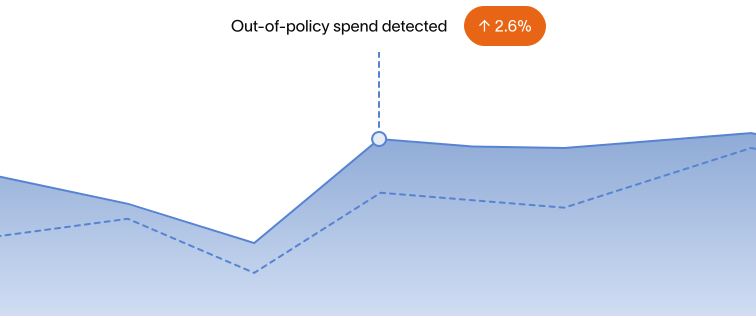
Eliminate wasteful spend before it happens

“Ramp is building with AI in a way that re-imagines how finance teams operate.”
Brad Lightcap, Chief Operating Officer, OpenAI
Enterprise spend management with global controls and security built-in.
Modular by design
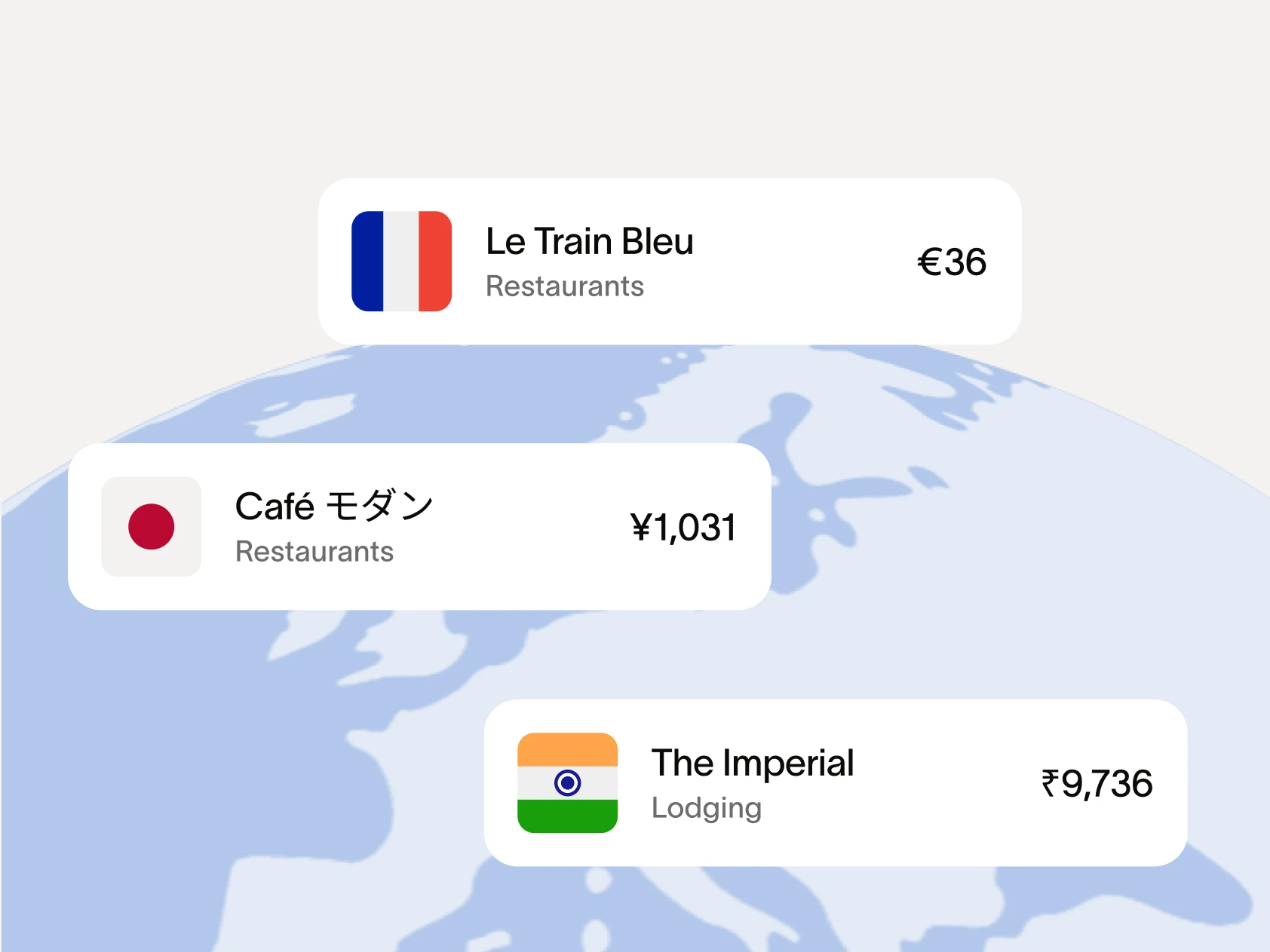
Global coverage, unified control
Integrate into your existing tech stack
Trust & security
Designed for enterprise-scale security and compliance—SOC 2 Type II certified, ISO 27001 accredited, and aligned with FedRAMP Moderate standards.
The easiest upgrade your finance team will make.
Guided onboarding and implementation
Ramp experts lead implementation end-to-end: mapping your workflows, configuring controls, and training your teams for smooth change management.
Engineering backed deployment
Forward-deployed engineers and SI partners ensure Ramp integrates cleanly with your existing processes and tech stack.
Ongoing support
Dedicated account management and prioritized 24/7 global support ensure you continue to scale with confidence.
Why enterprise implementation doesn't have to be painful

“Ramp is setting a new standard for transparency, value, efficiency and tangible time and money savings.”
Former Chairman and CEO, American Express

Latest news
FAQ
Enterprise spend management is how large, complex organizations centrally control, govern, and optimize all company spending—across employees, vendors, subsidiaries, and regions—in real time.
It brings together corporate cards, employee expenses, procurement, and supplier payments into a single system that enforces policies automatically at the point of spend, supports multi-entity and multi-currency operations, and provides finance teams with consistent global visibility. Instead of relying on fragmented tools and after-the-fact reviews, modern enterprise spend management gives finance proactive oversight, audit-ready controls, and real-time insight across global operations—without slowing employees down.
Yes. Expense management focuses on employee spending, such as tracking receipts, reimbursements, corporate card transactions, and travel expenses.
Enterprise spend management is a broader term, but it's used in different ways. In some cases, it refers mainly to managing vendor and procurement spend. In others, it's used to describe a more complete view of company spending that includes expense management alongside accounts payable, procurement, vendor payments, and purchase orders.
Legacy enterprise spend and expense platforms were designed primarily as systems of record. They rely heavily on manual configuration, static rules, and after-the-fact review to manage spend across the organization.
Modern platforms like Ramp take a different approach by embedding AI directly into the flow of transactions. Rather than reviewing spend after it occurs, AI agents continuously evaluate transactions in real time using business context such as policies, organizational structure, historical patterns, and risk thresholds. This allows routine spend to be handled automatically while surfacing true exceptions for review.
As a result, finance teams gain more consistent oversight across global and multi-entity environments without needing to manage controls on an entity-by-entity basis, and employees experience simpler, faster workflows.
In global, multi-entity organizations, AI helps finance teams maintain consistent oversight despite differences in currency, region, and local policy requirements. By evaluating transactions in context and in real time, AI can apply the appropriate rules and controls automatically while surfacing higher-risk or exception-based spend for review.
Enterprise-grade AI platforms like Ramp are designed with governance and auditability built in. Actions completed by AI agents are logged, traceable, and tied to specific policies, users, and approvals. Role-based permissions, entity-level access controls, and segregation of duties ensure agents operate within the same control framework as human users.
This approach enables centralized visibility and governance across entities without requiring finance teams to manually manage spend on an entity-by-entity basis, improving efficiency and coverage while maintaining transparency, accountability, and compliance.
Yes. Ramp's enterprise platform is built for global operations, supporting spending across 190+ countries with comprehensive multi-entity and local currency capabilities.
Global spending and payments:
- Issue corporate cards in local currencies across 40+ countries including CAD, GBP, EUR, AUD, SDG, JPY and more.
- Send payments to vendors in 185+ countries with free unlimited international wires through Ramp Treasury
- Reimburse employees in their local currency across 65+ countries
- Fund AP payments, card statements, and reimbursements from local bank accounts in select markets, reducing intercompany transfers and reconciliation complexity
Multi-entity management:
- Manage multiple entities from a single Ramp account with entity-level visibility controls
- Separate statement payments and funding accounts by entity
- Track transactions and reconcile spend in each entity's local currency
- Set budgets, approvals, and controls at the entity level while maintaining centralized oversight
International accounting and compliance:
- Automatic VAT capture and multi-currency reconciliation
- Direct ERP integrations with Oracle Fusion Cloud, Workday, NetSuite OneWorld and Sage Intacct and more
- Real-time reporting across all entities and currencies without manual conversions
Ramp is built for enterprises managing global complexity at scale. AI-powered automation and enterprise-grade controls help finance teams enforce policies consistently across entities and regions, while keeping the employee experience simple.
By unifying corporate cards and expenses on a single platform, Ramp gives finance leaders real-time global visibility, automated compliance, and audit-ready reporting, so teams can scale with confidence.
Ramp's enterprise platform pricing is customized based on your organization's size, transaction volume, and specific feature requirements. Enterprise customers work directly with Ramp's sales team to build a package that fits their needs. This includes multi-entity consolidation, dedicated implementation support, advanced integrations, and premium features.
Contact our enterprise sales team for a tailored quote based on your company's requirements.
Enterprise-grade expense management software should balance tight control with a frictionless employee experience. Key features include:
- Real-time policy enforcement that prevents out-of-policy spend before it happens
- Global card and expense support, including multi-entity, multi-currency, and local reimbursement workflows
- AI-powered receipt capture and categorization to minimize employee effort and improve data accuracy
- Flexible approval workflows that adapt to organizational hierarchy, spend type, and region
- Multi-entity visibility and consolidation for global finance teams
- Role-based permissions and access controls, including entity-level visibility restrictions and segregation of duties, to ensure users only see and act on what's appropriate for their role
- Audit-ready controls, including immutable logs and traceable approval histories
- ERP-grade integrations for automated syncing, reconciliation, and faster close cycles
- Enterprise security such as SSO, granular user and entity access controls, and compliance with standards like SOC 2 and PCI-DSS
Enterprise spend management systems can provide the following key benefits:
- Real-time spend visibility: Get a complete view of all company spending across employees, vendors, departments, and entities in one centralized platform.
- Cost reduction: Reduce unnecessary spending through automated controls, duplicate payment prevention, and optimized vendor negotiations.
- Increased efficiency: Eliminate manual data entry, automate approval workflows, and streamline processes from expense reporting to invoice payments.
- Faster financial close: Seamless ERP integration and automated reconciliation help finance teams close books faster with greater accuracy.
- Better budget control and cash flow: Real-time data enables smarter budgeting, prevents overspending, and optimizes payment timing to improve working capital.
- Improved compliance and risk management: Enforce internal policies and external regulations automatically with built-in controls, audit trails, and fraud detection.
- Improved employee experience: Faster expense submission, fewer errors, and quicker reimbursements, leading to higher adoption and better compliance