Ramp vs Coupa
Why businesses choose Ramp over Coupa
Ramp is one modern, AI-native platform, built to work well from day one. Coupa splits procurement into modules that often go underused, with implementations that can run 6-12 months and an interface many teams find dated.
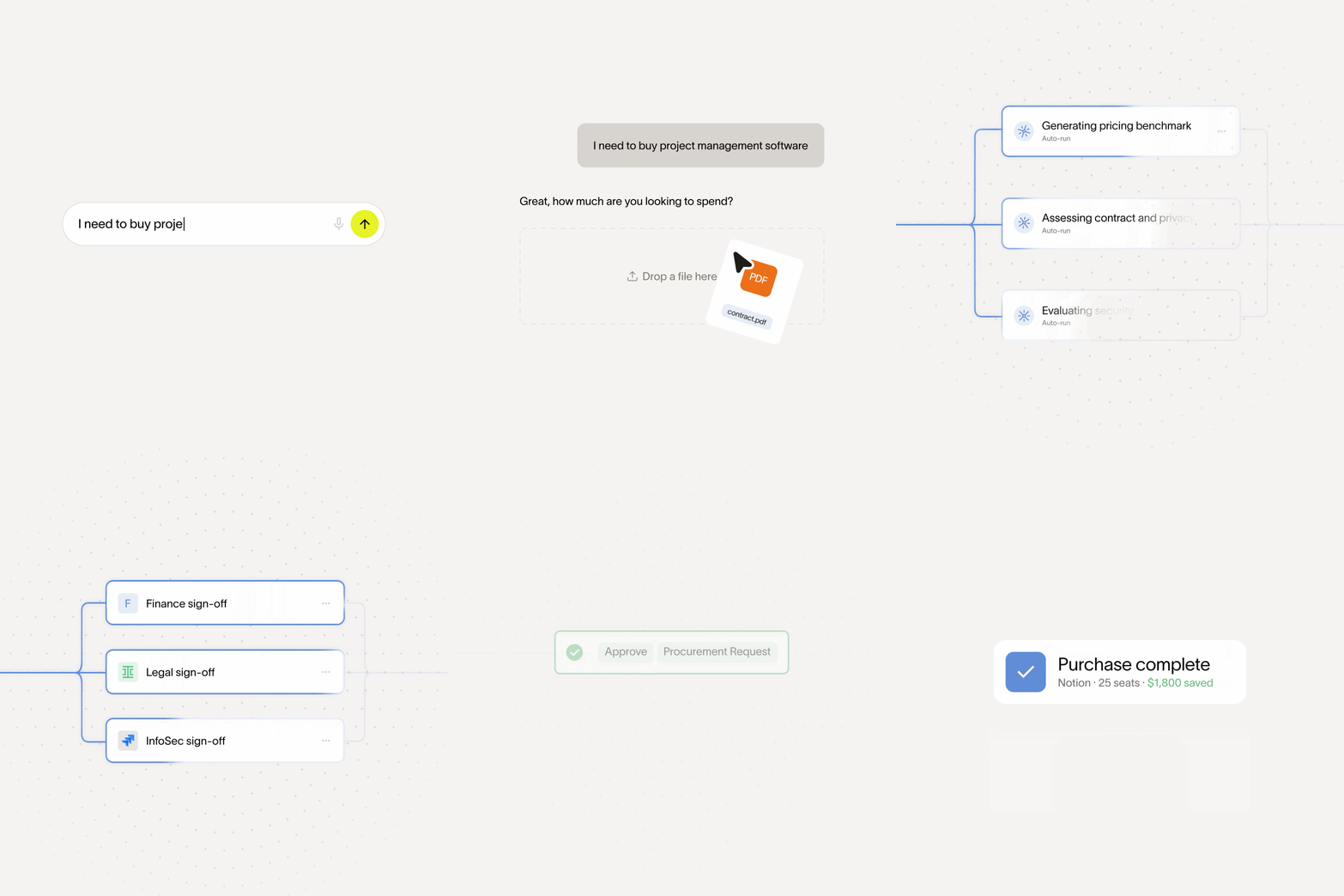


Top 3 reasons leaders pick Ramp over Coupa
Get full visibility into non-payroll spend

Delight employees with a modern experience
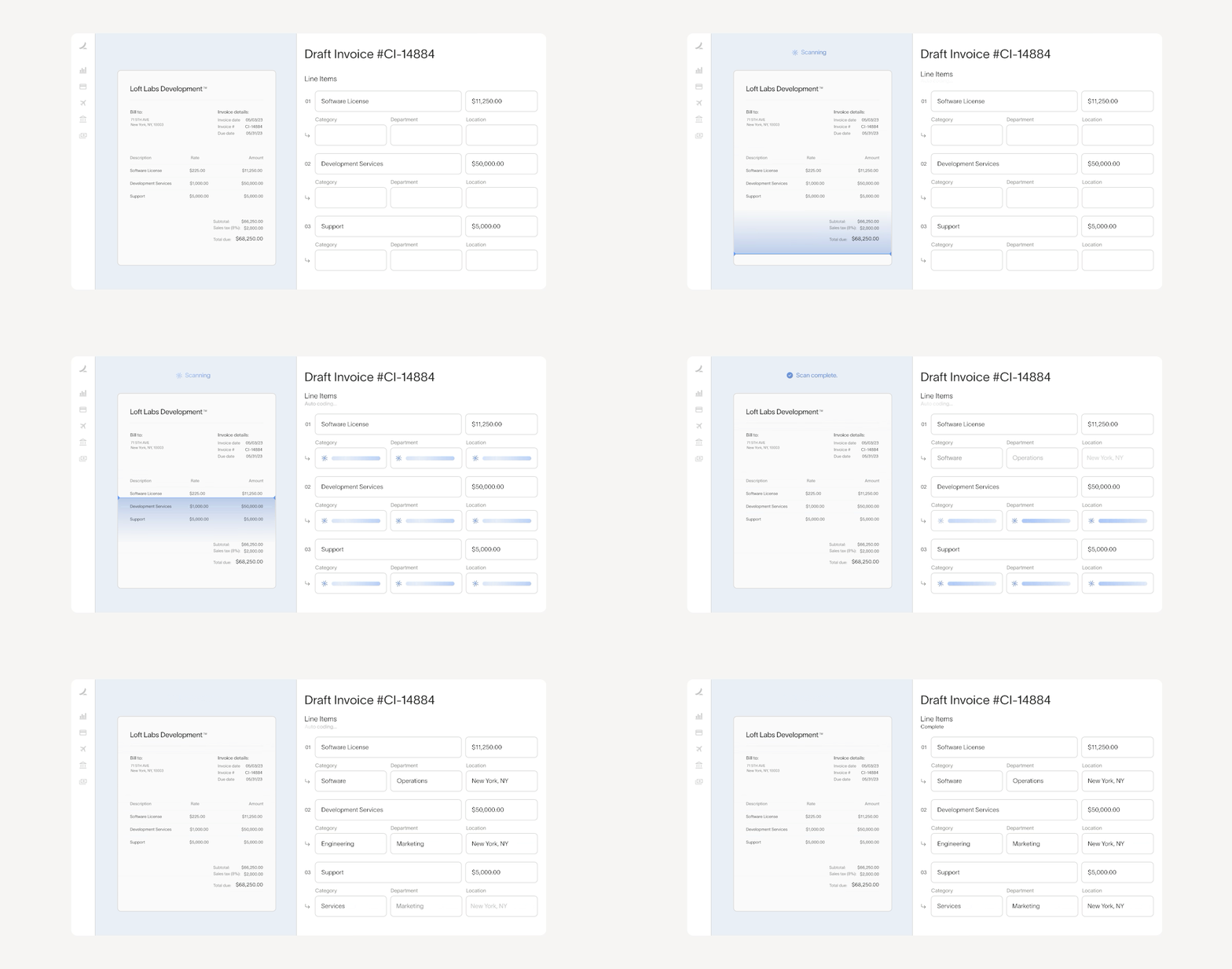
Faster time to value

Compare Ramp vs. Coupa


“We chose Ramp because it replaced several disparate tools with one platform our teams actually use—if it’s not in Ramp, it’s not getting paid.”
Michael Bohn
Head of Business Operations, Foursquare

Built for finance teams who don't have a dedicated Coupa administrator.
Ramp is built for the finance team that manages purchasing, cards, and AP as part of a broader role, with agents performing work that a dedicated team would otherwise handle manually. Coupa was built for organizations with a standing procurement team and a multi-year implementation budget.
dollars saved
hours eliminated
out of policy spend flagged
FAQ
Coupa's own maturity model lays out four stages: Advisory, Digital Assistant, Supervised Coworker, and Autonomous Execution. Coupa hasn't said which stage its own agents are on. The connectivity layer that would let agents act across systems, including agent-to-agent coordination, isn't due until September 2026.
Compose bundles pieces built at different times: an intake tool, a workflow builder, and a connector layer, with Coupa's Tonkean acquisition folded into the intake piece after the fact. Ramp's agents run on the same data model as the card, the bill, and the purchase order from day one. Ramp's Policy Agent automatically approves 85% of expense reviews at 99% precision, live today.
Coupa customers report syncs that break without warning, discovered when accounting doesn't reconcile at close. Ramp's NetSuite integration is real-time and bi-directional at the field level, and the Accounting Agent auto-codes transactions to the GL as they happen. AIRCO went from a six-month prior implementation to fully live on Ramp procurement, AP, and cards in under a week.
Coupa Card launched in November 2025, promising real-time point-of-sale policy enforcement as a future update, as well as card configuration by user, project, or department. Eight months later, Coupa's own product page still lists department- and project-level configuration as “coming soon,” and 3rd-party corporate card branding has quietly disappeared from Coupa's current marketing. Global availability was promised for Q1 2026; there's no public confirmation that it shipped. Ramp issues cards natively and enforces policy at the moment of swipe, because the card and the purchase order live in the same system
Coupa's bundled pricing means dropping a module rarely lowers the bill. Vendr, a third-party pricing benchmarking firm, reports enterprise Coupa deals running $200K to $2M+ a year in subscription alone, priced on a mix of users, transaction volume, and modules for which Coupa doesn’t publish a rate card. Ramp's pricing scales with what you actually use, not a locked bundle negotiated three years ago.
It is, in both Source-to-Pay Suites and Accounts Payable Applications, and that's worth taking seriously. It's also worth reading what Gartner says in the same report. Gartner's stated cautions about Coupa: an AI pricing model billed via usage tokens, where "long-term customers' usage and costs remain unclear"; a UI that was "still under development" during the evaluation period; and a one-size-fits-all product that "doesn't engage in customer-specific development." Market leadership doesn't mean every deployment fits. Ask what your token-based AI costs will look like in year three before you renew.