
- Types of contingent workers
- Benefits of a contingent workforce
- Challenges of managing contingent workers
- How to manage a contingent workforce
- Contingent workforce management best practices
- How to choose between a VMS and an MSP
- Contingent workforce management solutions
- Simplify contingent workforce payments with Ramp
Contingent workforce management is the process of sourcing, engaging, managing, and offboarding non-permanent workers such as contractors, freelancers, consultants, and temporary staff. It covers everything from hiring and onboarding to payments, compliance, and offboarding, and typically involves coordination between HR, procurement, and finance.
Good contingent workforce management gives you cost control, legal compliance, and workforce efficiency. It means clear contracts, structured payment processes, and performance monitoring so you can scale your workforce up or down based on demand without unnecessary overhead.
Contingent workforce vs. permanent workforce
A contingent workforce is made up of workers who aren't permanent employees. They work on a contract, project, or temporary basis, and their engagement ends when the work is done or the contract expires.
This is the opposite of a permanent workforce, where full-time, salaried employees have ongoing roles, receive benefits, and are covered under labor laws. Contingent workers give you flexibility, but they come with different legal, tax, and management considerations:
| Full-time employees | Contingent workers |
|---|---|
| Employment status | Long-term, permanent staff protected by labor laws |
| Compensation | Fixed salary plus benefits such as healthcare, retirement, and PTO |
| Scheduling | Fixed schedule, regular hours, often at a designated location |
| Tax treatment | Receive W-2 forms; employer handles payroll tax withholdings |
| Hiring and termination | Longer process with interviews, onboarding, and potential severance |
Types of contingent workers
Not all contingent workers are the same. Understanding the differences helps you classify them correctly, structure contracts appropriately, and avoid compliance headaches:
- Independent contractors: Self-employed individuals who complete specific projects or deliverables under a contract. They control how and when they do the work.
- Freelancers: Similar to contractors, but they often juggle multiple clients simultaneously on shorter-term assignments. Common in creative, marketing, and tech roles.
- Temporary agency workers: Hired through a staffing agency for a set period. The agency handles payroll and benefits, which simplifies your administrative burden.
- Consultants: Specialists brought in for strategic advice or deep expertise, often at higher rates. Think cybersecurity assessments, M&A advisory, or process optimization.
- Gig workers: On-demand workers engaged through platforms for task-based work, such as delivery, rideshare, or short-term manual labor
Benefits of a contingent workforce
According to a report from Indeed, 65% of businesses plan to increase their use of contingent labor over the next two years, driven by rising costs and persistent skill shortages. A well-managed contingent workforce gives you access to talent and flexibility that permanent hiring simply can't match. Here's where the value shows up.
Cost flexibility
You pay only when you need workers—no ongoing salary, benefits, or overhead during slow periods. This keeps labor costs variable instead of fixed, which is especially valuable for project-driven or seasonal work. To manage these costs effectively, you can track contractor payments and improve budget allocation with dedicated tools.
Access to specialized talent
Some projects require niche expertise your full-time team doesn't have. Instead of hiring a permanent employee for a short-term need, contingent talent management lets you bring in a contractor or consultant with the exact skills required, whether that's IT implementation, forensic accounting, or brand strategy.
Faster time to hire
Traditional hiring can take weeks or months. Contingent workers, especially those sourced from pre-vetted talent pools or staffing agencies, can start within days. That speed matters when you're facing a deadline or filling a sudden gap.
Workforce scalability
Demand fluctuates. A logistics company might need extra warehouse staff during peak shipping season, while a tech firm might need freelance developers for a product launch. Contingent workforce management lets you scale up during high-demand periods and scale down when workloads decrease, without carrying unnecessary payroll.
Reduced long-term liability
Contingent workers come with fewer obligations around severance, unemployment insurance, and benefits compared to full-time hires, which makes expense management more predictable and reduces your long-term financial exposure.
Challenges of managing contingent workers
The flexibility of a contingent workforce comes with real management challenges. If you don't address these proactively, costs creep up, compliance risks grow, and operational efficiency suffers.
Limited visibility into spend
Contingent labor costs often live in different budgets across departments. Marketing hires freelancers, IT brings in consultants, and operations contracts temp workers—all independently. Without a centralized view, total spend is hard to track and even harder to control. 75% of HR leaders struggle with cost visibility, and 70% lack workforce oversight because legacy systems weren't built for contingent labor.
Contingent workforce payments and expense tracking
Paying contractors through multiple channels—invoices, bill pay, expense reimbursements—creates fragmented records. This makes reconciliation painful and increases the risk of duplicate payments, missed invoices, or inaccurate reporting. Ramp Bill Pay captures and codes contractor invoices, routes approvals, and pays via ACH, check, virtual card, or wire from one platform with two-way ERP sync, so records stop living in separate channels.
Compliance and worker classification
Misclassifying a worker as a contractor when they should be an employee carries significant legal and tax risks. The IRS uses specific criteria around behavioral control, financial control, and relationship type to determine classification. Getting it wrong can lead to tax audits, back-pay obligations, and penalties.
Fragmented processes across departments
HR, procurement, and finance often manage contingent workers separately. This leads to duplicate work, inconsistent data, and gaps in oversight. One department might approve a contractor engagement that another department has no visibility into.
Inconsistent onboarding and offboarding
Without standardized processes, contractors may lack access to the tools they need to do their work—or worse, retain access to systems and data after their contract ends. Both scenarios create risk.
How to manage a contingent workforce
Managing contingent workers well isn't just about hiring the right people. It's about building repeatable processes that give you control, visibility, and efficiency across the entire lifecycle.
1. Centralize your contingent labor program
Bring all contingent worker data, contracts, and payments into one vendor management system. This supports contingent workforce planning and gives you a single source of truth. When everything lives in one place, you eliminate the blind spots that come from managing contractors across disconnected spreadsheets and departments.
2. Establish clear contingent workforce management guidelines
Document policies for worker classification, contract terms, payment schedules, and approval workflows. When everyone follows the same playbook, you reduce compliance risk and make it easier to onboard new managers who oversee contingent workers.
3. Align finance and HR workflows
Make sure both teams share visibility into contractor status, spend, and compliance documentation. Finance needs to know who's being paid and why. HR needs to know that classification and contracts are in order. When these teams operate in silos, things fall through the cracks.
4. Automate payments and expense management
Manual invoice processing is slow, error-prone, and hard to scale. Use contingent labor management software to automate invoice processing, bill pay, and reimbursements. With Ramp Bill Pay, finance teams process invoices 2.4x faster and with 86% fewer clicks than legacy software, because AP Agents auto-code contractor invoices and recommend approvals rather than just digitizing manual steps. Automating payments this way reduces manual work, speeds up contractor payments, and improves retention by ensuring people get paid on time.
5. Track contractor performance and ROI
Measure output and costs per contractor to inform future contingent workforce strategies and vendor decisions. If a freelancer consistently delivers high-quality work on time, they're worth keeping in your talent pool. If a staffing agency's placements underperform, it's time to renegotiate or switch vendors.
Contingent workforce management best practices
With 4.3% of the U.S. workforce—6.9 million people—being contingent as of July 2023, getting this right matters. Without proper management, you risk misclassification penalties, inconsistent quality, and runaway costs buried across departments.
Beyond these implementation steps, the following ongoing best practices keep your contingent labor program running smoothly.
Define worker classification criteria
Create clear internal guidelines that align with IRS and Department of Labor (DOL) rules to avoid misclassification penalties. Key factors include the degree of control you have over the worker, their financial independence, and the length of engagement.
Independent contractors maintain control over how and when they complete their work, use their own tools, and set their own rates. If that doesn't describe your worker, they may need to be classified as an employee.
Standardize contracts and agreements
Use templates for contractor agreements that include scope of work, deliverables, payment terms, and IP ownership. Intellectual property rights and confidentiality agreements are especially important in industries that deal with sensitive data or proprietary information. Standardized contracts protect both parties and reduce the risk of disputes.
Set spending controls and approval workflows
Require approvals for contractor engagements above certain thresholds. Enforce budget limits by department or project so that contingent labor spend doesn't quietly balloon. This is where tools with built-in policy enforcement make a real difference: Ramp customers have cut out-of-policy spend by 62% over 2 years, driven by approval controls that intercept non-compliant payments before they go out.
Maintain compliance records
Keep W-9s, signed contracts, 1099-NEC forms, and payment records organized for audits and tax reporting. Starting with payments made in 2026, you must issue a 1099-NEC for independent contractors earning $2,000 or more annually (up from the old $600 threshold) and ensure proper withholding and reporting for W-2 temporary employees. Organized records make tax season and labor audits far less stressful.
Review and optimize regularly
Audit your contingent labor program quarterly to identify cost savings, underperforming vendors, or process gaps. Look at total spend by department, contractor performance metrics, and compliance documentation completeness. Regular reviews turn your contingent workforce program from a cost center into a strategic advantage. Integrating these reviews into your expense management workflow helps you catch trends before they become problems.
How to choose between a VMS and an MSP
A vendor management system (VMS) is software you run to track and manage contingent workers, while a managed service provider (MSP) is an outside team you hire to run your contingent workforce program for you.
| VMS | MSP | |
|---|---|---|
| What it is | Software platform | Outsourced service |
| Who runs it | Your team | A provider's team |
| Best for | In-house control and visibility | Offloading day-to-day program management |
| Examples | SAP Fieldglass, Beeline, Workday VNDLY | An MSP partner managing sourcing, compliance, and vendors |
Choose a VMS when you want to keep sourcing, approvals, and vendor decisions in-house but need a system of record to manage them. Choose an MSP when you'd rather hand off the day-to-day running of your contingent labor program, including vendor negotiation and compliance oversight, to a dedicated team.
Many larger organizations use both together, running an MSP on top of a VMS to get program management and a centralized data layer at the same time. Whichever model you choose, you still need finance-side visibility into contingent spend, so evaluate contingent workforce management solutions with that in mind.
Contingent workforce management solutions
The right software eliminates the manual work and fragmented processes that make contingent workforce management painful. Whether you run it yourself or through an MSP, a VMS or finance platform should deliver these core features. When evaluating tools, look for:
- Centralized vendor management: Stores all contractor and vendor info in one place for easy access and oversight
- Automated bill pay: Processes contractor invoices without manual data entry, reducing errors and delays
- Real-time spend visibility: Shows contingent labor costs across departments instantly so you can spot trends and overages
- Policy enforcement: Flags or blocks out-of-policy payments automatically before they go through
- Accounting integrations: Two-way ERP sync (for example, NetSuite, Sage Intacct, QuickBooks Online, or Xero) so paid contractor bills reconcile automatically without extra manual work
These features directly address the challenges of limited visibility, fragmented payments, and inconsistent processes by centralizing data and automating key workflows.
Simplify contingent workforce payments with Ramp
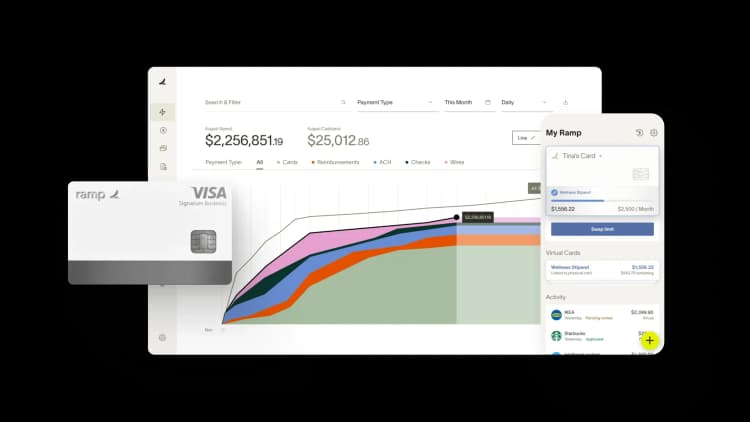
Ramp helps you take control of contingent workforce payments and solve the spend visibility challenges that come with managing contractors across departments. With Ramp, you can:
- Automate bill pay for contractor invoices so payments go out accurately and on time
- Get real-time visibility into contingent labor spend with reporting tools that break down costs by department, project, or vendor
- Set built-in controls and approval workflows to enforce spending policies before payments are processed—Ramp customers have cut out-of-policy spend by 62% over two years, driven by approval controls that intercept non-compliant payments before they go out
- Sync contractor payments directly to your accounting system with native integrations

FAQs
An MSP is a company that manages your contingent workforce program for you, handling sourcing, compliance, and vendor relationships, while a VMS is software you run yourself to manage contractors and staffing vendors.
Most companies pay contingent workers through invoices and bill pay, direct deposit, or the staffing agency that employs them, depending on worker type and contract terms.
Technology, healthcare, manufacturing, professional services, and retail rely heavily on contingent labor, though nearly every industry uses some form of it today.
Contingent workers typically aren't counted in official headcount since they aren't employees, but tracking them separately gives you a more accurate picture of total labor costs.
Start by reviewing historical contingent spend by department and project, then build forecasts based on anticipated hiring needs and average contractor rates for your industry.


“I assumed I would have to choose between speed and control. What I found is that you can have both. A well-designed system takes friction out, for the finance function and for everyone else.”
Justin Webster
CFO, Denver Broncos

“A well-run district should not have to choose between getting work done at the school site and keeping control of the dollars behind it. We're not hiring more people to do more jobs, so we have to be smarter about the process. With Ramp, the purchase, the receipt, and the record stay together from the start. ”
Nick Brizeno
Director of Purchasing, San Marcos Unified School District

“In senior living, scale only works if the communities still feel personal. We needed the back office to carry more of the complexity, not the people serving residents. Ramp helped us build that infrastructure, so the experience in the community could stay human.”
Ryan Cole
CFO, Agemark Senior Living

“AI is moving faster than the finance context around it. Prices change, models change, and the value is not always obvious from an invoice. We needed enough detail to know which bets deserved more investment — and which ones did not.”
Greg Cooley
Controller, AngelList

“Invoices, cards, tokens. The categories change but the principle doesn't: know where the money is going, remove the work around it, and make sure the spend is worth it.”
Maciej Mylik. Finance
ElevenLabs

“We weren’t trying to retrofit an old finance system. We had a blank canvas, and Ramp gave us the foundation to build a global finance function of the future.”
Justin Dourado
Director of Finance, Othership

“There's just no surprises anymore. No more waiting two months to find out how a job did. We know how it's doing as it's happening.”
Erich Kuss
Financial Systems Manager, Infinity Home Services

“More token spend isn’t proof that AI is working. Less isn’t proof that it isn’t. What matters is whether we’re buying the right level of intelligence for the work. Ramp lets us make that judgment in the same place we manage every other type of spend.”
Cody Nutt
Senior Director of Business Systems, Daxko
