How to check your Chase credit card application status

- How to check your Chase business credit card application status
- What your Chase application status means
- How long does Chase take to approve a business credit card?
- Why your Chase application status is pending
- Chase approval rules that could affect your application
- How Chase business credit card applications are different
- What to do if your Chase application is denied
- How to use your card right away after approval
- Skip the personal credit check with the Ramp Corporate Card

AI Summary
You can check your Chase business credit card application status by phone, online, or at a branch. Chase says you should generally get a decision or a follow-up within 14 days, and sometimes in as little as an hour. The same steps work for personal and business Chase cards.
How to check your Chase business credit card application status
Chase offers several ways to check the status of your business credit card application. Whether you applied online, over the phone, or in person, you can track your application using the method that works best for you:
| Method | Best for | Availability |
|---|---|---|
| Phone | Fastest results | Automated line |
| Online | Existing Chase customers | Anytime via chase.com |
| In-branch | Complex questions | During branch hours |
1. Call the Chase application status line
Calling Chase is often the fastest way to get an update. Chase publishes one number for both personal and business card status checks: 1–888-338–2586.
When you call, have this information ready:
- Your SSN or EIN
- Your phone number
- Your business address and ZIP code
- Your application reference number
- Business formation documents, such as articles of incorporation, if Chase asks for them
If your status shows pending, ask whether Chase is waiting on documents from you. A quick call can surface a missing item that would otherwise stall your review for days.
2. Check online through chase.com
You may have been given an application portal and login credentials when you applied, so check any notices Chase sent you.
To find your business application status:
- Log in to Chase Online
- Open the main menu
- Look for Application Status in the main menu
- View your status as approved, pending, or declined
3. Visit a Chase branch in person
If you prefer face-to-face service or your application requires additional documentation, you can visit a local Chase branch. Use the Chase website or a map app to find your nearest location, and bring a valid ID along with any application confirmation details. Speaking directly with a business banker can be especially helpful if your application has hit a snag.
What your Chase application status means
When you check your status, you'll typically see one of three messages:
- Approved: Your card is on its way. You may be able to access your card details immediately through the Chase mobile app.
- Pending/Under review: Chase hasn’t made a final decision yet and may need more time or additional information. This doesn't mean you've been denied.
- Declined: Chase's denial notice normally includes the reason and information about reconsideration. You can take steps to appeal or address the issues.
You may also see an automated message with a time frame instead of a clear status.
What Chase's automated status messages mean
Chase doesn't publish what its automated timeline messages mean, so these interpretations reflect what applicants commonly report, not Chase policy:
| Message | What applicants commonly report it signals | What to do |
|---|---|---|
| 7 to 10 days | A closer review or a request for more information | Call the status line and ask whether Chase needs documents |
| 2 weeks | Processing after a decision | Watch your mail for the decision notice |
| 30 days | A longer manual-review queue | Check your status regularly and keep documents ready |
Only Chase's decision notice confirms the outcome. "Pending" and "under review" both mean there's no final decision yet, so check your status regularly while you wait and be ready to send any requested documents promptly.
How long does Chase take to approve a business credit card?
According to Chase, you should generally get a decision or a follow-up within 14 days of applying, and it can take as little as an hour. Mailed applications take longer.
Several factors affect the timeline, including your credit history, the accuracy of your application details, and whether Chase needs to verify your income or identity. Checking by phone is the fastest way to get an update.
By comparison, Ramp Corporate Card applications are approved in fewer than 48 hours.
Why your Chase application status is pending
A "pending" or "under review" status isn't a denial. It simply means Chase needs more time to evaluate your application.
Common reasons for a pending status include:
- High recent credit activity or multiple recent credit applications
- Identity or income verification requirements
- Inconsistencies on your credit report
- A large requested credit limit
- Limited personal or business credit history
Chase needs additional information or verification
Chase may need to confirm your identity, income, or business details before making a decision. Chase may ask you to verify details such as your EIN, business revenue, or formation documents, and may request tax returns, bank statements, articles of incorporation, or proof of business address.
If Chase notices unusual activity, your application may also be paused for additional business credit card fraud screening.
High application volume or system delays
Sometimes delays have nothing to do with your application. Seasonal volume spikes or internal processing backlogs can extend review periods. If your application seems stuck, calling the status line can help you confirm whether Chase is waiting on something from you or simply working through a queue.
Chase approval rules that could affect your application
Chase has a few informal credit card approval rules that may impact your chances of getting approved, even if your credit is strong.
Chase 5/24 rule
The Chase 5/24 rule is an unofficial guideline used by Chase to determine eligibility for most of their credit cards. If you've opened five or more personal credit cards across any credit card issuer in the past 24 months, your application will likely be declined, regardless of your credit score.
Chase has not publicly confirmed the rule, and which accounts count can vary. Still, it's widely reported that the 5/24 rule applies to approval for most Chase credit cards, including both personal and business credit cards.
Here's one nuance that works in your favor: While you must be under 5/24 to get approved, cardholders widely report that most Chase business cards don't appear on personal credit reports after approval. That means they generally won't add to your 5/24 count going forward.
Chase 2/30 rule
The Chase 2/30 rule is another unofficial, applicant-reported guideline about how many Chase card approvals you can get in a 30-day window. Applicants commonly report a limit of two approvals in 30 days, and some report Chase may approve only one business card per 30 days.
How Chase business credit card applications are different
Business card applications typically ask for your EIN, or your SSN if you don't have one. Some issuers may ask for extra documents, such as financial statements, to verify your business's creditworthiness.
Chase evaluates business cards using a mix of your personal credit and your business profile, so review the Chase business card requirements before you apply. Gather these documents to avoid a pending status:
- Business formation documents (articles of incorporation, LLC operating agreement)
- Recent business tax returns
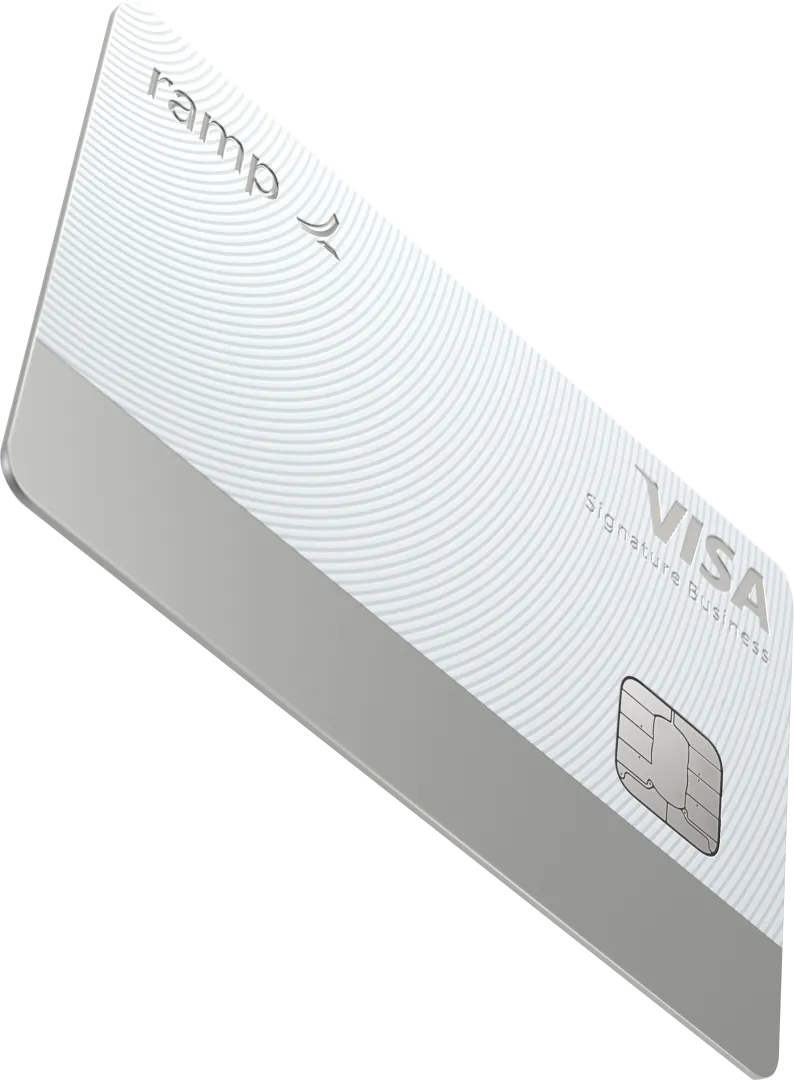
Unlike traditional business cards that hinge on personal credit and 5/24 status, the Ramp Corporate Card requires no personal credit check and no personal guarantee. You can get one using only your EIN.
Discover Ramp's corporate card for modern finance
What to do if your Chase application is denied
A denial isn't the end of the road. You may be able to successfully appeal or improve your approval odds with a few key steps:
1. Review the denial letter
Lenders are required to notify you of the decision, and the notice either gives the specific reasons or tells you how to request them. Carefully review this letter to understand why your application was unsuccessful. Common reasons include a low credit score, insufficient credit history, too many recent inquiries, or a high debt-to-income ratio.
2. Check your credit report
Obtain a copy of your credit report from each of the three major credit bureaus. Verify that the information is accurate and dispute any errors that may have contributed to the denial.
3. Call to appeal your Chase denial
Chase's widely reported reconsideration lines are 1–888-270–2127 for personal cards and 1–800-453–9719 for business cards, and applicants report the business line is staffed during weekday hours. Explaining your situation live could get Chase to reconsider their decision.
Before calling, make sure you're ready to address any errors or explain recent credit activity, changes in income, or why you believe your business still qualifies.
When you call, try a script like this:
"Hi, I recently applied for a Chase business credit card and saw it wasn't approved. I'd like to see if there's any additional information I can provide to help reconsider the decision."
4. Address the reasons or consider a different card
Take steps to address the issues that led to the denial. This may involve paying down debt, correcting errors on your credit report, or building a stronger credit history. You may want to consider applying for a different business credit card with less stringent requirements, whether you're looking for cashback, travel rewards, or balance transfer perks.
5. Wait before reapplying
Wait a few months before reapplying for the same card, especially if the reason for denial was credit-related. This gives you time to improve your creditworthiness and increases your chances of approval the next time around.
How to use your card right away after approval
If your application is approved, you may not have to wait for the physical card to start using it, and you may be able to access your card details right away.
- Access your card details online: If approved, you may be able to log in to your online Chase credit card account or use the Chase Mobile app to view your new card details immediately.
- Add your card to a digital wallet: You may be able to use your card before it arrives by adding it to a digital wallet directly from the Chase app.
- Watch for your physical card in the mail: According to Chase, your physical card usually takes up to 2 weeks to arrive after approval. Chase may not provide tracking for the physical card.
Skip the personal credit check with the Ramp Corporate Card
If you're facing a denial or want to avoid the potential complications of traditional bank card approvals, consider Ramp.
Unlike traditional business credit cards, the Ramp Corporate Card doesn't require a personal credit check or personal guarantee. Applications are approved in fewer than 48 hours.
With Ramp, you get unlimited physical and virtual cards and $350k+ in partner offers. You can set merchant, category, and amount limits on every card, so out-of-policy spend is blocked at swipe instead of flagged after the fact. You also get:
- Expense management tools: Set spending limits, automate receipt collection, and simplify expense reporting with built-in expense management automation software.
- Accounting integrations: Ramp offers 200+ integrations, including accounting and ERP systems, to help you close your books faster.
Ready to get started? Try an interactive demo to see how Ramp works.

FAQs
Chase doesn't publish which business card is easiest to get. Chase reviews your personal credit as part of a business card application, so a strong personal credit profile and a solid business profile give you the best odds.
You can't speed up Chase's internal review process. However, calling the status line lets you confirm whether Chase needs additional documentation from you, which can help prevent unnecessary delays on your end.
Checking your status isn't a new application, so it shouldn't add another hard inquiry beyond the one from your original application.
Chase may ask for business formation documents, tax returns, bank statements, or proof of business address to verify the information on your application. Having these ready can help move the review along faster.
Chase says your card usually takes up to 2 weeks to arrive after approval and may not come with tracking. If it hasn't arrived after 2 weeks, call the status line to confirm it shipped.


“Our cupcakes are handmade. Our back office doesn’t need to be. Ramp gives us the automation to run a big business without losing the personal touch that made us who we are.”
Amanda Tedeschi
Controller, Baked by Melissa

“I want to trust the people at our sites to buy what they need, when they need it. With everything in Ramp, they have one place to go and one set of rules to follow. And I can see how all of their spending ties back to the contracts that fund their work.”
Marina Peterson
CFO, Wu Yee Children’s Services

“Finance isn’t just there to keep a record of the past. Are we negotiating with a retail partner? We have a seat at that table. Looking at a brand partnership? We have a seat at that table too. That’s really the big unlock: finance can be a strategic partner across the business, while Ramp keeps day-to-day work from pulling us away.”
Rachel Prescott
CFO, Caraway

“I assumed I would have to choose between speed and control. What I found is that you can have both. A well-designed system takes friction out, for the finance function and for everyone else.”
Justin Webster
CFO, Denver Broncos

“A well-run district should not have to choose between getting work done at the school site and keeping control of the dollars behind it. We're not hiring more people to do more jobs, so we have to be smarter about the process. With Ramp, the purchase, the receipt, and the record stay together from the start. ”
Nick Brizeno
Director of Purchasing, San Marcos Unified School District

“In senior living, scale only works if the communities still feel personal. We needed the back office to carry more of the complexity, not the people serving residents. Ramp helped us build that infrastructure, so the experience in the community could stay human.”
Ryan Cole
CFO, Agemark Senior Living

“AI is moving faster than the finance context around it. Prices change, models change, and the value is not always obvious from an invoice. We needed enough detail to know which bets deserved more investment — and which ones did not.”
Greg Cooley
Controller, AngelList

“Invoices, cards, tokens. The categories change but the principle doesn't: know where the money is going, remove the work around it, and make sure the spend is worth it.”
Maciej Mylik. Finance
ElevenLabs
