

How the startup that helped design Ramp’s procurement agent automated its own procure-to-pay
“Browserbase builds infrastructure so AI agents can do real work. Ramp is doing the same for finance. It’s not another tool. It’s a system purpose-built for AI-driven finance, and that’s why we chose Ramp as our financial operating system from day one.”
Founder & CEO, Browserbase

Browserbase was founded on a simple observation: most of what people do on the web is repetitive, and software should do it for them. The company’s infrastructure powers AI agents that log into portals, pull documentation, and navigate authentication walls in seconds.
The company’s own purchasing processes, however, had been managed manually and ad hoc. Few companies manage it any differently. Fewer than 2% of companies have a dedicated procurement team. Most of that purchasing work lands on whoever can find an hour.
At Browserbase, that was Beatriz Go, Chief of Staff. As the company grew from a few thousand to about a million in monthly spend in under two years, she managed corporate cards, bill pay, vendors, and month-end close, without a dedicated finance hire.
And like most fast-growing companies, they kept buying what they needed to keep shipping fast. Contracts auto-renewed because no one had the job of catching them. Vendor seats accumulated because tracing who approved them took time nobody had. None of it was reckless. It was the shape of a company too busy building to stop and count.
When Beatriz finally made time to count, she found something that couldn’t be ignored.
The $80K hiding in the auto-renewals
One person. One month. Line by line through every tool, seat, and subscription Browserbase held. The audit turned up >$80,000 in duplicate licenses and auto-renewals that nobody had caught at entry: renewals that slipped through on autopilot, vendor seats nobody remembered purchasing, the kind of waste that only shows up when someone finally sits down to count it. The audit was worth doing. And nobody, especially Beatriz, wanted to do it again.
The money was only part of it. Shadow spend and compliance gaps aren’t separate problems — they’re the same one. When there’s no procurement function or system, there’s no consistent process for evaluating the tools coming in. Every software request that bypasses a formal review is both an untracked cost and an unvetted risk. Most companies don’t know how exposed they are because no one has ever stopped to look.
At Browserbase, a vendor security review that should have taken hours was taking days: downloading documentation, checking SOC 2 compliance, reviewing privacy policies, cross-referencing internal standards, looping in the right approver with each step, waiting on someone who was already at capacity. By the time a request cleared, the person who filed it had usually found a workaround. That’s how duplicate subscriptions accumulate: not from negligence, but from friction.
"Every duplicate subscription, every auto-renewal nobody caught: it adds up before you see it coming. It’s not a failure of any one person on the team. It’s a failure of the process."
— Beatriz Go, Chief of Staff at Browserbase
How a card program became an autonomous financial operating system
Browserbase didn't adopt Ramp for cards. They adopted it for control, and founder Paul Klein IV made that decision in the company's first weeks, before there was much to control. The bill pay, the vendor base, the procurement agent: everything that followed was built on the same platform they chose at the start. With a small ops function supporting a fast-growing team, they needed a way for Paul to give employees autonomy to move fast without losing visibility into what was being bought, by whom, and why.
"We want everybody to run at the speed of business, but within a controlled framework," Paul explains. "Ramp makes it easy for us to have clear observability over our finances, which actually empowers the team."
As the vendor base expanded, bill pay became the next pressure point. Invoices were arriving through email, getting approved informally, and paid in ways that were hard to reconcile at month-end. Browserbase moved bill pay onto Ramp, centralizing more than 100 vendors into a single workflow. What started as a handful of invoices a month grew alongside the company, and now runs in the millions of dollars every month.

Cards, bill pay, and purchasing now run through the same platform. Beatriz and the leadership team have a single view of every dollar Browserbase spends, from the first employee expense to the final vendor invoice. No separate tool for approvals, no spreadsheet tracking renewals, no month-end scramble to find what slipped through. However, the bigger shift came on the purchasing side.
"Ramp started as our card platform. Then it became the operating system for our entire financial operation: procurement, bill pay, close. That’s when it stops being software and starts being infrastructure."
— Paul Klein IV, CEO & Co-Founder at Browserbase
The session that became the product spec
Ramp’s procurement agent could automate vendor research, compliance reviews, and PO routing. But to visit vendor websites, pull documentation from behind login screens, and navigate authentication walls the way a real reviewer would, it needed a cloud browser layer that could act like a person online. Ramp and Browserbase were already building that infrastructure together. The other piece they needed was already in-house: the operational knowledge of how procurement actually works at a fast-growing startup. It was Beatriz.
Ellen Li, the product manager leading procurement at Ramp, came to Browserbase’s San Francisco office with her team. They weren’t there as vendor and customer. They were there to build something. To build it right, they needed to see how the work actually got done. They pulled up chairs and watched Beatriz work.
Beatriz walked the team through a live vendor review step-by-step: opening the vendor’s website, locating their trust documentation, checking SOC 2 certification, cross-referencing internal standards, building the case for the approver. Each step she took by hand became a requirement the agent would need to handle. By the time the session ended, the shape of the product was clear.
Browserbase didn’t adopt a procurement tool off the shelf. They helped design one and then became the first Ramp customer to run on it.
"We helped design this. That's not something you usually get to say about the tools you rely on every day. Because Ramp's team sat with us and watched how this work actually happens, they built something that fits exactly how we work. The best tools aren't built for a hypothetical customer. They're built from watching a real one."
— Beatriz Go, Chief of Staff at Browserbase
What the network knows
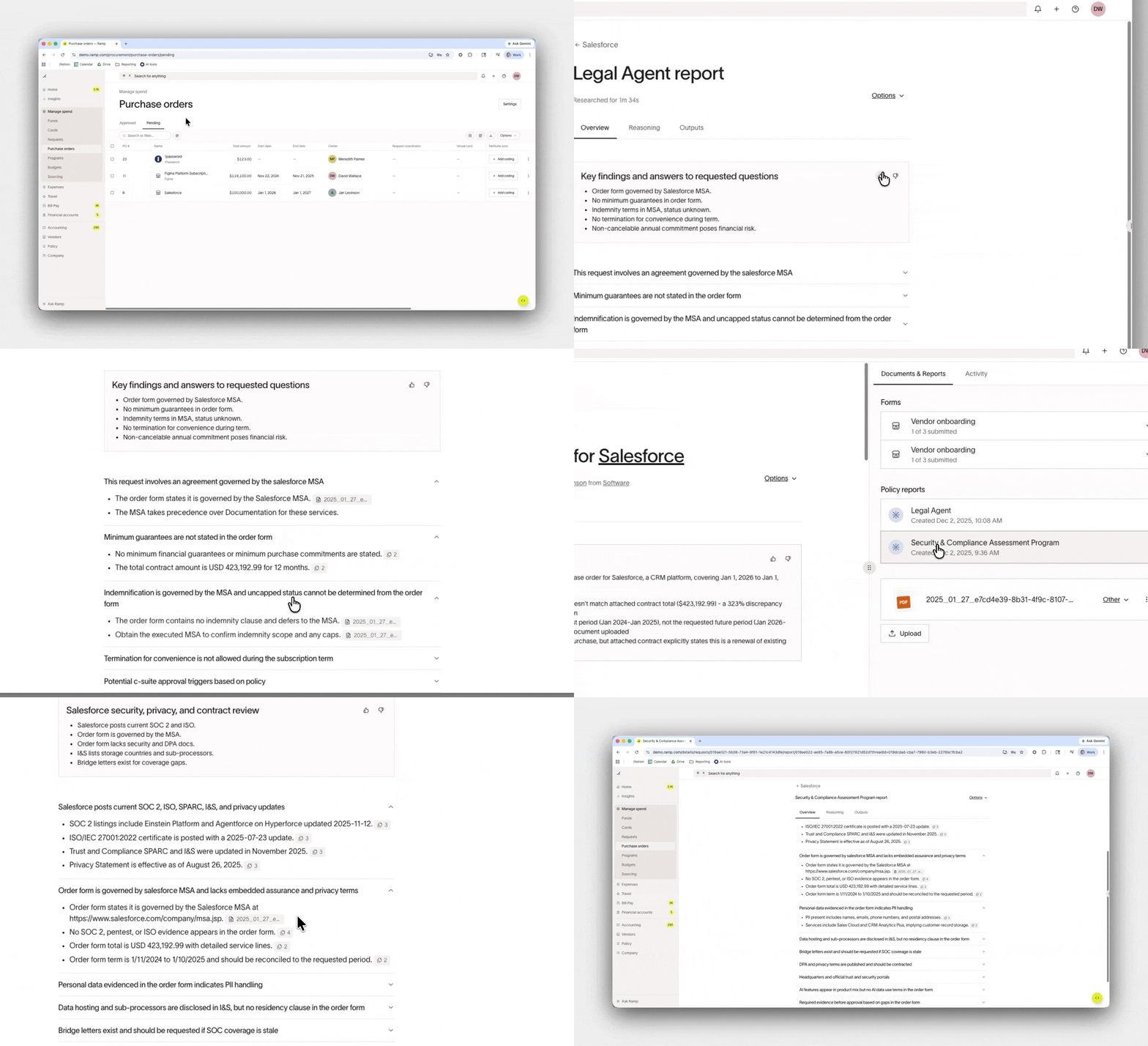
The agent handles the workflow: compliance checks, vendor research, approval routing. But it also carries what no single reviewer could bring alone. The accumulated intelligence of 50,000+ companies on the Ramp network means every vendor request arrives with context already attached: what similar companies pay, what the contract terms look like, where there’s room to push back.
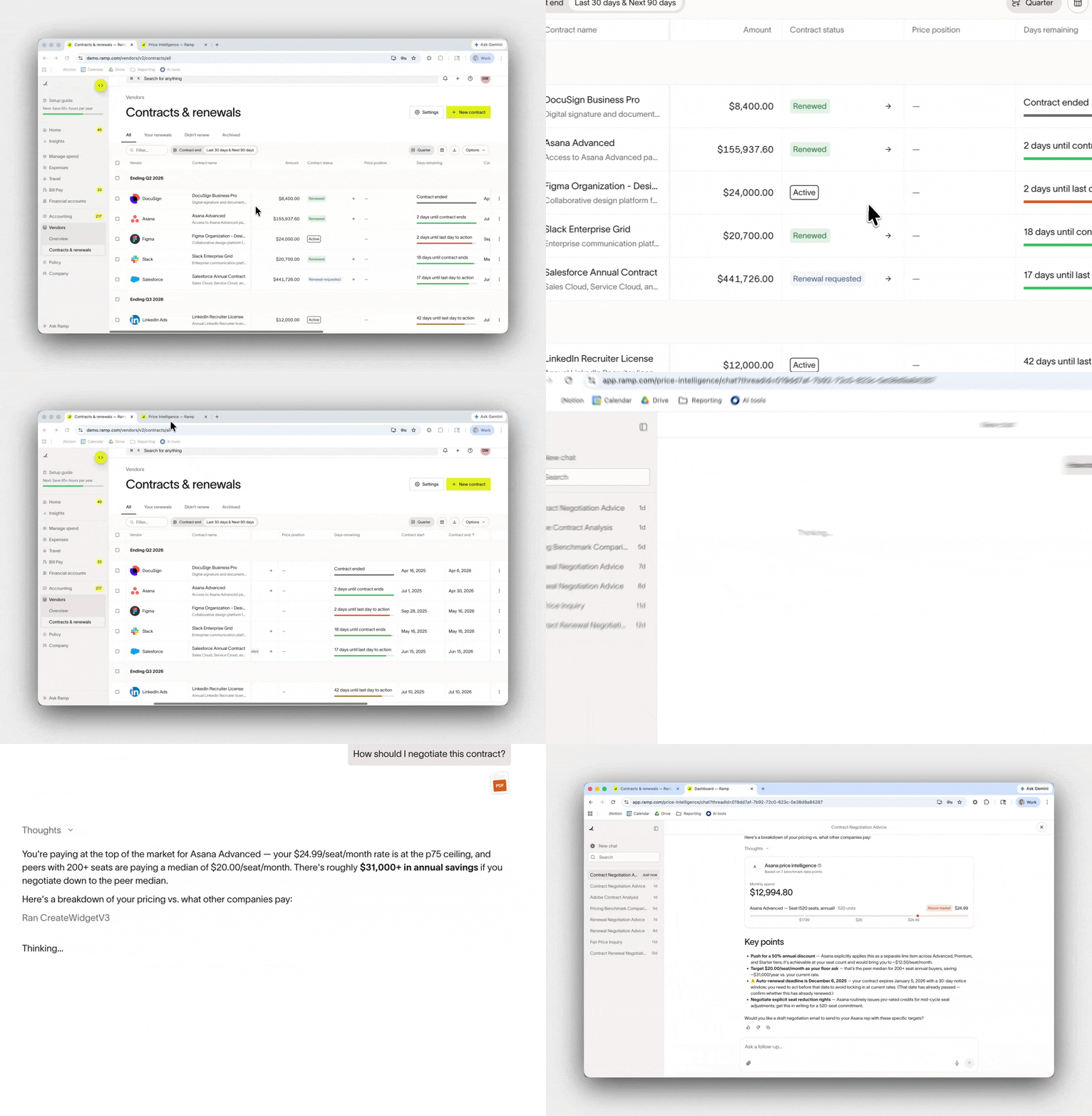
Contract renewals surface 90 days in advance, with usage data and market pricing pre-loaded. The $80,000 audit was, at its core, a renewals failure. That failure mode no longer exists.
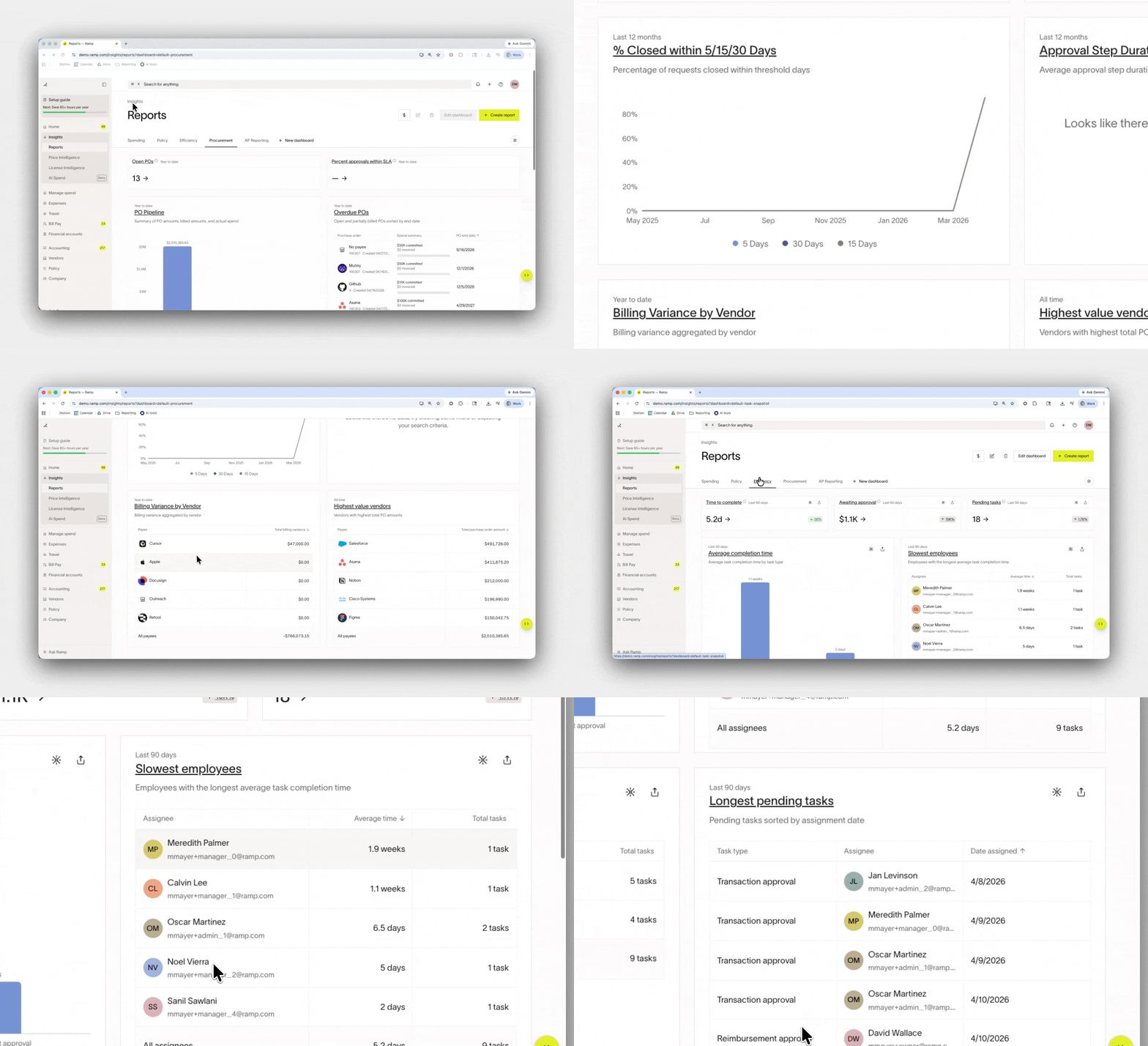
The same visibility runs through every purchase order, tracked from request to approval to payment, with a full audit trail where there was none before. As Browserbase’s vendor base has grown, the reporting has kept pace: spend by vendor, by team, by category, updated continuously rather than assembled at quarter-end. The financial picture that once required a month-end scramble to produce is now always current.
50+ requests and 1,670 hours
The first real test of the Procurement Agent at Browserbase wasn't a demo. A teammate flagged a new video recording software she wanted to evaluate. Instead of routing through the usual gauntlet of manual review, she submitted a purchase request through Ramp. Within seconds, the agent had visited the vendor's website, pulled their trust and compliance documentation, checked it against Browserbase's security requirements, and returned a verdict: the tool wasn't SOC 2 compliant. Request denied.
"We clearly saw Browserbase working in the back end," Beatriz said. Ramp's Procurement Agent had just collapsed a multi-day security review into a matter of seconds — powered, in part, by Browserbase's own browser infrastructure.
"Ramp's Procurement Agent is like having an extra person on the team you can trust: someone who gives you exactly the information you need, right when you need it, and never lets anything slip through."
— Beatriz Go, Chief of Staff at Browserbase
Since activating the agent, Browserbase has submitted more than 50 purchase requests through Ramp. Each one used to require hours and hours of manual work: pulling documentation, running compliance checks, routing to the right approver, following up until payment cleared. The agent handles roughly two hours of that work before any human sees the findings. For Browserbase, that's an average of 26 hours of procurement work every month that gets automated and no longer falls to Beatriz or anyone else.
Renewal monitoring runs the same way. Hundreds of vendors, each with a contract and a renewal date, are now tracked in the background. Upcoming renewals surface 90 days in advance, with market pricing and usage data already attached. The $80K audit was, at its core, a renewals failure: contracts that auto-renewed without review, seats that accumulated without oversight. That failure mode is gone.
The month-end that now runs itself
Browserbase now runs millions of dollars in combined card and bill pay spend through Ramp each month. Ramp is used across the company from engineers submitting receipts through the Ramp CLI, to the ops team processing invoices, and to Beatriz reviewing purchase approvals that arrive pre-screened.
The hidden cost of the month-end close isn't the transactions. It's the cleanup. Receipts to track down. Accounts to reconcile. Approvals that weren't documented the first time around. On a lean ops team supporting a fast-growing company, the work accumulates fast. Ramp eliminates most of it: receipts come in through the app and CLI, transactions sync and review automatically, and reconciliation runs continuously. It has totaled 1,670 hours of automated work across the company. That’s an average of 100+ hours/month the company saves by having work automatically handled through Ramp.
Browserbase went from thousands to about a million in monthly spend in under two years — a company where engineers expense tools from their terminals and a single Chief of Staff runs the entire financial operation. For a long time, that meant doing the work by hand. The audits. The vendor reviews. The renewals nobody caught until Beatriz stopped to look. Now agents handle all of it, and the time that used to go to financial housekeeping goes back to the team that’s here to build.

See your procure-to-pay workflow on autopilot
Explore how AI can surface duplicate renewals, enforce purchasing controls, and remove manual work from your team’s buying process. → Get your P2P plan


