

How the Hospital Association of Oregon went from manual AP to 92% automation
“Our previous bill pay process probably took a good 10 hours per AP batch. Now it just takes a couple of minutes between getting an invoice entered, approved, and processed.”
VP of Finance and Accounting, Hospital Association of Oregon

Stamps, spreadsheets, and a stack of invoices that never got smaller
When Jason Hershey, VP of Finance and Accounting, joined the Hospital Association of Oregon, he was replacing a seasoned CFO of 30 years. “We had lots of really good processes in terms of a clean accounting process, but we didn’t have modern systems and tools in place,” says Jason. “Everything was done manually.”
All financial operations — expenditures, bill pay, and reimbursements — were handled by hand. “We would send invoices as email attachments for approval and do paper vouchers for check runs,” says Jason. “We would email the list of checks for approval, and then we would stamp the checks, lick the envelopes, and put them in the mail.”
“The whole payments process was really inefficient,” says Jason. “We’d send invoices out for approval, but the return email saying ‘approved’ usually wouldn’t have the invoice attached, so we’d have to go back and match up the invoice that was sent.” This was highly time-intensive and created an opportunity for error. “Our payment vouchers were not directly tied to the accounting system, so we had to hand-key everything twice. We spent a lot of time hand-keying, and a lot of time double-checking that everything was keyed correctly.”
In his new role, Jason saw an opportunity to drive organizational-wide efficiency and reduce manual effort through finance and accounting technology.
Replacing the paper trail and automating finance busywork
Jason came across Ramp early on in his tenure at the association, and right away he recognized its potential to reduce much of the manual time his team was spending on finance and accounting. The association worked with Ramp to deploy corporate cards, Bill Pay, and automated reimbursements, giving department heads real-time visibility into their budgets and eliminating the paper-based processes that had defined the team's week.
Corporate cards for the end of manual reconciliation
Before Ramp, every card transaction required a separate payment voucher created outside NetSuite — meaning manual re-entry and manual verification for every purchase. With Ramp cards, transactions flow directly into NetSuite with accounting codes pre-filled. No voucher. No double entry. No manual matching at month end.
"We've fully embraced the corporate card aspect of Ramp. We've issued virtual and physical cards and really relied on the system to help us with tracking expenses and getting memos and receipts in. Ramp makes turning in receipts easy for employees — so they do it."
— Jason Hershey, VP of Finance & Accounting
That behavioral shift matters as much as the technology behind it. When receipt submission is frictionless, compliance follows naturally — and over time, 79% of all card transactions now code themselves with zero human intervention, turning reconciliation from a recurring chore into something that largely takes care of itself.
Bill Pay turned the biggest bottleneck into a background process
The bigger bottleneck was AP. Vendor invoices arrived over email, got routed through chains of forwarded messages for approval, and ended with Jason printing, stamping, and mailing physical checks — every single week.
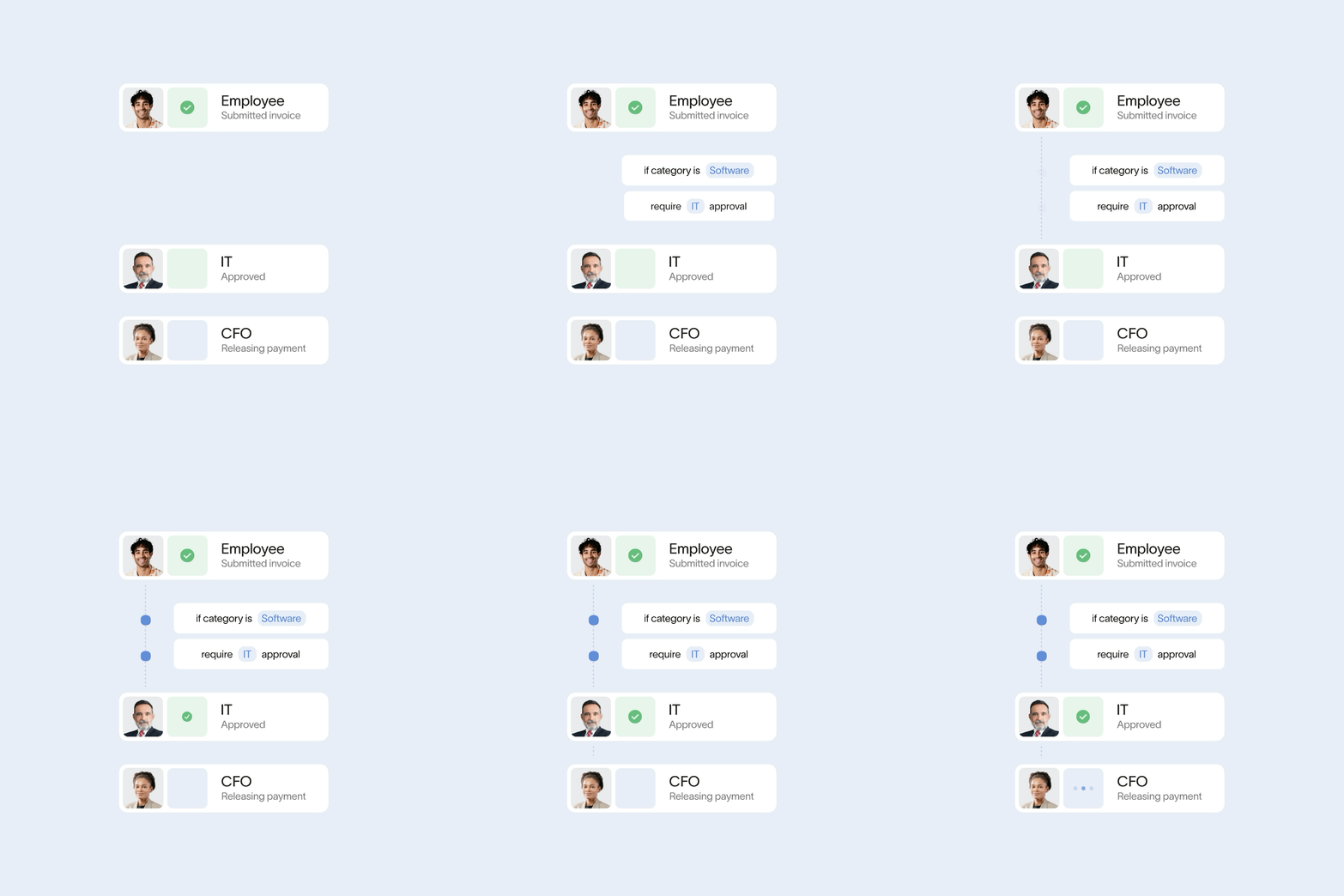
With Ramp Bill Pay, invoices now arrive directly in the platform, are automatically read and digitized via OCR, and are routed to the right approver without anyone having to chase them down. Once approved, payments sync back to NetSuite. The stamps, the check runs, the filing — gone.
Less time on invoices, more time on Oregon’s hospitals
The numbers that followed tell a story of compounding improvement — each automated workflow freeing up time and attention that the team could redirect somewhere more useful.
Today, nearly all of the association's monthly invoices are processed automatically. Jason’s team now touches less than 10% of them.
“Introducing Ramp was a big time-saver in many ways,” says Jason. “It allowed us not to have those bottlenecks of having to get all of the AP done in a weekly check run. Now we can have things approved in the system and have payments issued as approvals are made.”
The contrast with what came before is stark. "Before, our team would spend all day doing data entry and preparing the batches on Monday," says Jason. "Then I'd be in the office on Tuesday and would probably spend a good hour and a half to two hours reviewing, stamping, and mailing things. And then after checks were all mailed, we would have to go and file everything."
"Doing it the old way probably took a good 10 hours per AP batch. Now it just takes a couple of minutes between getting an invoice entered, approved, and processed."
— Jason Hershey, VP of Finance & Accounting
A month-end close that no longer defines the month
Part of what made the old process so disruptive wasn't just the time it consumed — it was the way it fragmented everything around it. "You have all these small disruptions when you get an email from someone that you need to go deal with," says Jason.
Because transactions now code and sync to NetSuite continuously, the books are largely written before close even begins. The team closes up to five days sooner, without adding headcount.
Reimbursements paid in days, not weeks
For Jason, one of the most meaningful changes wasn't about AP at all — it was what happened when an employee needed to get paid back. "That was probably one of the biggest 'aha' moments for me," he says. Employees who previously waited 2 weeks for reimbursement now submit an expense, get manager approval, and receive funds within 1-2 days.
"No paper vouchers or checks need to be printed, and all of that can happen without batching a week's worth of transactions together," says Jason. "Ramp has really streamlined that whole process in a nice way."
An audit that takes minutes, not days
"If you think about our old process, it was all paper-based," says Jason. "We didn't scan all of our invoices, so we kept that paper copy of the invoice and the voucher and the check stub in our filing cabinets in our office." At audit time, that meant manually searching through physical files.
"This year, it was nice to just download everything we needed directly from Ramp and email it to the auditor," he says. "It's a lot faster to find things. We don't have to be in the office or refile things afterward."
What 700 hours back really means
Over three and a half years, the changes compound into a single number: more than 700 hours reclaimed — roughly 17 hours every month that used to disappear into AP processing, receipt matching, reimbursement approvals, and end-of-month reconciliation that now largely handles itself.
That time has gone somewhere useful. "In the last couple of years, we've been really focused on introducing new tools, like putting a new payroll system in place," says Jason. "Now we're working on updating our accounting system."
"Ramp is such a valuable time-saver, especially in an environment where you're maybe a small or one-person finance shop. You can feel a little bit more comfortable that the system is going to help you do those things you're worried about and do it well."
— Jason Hershey, VP of Finance and Accounting
For a lean, mission-focused organization, that's not just operational improvement — it's time returned to Oregon's hospitals, and the communities they serve.


