
- What the GENIUS Act actually regulates
- Key dates finance teams should track
- What this means if you're already using stablecoins
- What the GENIUS Act doesn't do
- How Ramp supports compliant stablecoin payments
A federal framework now governs who can issue stablecoins and how. Here's what that changes for your team as a stablecoin user, not an issuer.
The GENIUS Act, signed into law on Jul 18, 2025, gives stablecoins their first comprehensive federal regulatory framework in the United States. If regulatory uncertainty was the reason you held off on stablecoin payments, that uncertainty has a defined shape now.
This isn't legal advice, and the rules are still being finalized. But the broad strokes are set, and they matter for any finance team evaluating stablecoins for payments or treasury.
What the GENIUS Act actually regulates
The GENIUS Act regulates stablecoin issuers, not your business if you simply hold or send stablecoins through a provider. That distinction gets lost in a lot of coverage, and it changes who carries the compliance burden.
The act requires payment stablecoins to be backed one-to-one by U.S. dollars or other low-risk assets, such as short-term Treasuries. It also sets issuer standards for licensing, foreign issuer treatment, custody, and safekeeping. In practice, the company issuing the stablecoin you use, not your business, is on the hook for reserve audits, licensing, and custody compliance. Your job is choosing an issuer that meets the bar, not meeting it yourself.
Key dates finance teams should track
The GENIUS Act doesn't take effect all at once. Two dates matter most for planning purposes.
Date | What happens |
|---|---|
Jul 18, 2026 | Major rulemaking and reporting deadlines, including issuer treatment, capital and liquidity standards, AML and sanctions rules, and foreign issuer requirements |
Earlier of Jan 18, 2027, or 120 days after final implementing regulations are issued | |
Jul 18, 2028 (three years after enactment) | It becomes unlawful for a digital asset service provider to offer a payment stablecoin to a U.S. person unless it's issued by a permitted issuer |
Flag that last deadline internally. By mid-2028, any stablecoin you use needs to come from a permitted issuer. If you're choosing a stablecoin partner today, ask whether they expect to qualify.
What this means if you're already using stablecoins
If your business already pays vendors or holds operating cash in USDC or USDT, the GENIUS Act doesn't require you to do anything differently today. The compliance burden sits with the issuer.
What it does change is the diligence question. Before the GENIUS Act, "is this stablecoin properly backed" was a question about a company's voluntary attestations. Now it's a question about whether that issuer is on track to meet a federal licensing standard. Worth asking your platform or issuer directly which track they're on.
Separate issuer- and platform-level compliance from your internal controls. If you're using stablecoins through a regulated provider, that provider or issuer should generally handle required anti-money laundering (AML), sanctions, custody, and transaction-monitoring obligations. Your team still needs diligence on the provider, approved-counterparty policies, payment approvals, and an audit trail. This is especially important if you operate in a regulated industry or move funds outside a managed platform. The GENIUS Act doesn't turn every business user into a stablecoin compliance program.
What the GENIUS Act doesn't do
A federal framework for issuers doesn't make stablecoin balances FDIC insured. It doesn't eliminate state-level or international variation. Stablecoin rules still differ by country, and in some jurisdictions, by state. It also doesn't remove your need for vendor diligence, payment controls, and records for stablecoin payments; regulated businesses may still have separate AML or sanctions obligations under other laws. And it doesn't apply retroactively to every provision today: most of the framework phases in through 2026 and 2027.
Treat the GENIUS Act as removing one source of uncertainty, not all of them.
How Ramp supports compliant stablecoin payments
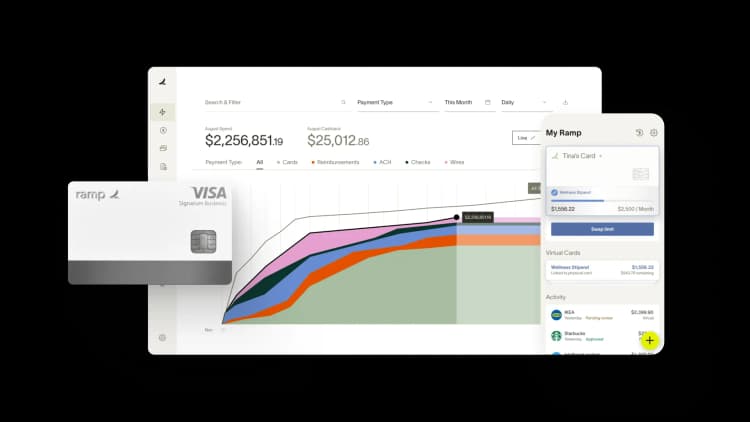
Ramp's stablecoin account runs USDC and USDT payments through the same approval workflows, audit trail, and accounting sync your team already uses for cards and bill pay.
Stablecoins are most useful when they solve a real payment problem, such as faster cross-border settlement, vendor payments, or accounts payable (AP) workflows that need clear approvals and reconciliation.
Learn more about Ramp Stablecoins
This article is for general informational purposes only and doesn't constitute legal, accounting, or financial advice. Confirm current requirements with your own legal counsel before making compliance decisions.

FAQs
Stablecoins were already legal to use before the GENIUS Act. What the act adds is a federal licensing and reserve-backing framework for the companies that issue them, with most provisions phasing in between 2026 and 2027.
It regulates issuers: the companies backing and creating the stablecoin. Businesses using stablecoins for payments aren't subject to the act's issuer reserve and licensing requirements directly. Their own compliance obligations depend on their role: an ordinary business using a regulated provider generally relies on the issuer or platform for AML and sanctions controls, while financial institutions, money services businesses, custodians, or platforms may have their own obligations under other laws.
By Jul 18, 2028, three years after the act's enactment, it becomes unlawful for a digital asset service provider to offer a payment stablecoin to a U.S. person unless it comes from a permitted issuer.
No. The act regulates how issuers back and audit their stablecoins; it doesn't extend FDIC insurance to stablecoin balances. Treat a stablecoin balance differently from an insured deposit account.
Yes. It was signed into law on Jul 18, 2025. What's still pending is implementation: most rulemaking and reporting requirements phase in through 2026, with core provisions taking effect by the earlier of January 18, 2027, or 120 days after final implementing regulations are issued.


“I assumed I would have to choose between speed and control. What I found is that you can have both. A well-designed system takes friction out, for the finance function and for everyone else.”
Justin Webster
CFO, Denver Broncos

“A well-run district should not have to choose between getting work done at the school site and keeping control of the dollars behind it. We're not hiring more people to do more jobs, so we have to be smarter about the process. With Ramp, the purchase, the receipt, and the record stay together from the start. ”
Nick Brizeno
Director of Purchasing, San Marcos Unified School District

“In senior living, scale only works if the communities still feel personal. We needed the back office to carry more of the complexity, not the people serving residents. Ramp helped us build that infrastructure, so the experience in the community could stay human.”
Ryan Cole
CFO, Agemark Senior Living

“AI is moving faster than the finance context around it. Prices change, models change, and the value is not always obvious from an invoice. We needed enough detail to know which bets deserved more investment — and which ones did not.”
Greg Cooley
Controller, AngelList

“Invoices, cards, tokens. The categories change but the principle doesn't: know where the money is going, remove the work around it, and make sure the spend is worth it.”
Maciej Mylik. Finance
ElevenLabs

“We weren’t trying to retrofit an old finance system. We had a blank canvas, and Ramp gave us the foundation to build a global finance function of the future.”
Justin Dourado
Director of Finance, Othership

“There's just no surprises anymore. No more waiting two months to find out how a job did. We know how it's doing as it's happening.”
Erich Kuss
Financial Systems Manager, Infinity Home Services

“More token spend isn’t proof that AI is working. Less isn’t proof that it isn’t. What matters is whether we’re buying the right level of intelligence for the work. Ramp lets us make that judgment in the same place we manage every other type of spend.”
Cody Nutt
Senior Director of Business Systems, Daxko
