Ramp names October 15 National Expense Report Day

- The world’s most outdated office ritual
- History’s first receipt
- Brian’s Office: A live look at inefficiency
- The data behind the day
- A new era: From National Expense Report Day to National Expense Report Remembrance Day
- Join the movement
The world’s most outdated office ritual
Crumpled receipts. Confusing forms. “Please attach documentation” requests. Transaction details you’d never remember. Expense reports are a workplace ritual that should’ve disappeared decades ago.
And yet, billions of hours are still wasted doing them manually — time that could be spent on work that actually matters. The truth is, expense reports are a solved problem. Ramp customers don’t file them manually anymore; automation and AI handle them in real time.
So this year, Ramp is officially calling time on one of the modern office’s most absurd inefficiencies. October 15 is now National Expense Report Day, a holiday created to spotlight (and retire) the grind that is manual expense reporting.
History’s first receipt
The world’s first written record wasn’t a poem or a law — it was a receipt, etched into clay 5,000 years ago. Humanity has since invented running water, electricity, and the internet … but somehow, not a better way to file expenses.
From shoeboxes of receipts to spreadsheets in the 1980s to digital tools in the 2000s, the process barely changed. Employees still hunt for receipts, fill out forms, and wait for approvals.
It’s time to move on from the parchment-and-quill era of finance.

Photo credit: Bloomsbury Auctions
Brian’s Office: A live look at inefficiency
To prove just how absurd manual expense reports have become, Ramp teamed up with Brian Baumgartner (aka everyone’s favorite fictional accountant) for a live NYC stunt: Brian’s Office.
For one day, inside a glass office in Manhattan’s Flatiron Plaza, Brian will do expense reports the old-fashioned way — by hand — and try to keep pace with the 600,000 receipts Ramp automates every single day.
Part comedy, part cautionary tale, Brian’s Office shows what happens when a task long past its expiration date refuses to die.
The data behind the day
New research from The Harris Poll,1 commissioned by Ramp, reveals the toll of manual expense reporting: lost time and lost money.
- 67% of employees who file expense reports lost money in the past year due to missed deadlines or abandoned submissions.
- 68% have lost receipts before submitting.
- 33% spend two or more hours a month filing reports, and 15% spend four or more hours.
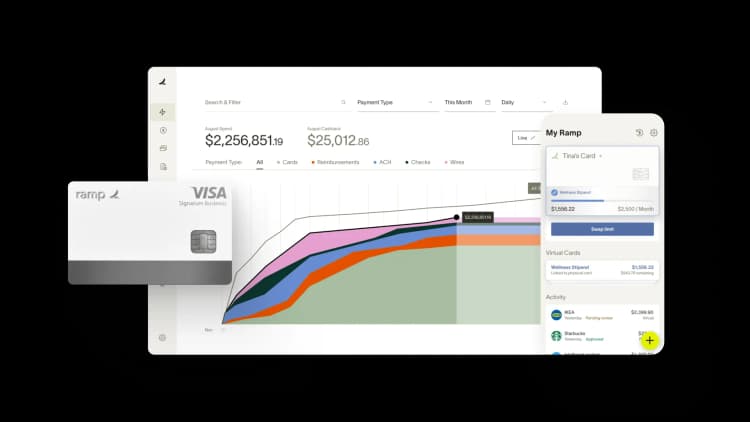
Ramp eliminates expense reports altogether. Every transaction is automatically categorized, matched with its receipt, and approved in real time. No spreadsheets, no follow-ups, no lost weekends.
Finance teams get back their hours to focus on more strategic work. Employees get back their sanity. Companies move faster.
A new era: From National Expense Report Day to National Expense Report Remembrance Day
Ramp’s goal isn’t to make this holiday permanent. It’s to make it obsolete.
Once every company embraces automation, October 15 will evolve into National Expense Report Remembrance Day, a moment to look back at the absurdity of manual expense reporting and celebrate a world where finance teams and employees can finally focus on work that matters.
Join the movement
Here’s how to take part in National Expense Report Day 2025:
- Check out Brian’s Office: Watch highlights of the live NYC stunt on Ramp’s social channels.
- Share your story: Post your funniest or most frustrating expense report fails with #ExpenseReportDay.
- Try a smarter solution: See how Ramp automates away the pain of expense reporting once and for all.
At Ramp, expense reports are history. See how here.
1 Survey Methodology
This survey was conducted online within the United States by The Harris Poll on behalf of Ramp from October 2-6, 2025, among 788 employed adults ages 18+ and older who file expense reports at work. The sampling precision of Harris online polls is measured by using a Bayesian credible interval. For this study, the sample data is accurate to within +/- 4.3 percentage points using a 95% confidence level.


“I assumed I would have to choose between speed and control. What I found is that you can have both. A well-designed system takes friction out, for the finance function and for everyone else.”
Justin Webster
CFO, Denver Broncos

“A well-run district should not have to choose between getting work done at the school site and keeping control of the dollars behind it. We're not hiring more people to do more jobs, so we have to be smarter about the process. With Ramp, the purchase, the receipt, and the record stay together from the start. ”
Nick Brizeno
Director of Purchasing, San Marcos Unified School District

“In senior living, scale only works if the communities still feel personal. We needed the back office to carry more of the complexity, not the people serving residents. Ramp helped us build that infrastructure, so the experience in the community could stay human.”
Ryan Cole
CFO, Agemark Senior Living

“AI is moving faster than the finance context around it. Prices change, models change, and the value is not always obvious from an invoice. We needed enough detail to know which bets deserved more investment — and which ones did not.”
Greg Cooley
Controller, AngelList

“Invoices, cards, tokens. The categories change but the principle doesn't: know where the money is going, remove the work around it, and make sure the spend is worth it.”
Maciej Mylik. Finance
ElevenLabs

“We weren’t trying to retrofit an old finance system. We had a blank canvas, and Ramp gave us the foundation to build a global finance function of the future.”
Justin Dourado
Director of Finance, Othership

“There's just no surprises anymore. No more waiting two months to find out how a job did. We know how it's doing as it's happening.”
Erich Kuss
Financial Systems Manager, Infinity Home Services

“More token spend isn’t proof that AI is working. Less isn’t proof that it isn’t. What matters is whether we’re buying the right level of intelligence for the work. Ramp lets us make that judgment in the same place we manage every other type of spend.”
Cody Nutt
Senior Director of Business Systems, Daxko
