Amex Blue Business Plus requirements: How to qualify

- What is the Amex Blue Business Plus card?
- Amex Blue Business Plus requirements at a glance
- What you need for the Amex Blue Business Plus application
- Amex Blue Business Plus vs. Blue Business Cash
- How to qualify and apply for the Amex Blue Business Plus
- Common reasons applications get denied
- Get a corporate card without a personal credit check
Amex Blue Business Plus requirements come down to good personal credit, an SSN or ITIN, and basic details about your business and income. You don't need a minimum revenue, a registered LLC, or years in business. With a FICO score of 690 or higher and your paperwork ready, you can apply and get a decision in one sitting.
Note: Any cashback percentages, limits, fees, and other figures mentioned in this article are for illustrative purposes only. They do not represent guaranteed or expected rates. Actual terms, credit limits, rewards, and approval criteria vary by card issuer and may change at any time. Readers should verify current details directly with each issuer before applying.
What is the Amex Blue Business Plus card?
The Blue Business® Plus Credit Card from American Express is a no-annual-fee small business credit card that earns Membership Rewards points. It's built for small business owners, freelancers, and sole proprietors who run moderate spend through one card. Amex Blue Business Plus requirements are easier to meet than those for Amex's premium business cards because the card has a $0 annual fee and a preset spending limit.
With the Amex Blue Business Plus card, you earn 2X points on everyday business purchases on the first $50,000 each calendar year, then 1X. You also get a 0% introductory APR on purchases for 12 months, then a 16.99%–28.74% variable APR. Expanded Buying Power lets you spend above your credit limit, with the amount adjusting to your payment history and card use.
The card has a 2.7% foreign transaction fee on each purchase after conversion to US dollars. The card is a revolving credit card, so you can carry a balance and pay interest on it. Amex checks your personal credit, and you're personally liable for what the business charges.
| Feature | What it means for you |
|---|---|
| Annual fee | $0, so the card costs nothing to hold in slow months |
| Rewards rate | 2X Membership Rewards points on the first $50,000 in purchases per calendar year, then 1X |
| Intro APR | 0% on purchases for 12 months from account opening |
| Regular APR | 16.99%–28.74% variable, based on your creditworthiness |
| Foreign transaction fee | 2.7% of each transaction after conversion to US dollars |
| Welcome offer | Varies by applicant, and you see your offer before you accept the card |
If you buy from overseas suppliers or travel often, pair this card with one that has no foreign transaction fee.
Amex Blue Business Plus requirements at a glance
Amex publishes no minimum credit score or revenue for the Blue Business Plus. In practice, approval rests mainly on your personal credit profile and income.
| Requirement | What Amex looks for | Notes |
|---|---|---|
| Credit score | Good personal credit | FICO 690+ is the realistic bar |
| Identification | SSN | ITIN accepted for US residents without an SSN |
| Business structure | Any real business activity | No LLC or corporation needed |
| Tax ID | EIN | Sole proprietors without an EIN can use their SSN |
| Revenue | Annual revenue figure on the application | No cutoff, and $0 is allowed |
| Time in business | Years in business on the application | No minimum, so new businesses can apply |
| Personal income | Total annual income, including investments | Drives approval and your starting limit |
Credit score
Good personal credit, generally a FICO score of 690 or higher, is the realistic bar. Amex has no business cards for poor, thin, or fair credit, including FICO scores from 630 to 689.
Personal credit matters on a business card because Amex underwrites you, the owner. You're personally responsible for the debt, so your credit history is the best evidence Amex has.
Personal identification
An SSN is standard on the application. If you're a foreign national living in the US, you can apply with an ITIN instead.
Business structure and EIN
Sole proprietors, freelancers, and side-business owners can apply, and you don't need an LLC or corporation. Sole proprietors can apply with an SSN, while other business types need an EIN.
Revenue and time in business
Amex asks for annual revenue but sets no cutoff, so a new business can apply with $0 in revenue. There's no minimum time in business either.
Revenue and business history still count, which may affect your initial credit limit even though they aren't approval requirements.
Personal income
Amex asks for total annual income, including investments and non-taxable income like Social Security or disability. You can include all eligible income you can reasonably use to pay your bills.
This number carries heavy weight for both approval and your credit limit. Report every source of income you can document.
What you need for the Amex Blue Business Plus application
Gather these details before you start so you can finish the application in one sitting. Amex asks for business and personal information in two separate parts of the form.
Business details
- Legal business name (and DBA if applicable)
- Business address and phone number
- Industry
- Company structure
- Years in business
- Number of employees, counting yourself
- Annual revenue
- Estimated monthly spend
- EIN, or your SSN if you're a sole proprietor
Personal details
- Full name and home address
- Home and mobile phone numbers
- SSN
- Date of birth
- Total annual income
- Non-taxable income, if applicable
Keep your latest tax return open while you fill in revenue and income. Those figures should match what you've reported to the IRS.
Discover Ramp's corporate card for modern finance
Amex Blue Business Plus vs. Blue Business Cash
The two cards have nearly identical requirements. The main difference is how you earn rewards: Membership Rewards points on the Plus and statement-credit cash back on the Cash.
The Blue Business Cash lists 2% cash back on the first $50,000 in purchases each calendar year, then 1%. Both cards share the same $0 annual fee and 12-month intro APR on purchases.
| Feature | Blue Business Plus | Blue Business Cash |
|---|---|---|
| Annual fee | $0 | $0 |
| Rewards type | Membership Rewards points | Cash back, credited to your statement |
| Rewards rate and cap | 2X on the first $50,000 per calendar year, then 1X | 2% on the first $50,000 per calendar year, then 1% |
| Intro APR | 0% on purchases for 12 months | 0% on purchases for 12 months |
| Approval requirements | Good personal credit, SSN or ITIN, income details | Good personal credit, SSN or ITIN, income details |
Choose the Blue Business Plus if you'll transfer points to airline and hotel partners. Choose the Blue Business Cash if you want cash back with no redemption work.
How to qualify and apply for the Amex Blue Business Plus
You can meet the Amex Blue Business Plus requirements and apply in six steps, and most of the work happens before you open the form.
1. Check your personal credit
Pull your credit report and score before you apply. Dispute any errors, and pay down revolving balances to lower your utilization.
If your score sits below 690, build it up first. Amex has no secured or fair-credit business card to fall back on.
2. Confirm your business qualifies
Make sure you have real business activity, even if it's freelance work or a side business. Decide whether to apply with an EIN or your SSN.
Sole proprietors can use either one. Partnerships and corporations need an EIN.
3. Gather your business and personal information
Collect your revenue, monthly spend estimate, tax ID, and income figures before you open the form. Use accurate numbers, since Amex may ask follow-up questions to verify what you report.
Inflated figures can lead to a limit you can't repay. Stick to numbers you can back up with tax returns or bank statements.
4. Check your approval odds without a credit impact
American Express lets you find out whether you're approved with no credit score impact. A credit check that can affect your personal and business scores happens only if you accept the card.
This step may affect your business credit score in some cases. Read the credit disclosure on the application before you submit.
This apply-first decision differs from American Express business credit card pre-approval. Amex's pre-approval tool covers consumer cards only, so the application itself is your no-impact check for this card.
5. Submit your application and review your offer
Amex can make application decisions in under a minute. If you're approved, you'll see your welcome offer, which varies by applicant, and choose whether to accept the card.
A pending status means Amex needs more time or more information. Check your application for typos, and respond quickly if Amex contacts you.
If you're declined, call the reconsideration line with any context Amex didn't have. Otherwise, wait at least 30 days before applying for another Amex card.
6. Plan your spending for the welcome offer and credit limit
Welcome offers require a set amount of spending within a window, typically the first 3 months. Apply a few weeks before a planned purchase, like equipment or an annual software renewal.
Amex sets your starting credit limit mostly from your personal credit and income. Revenue and business history can move it higher. Expanded Buying Power lets you go above that limit, with the amount adjusting to your card use and payment history.
Spending above your limit is due in full with that month's statement. Don't count on financing anything above your limit.
Common reasons applications get denied
Most denials come down to personal credit, income, or too many recent applications. First-time applicants usually run into one of six problems:
- Credit score below the good range: Amex has no fair-credit business card, so scores from 630 to 689 usually get declined.
- High credit utilization: Large revolving balances relative to your limits signal that you're stretched.
- Recent late payments: A late payment in the past year can outweigh an otherwise strong profile.
- Too many new accounts: Amex approves no more than two credit cards within 90 days.
- Income too low for the credit requested: Amex may decline you or offer a smaller limit if your income can't support your estimated spend.
- Inaccurate application details: Typos or inflated figures can send your application to review or denial.
Amex has no published rule like Chase's 5/24 rule. However, Bankrate reports Amex still limits members to five credit cards at a time.
If you already hold five Amex credit cards, you may need to close one before you apply.
Get a corporate card without a personal credit check
The Blue Business Plus depends on your personal credit, and you're personally liable for every dollar on the card. That works for many sole proprietors. As your company grows, you may want business credit that isn't tied to your own score.
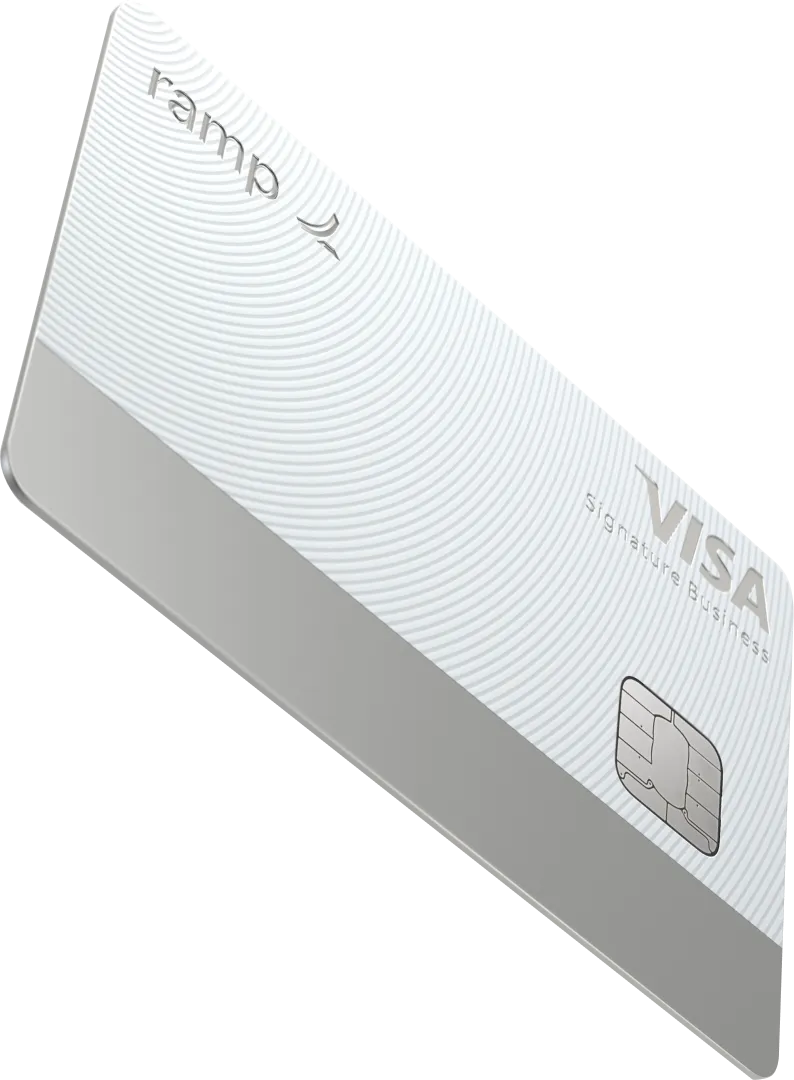
The Ramp Corporate Card gives incorporated US businesses a corporate card with no personal guarantee and no personal credit check. It's a charge card paid from your business bank account each statement period, so there's no interest or APR. You'll need a US entity and a US bank account to apply.
With Ramp, you can:
- Get approved fast: Applications are approved in fewer than 48 hours.
- Spend with more room: Credit limits run up to 20x higher than traditional business credit cards.
- Block out-of-policy spend at the swipe: Issue unlimited physical and virtual cards with controls enforced at the point of swipe, before spend happens.
- Close your books faster: 90% of transactions are auto-coded and synced to your accounting software.
- Earn cashback without points: Ramp offers cashback rewards on purchases, with no points programs or blackout dates.
The median Ramp customer saved 7.5% on expenses in their first year. Try an interactive demo to see how Ramp gives you more spending power without relying on your personal credit.

FAQs
Amex doesn't publish a minimum. In practice, you'll want good personal credit, generally a FICO score of 690 or higher.
Yes, if you have self-employment income. Sole proprietors and freelancers can apply using their SSN, and you don't need an LLC or EIN.
With good credit, Amex business cards are generally considered easy to get. The Blue Business Plus and Blue Business Cash are considered entry-level options because they have $0 annual fees and preset spending limits.
Amex lets you see whether you're approved with no impact on your personal credit score. A credit check happens only if you accept the card, and accepting may affect your personal and business credit scores.
No. Amex asks for annual revenue but doesn't set a cutoff, so new businesses with no revenue can qualify based on personal credit and income. Revenue may affect your starting credit limit.

“I want to trust the people at our sites to buy what they need, when they need it. With everything in Ramp, they have one place to go and one set of rules to follow. And I can see how all of their spending ties back to the contracts that fund their work.”
Marina Peterson
CFO, Wu Yee Children’s Services

“I assumed I would have to choose between speed and control. What I found is that you can have both. A well-designed system takes friction out, for the finance function and for everyone else.”
Justin Webster
CFO, Denver Broncos

“A well-run district should not have to choose between getting work done at the school site and keeping control of the dollars behind it. We're not hiring more people to do more jobs, so we have to be smarter about the process. With Ramp, the purchase, the receipt, and the record stay together from the start. ”
Nick Brizeno
Director of Purchasing, San Marcos Unified School District

“In senior living, scale only works if the communities still feel personal. We needed the back office to carry more of the complexity, not the people serving residents. Ramp helped us build that infrastructure, so the experience in the community could stay human.”
Ryan Cole
CFO, Agemark Senior Living

“AI is moving faster than the finance context around it. Prices change, models change, and the value is not always obvious from an invoice. We needed enough detail to know which bets deserved more investment — and which ones did not.”
Greg Cooley
Controller, AngelList

“Invoices, cards, tokens. The categories change but the principle doesn't: know where the money is going, remove the work around it, and make sure the spend is worth it.”
Maciej Mylik. Finance
ElevenLabs

“We weren’t trying to retrofit an old finance system. We had a blank canvas, and Ramp gave us the foundation to build a global finance function of the future.”
Justin Dourado
Director of Finance, Othership

“There's just no surprises anymore. No more waiting two months to find out how a job did. We know how it's doing as it's happening.”
Erich Kuss
Financial Systems Manager, Infinity Home Services
