

How Othership’s first finance hires built one operation across Canada and the U.S.
“We weren’t trying to retrofit an old finance system. We had a blank canvas, and Ramp gave us the foundation to build a global finance function of the future.”
Director of Finance, Othership

Before Othership had a finance team, it had a horse trough.
In the summer of 2019, co-founder Robbie Bent and a few partners filled one with grocery-store ice in a Toronto backyard. By winter, they’d converted the garage next door into a nightly ritual of sauna, breathwork, and cold plunge that neighbors first mistook for a cult. The New Yorker later called it “the SoulCycle of spas.” Six years on, that ritual has multiplied into locations across Canada and the US, drawing hundreds of visitors a day. People post about screaming, crying, and freezing together the way other cities post about brunch.
Justin Dourado, Othership’s director of finance, had spent the previous four years helping build the finance department at a high-growth company. Will Wang, a senior accountant with an assurance background, brought a close eye for the details that keep a fast-moving business steady. What appealed to both was the unusual combination in front of them: a business built around a shared sauna, breathwork, and cold-plunge ritual — and a lean finance team with room to try new technology and create a better way of operating.
By the time Dourado and Wang joined as Othership’s first two full-time finance hires, the physical experience was scaling faster than the systems behind it. Each location was its own legal entity, some billed in CAD, others in USD. The opportunity to build finance anew excited them; the greater risk was leaving the old process in place.
Before finance could guide growth, it had to be rebuilt
Othership’s finance operation ran the way many fast-growing companies do: by stretching an existing bank process until it stopped stretching. Twenty to thirty payments had to be entered manually every week as locations and entities multiplied.
The practical problem was attribution. A payment would go out, but the system did not make it easy to see which location it belonged to, or to build repeatable approval habits around that distinction. Each payment meant manually tracing the right entity, chasing an approver, verifying vendor banking details, and recording what it was for.
The cultural problem was control. Corporate cards were passed hand to hand. Ship captains, the operators running each location, had no streamlined way to buy the things that make Othership feel like Othership: tea service, hand-dipped incense, and other small programming details that shape each visit.
“Previously, they would have to chase down finance every time the shared cards got blocked at checkout due to reaching the credit limit,” Justin said. “Meanwhile finance would chase the ops team for receipts when closing the books.”
In the background, approval requests lived across inboxes and Slack. Requests could get lost, and when an Amazon charge landed, finance often had no clear record of who bought what, for which location, or why.
Justin and Will had been hired to build the finance function from scratch, and they saw a rare opportunity: create scalable infrastructure that would let finance guide growth instead of simply keeping pace with it.

“Twenty to thirty payments manually through the bank every week isn’t sustainable for a finance team of three. As a lean team looking to scale beyond one location, we knew we had to tackle that early.”
— Will Wang, Senior Accountant, Othership
Build it once, open anywhere
Justin and Will started with a question: how do you build finance for a company expanding across locations, entities, and borders?
Today, QuickBooks sits at the center of Othership’s current finance stack. As the team planned the systems it would add over time, they wanted a long-term partner that could integrate with QuickBooks now and carry payment workflows, approval history, and financial data into the next stage.
Ramp arrived first as a Bill Pay and accounts payable fix. That alone would have been useful. The more consequential decision was choosing a platform that could support operations in both Canada and the United States.
The company’s U.S. expansion had already exposed FX, tax, and reporting challenges in the existing setup. Choosing Ramp across both countries pulled the next changes forward: Justin and Will began planning to move U.S. entities out of QuickBooks Canada, while shifting financial reporting to USD.
From there, the team rolled Ramp out entity by entity. Accounting Agent and AP Agent learned recurring coding and payment-term logic; Omni helped resolve everyday finance questions; and cards with clear guardrails gave ship captains more autonomy to make location-level purchases.
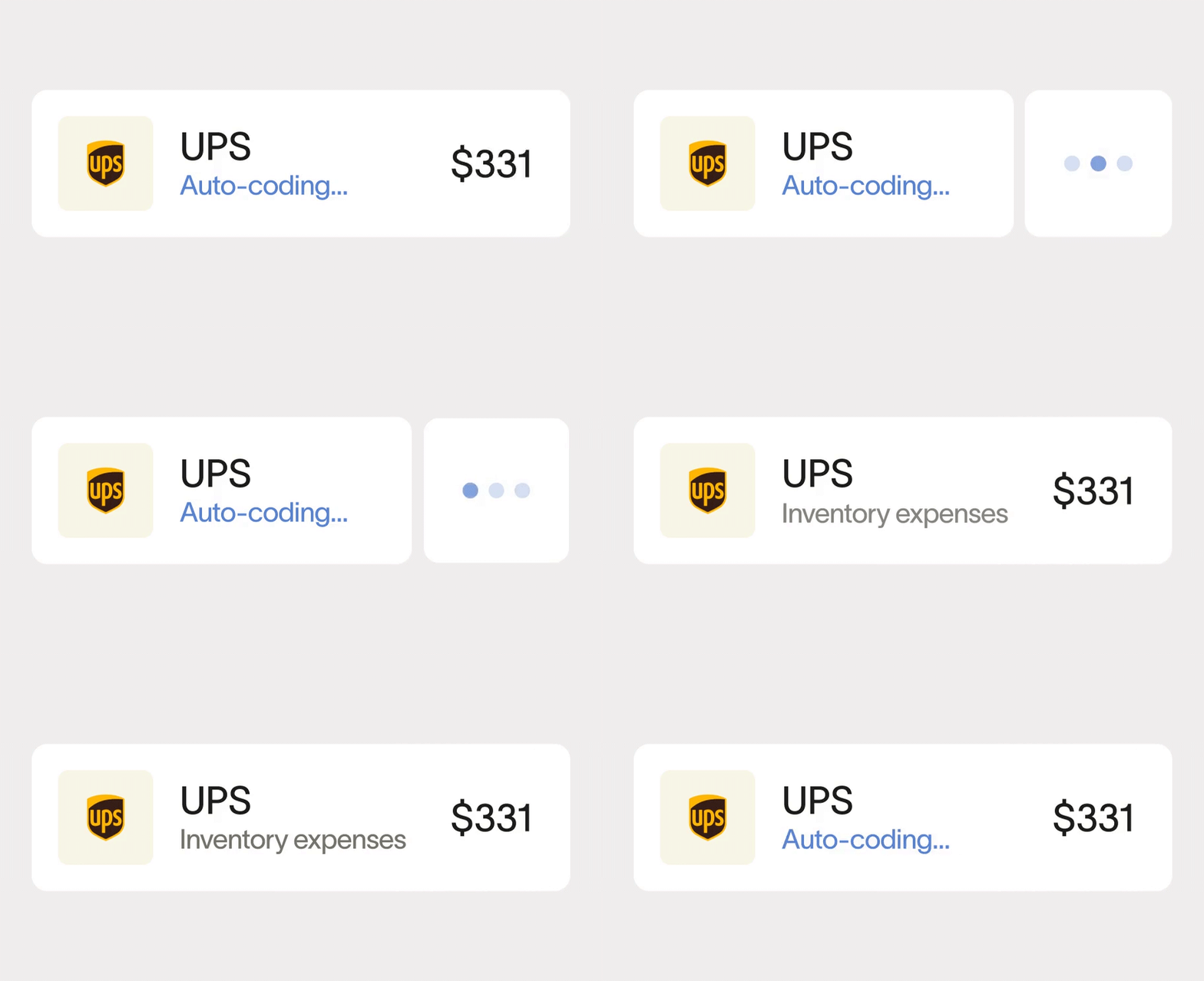
“We took a step back and looked at what the finance team was spending the most time on that was least valuable or could be automated. For us, the big one was coding. Ramp shifted me into more of a reviewer role instead of being the inputter.”
— Will Wang, Senior Accountant, Othership
The next six-figure payment didn’t come with a question mark
Within a few months of Justin and Will standing up the finance function for Othership, the tell wasn’t a dashboard. It was a construction invoice. Othership was already routing six-figure build-out bills for its new locations through the same workflow it used for everyday spend.
“Those payments used to make me anxious. I would recheck vendor bank details and triple-check approvals every time before releasing payment. Now, I can see it all in one place and trust that the right people have signed off.”
— Justin Dourado, Director of Finance, Othership
The payoff showed up quickly. In its first few weeks on Ramp, Othership recovered $10,950 through duplicate-payment prevention.
Meanwhile, Ramp was taking on more of the routine work as well. Ramp collapsed Othership’s AP process into one screen, bringing invoices, approvals, and payment details together for instant review. Smart OCR now automates two in three bills, saving finance an average of 20 hours each month.
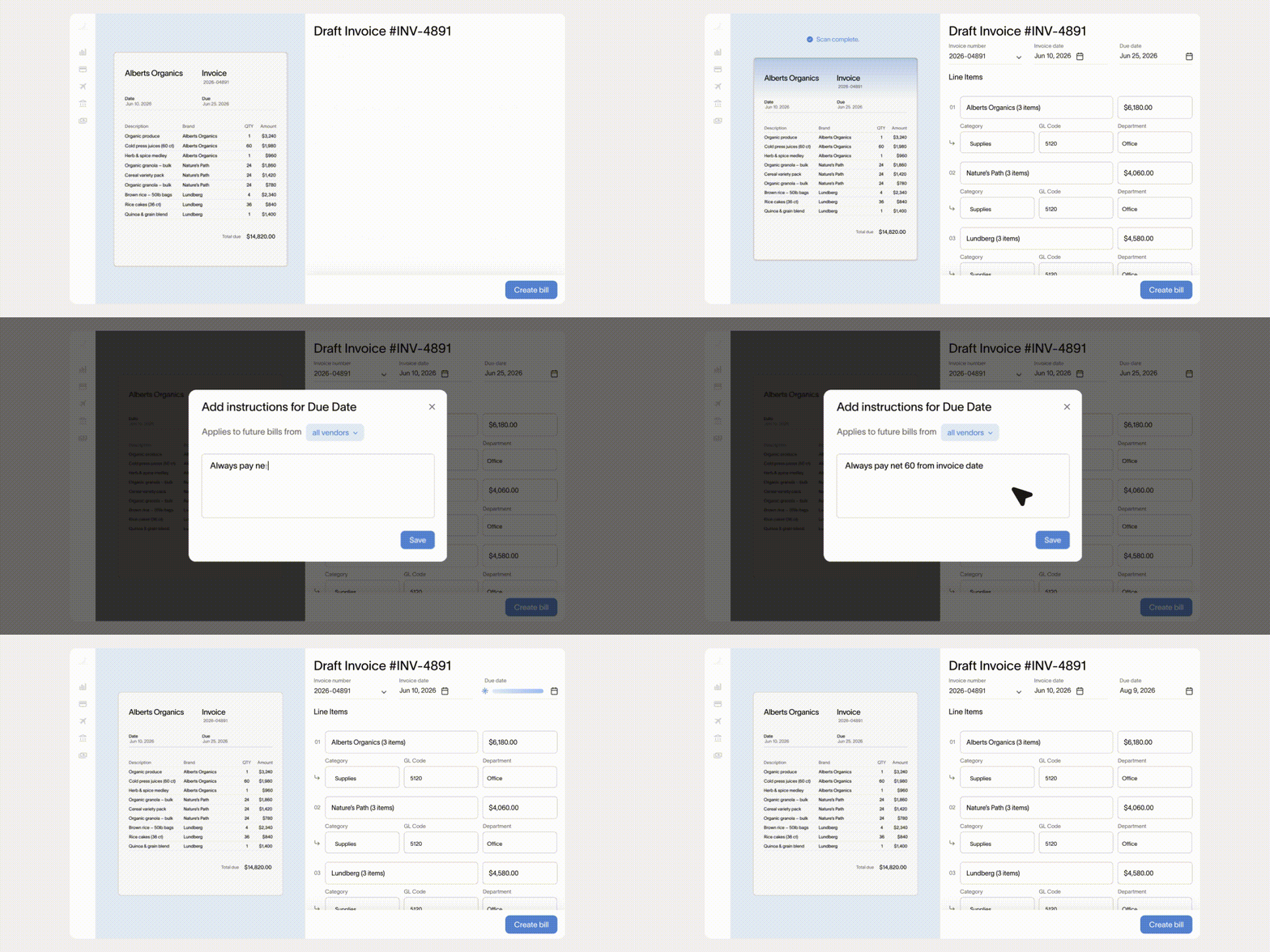
The AP Agent retains vendor-specific payment instructions, so once Will sets a vendor’s net-45 terms, they no longer need to be re-entered with every bill. Ramp’s Accounting Agent automatically codes roughly half of eligible transactions. Across day-to-day spend, 98.9% of card transactions now clear with zero manual touch.
The system gave ship captains something they had not had before: autonomy to make the purchases that up-level their locations. Kelsea, an area manager at Othership, is one of the operators responsible for keeping the day-to-day experience running.
“Yesterday I needed to make a last-minute purchase for the location,” she said. “Before, that would’ve meant asking around and waiting for someone to approve it. Now I can take care of it and keep the day moving.”
Each location now has a financial scorecard, a monthly view of its spending that helps ship captains understand their costs. Finance could now review spending against each location’s scorecard instead of acting as the bottleneck for every decision, the kind of operating model that matters more with every new location.
From a horse trough in a Toronto backyard to four locations across two countries, Othership had built the financial structure to grow without losing what made the first ritual special.
Justin’s playbook for finance that can scale
- Treat the blank canvas as an advantage. Early finance teams do not have to inherit every old workaround. Use that moment to decide which processes the business will need as it grows.
- Standardize before growth turns every exception into a new process. Align entities, reporting, and approvals before new locations add reconciliation work.
- Automate the repeatable work. Move coding and approval follow-up out of the queue so finance can focus on exceptions and decisions.
- Give operators autonomy with context and guardrails. Set the guardrails once, then let local teams make the decisions they are closest to while finance retains the visibility it needs.


