Secured business credit cards: Definition and best options

- What is a secured business credit card?
- How do secured business credit cards work?
- Benefits of a secured business credit card
- Limitations of a secured business credit card
- Secured vs. unsecured business credit cards
- Can you use a secured business credit card for personal use?
- How to get a secured business credit card
- Best secured business credit cards
- Alternatives to secured business credit cards
- How to access business credit without freezing your capital
- How MakeStickers maximized working capital without tying up cash in deposits
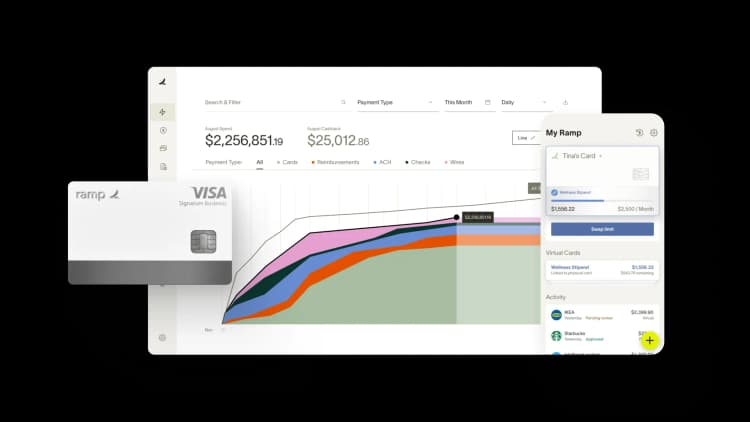
A secured business credit card requires a refundable cash deposit as collateral, and that deposit typically sets your credit limit. For businesses with limited credit history, thin credit files, or past credit setbacks, it's one of the most accessible ways to establish a business credit profile and start building toward unsecured financing.
Unlike prepaid cards, which draw directly from a loaded balance, secured credit cards extend actual revolving credit. Your deposit acts as a safety net for the issuer, not as a spending balance. Only true credit activity gets reported to business credit bureaus, so secured cards help you build the credit history you need for larger financing down the road.
What is a secured business credit card?
A secured business credit card is a credit card that requires a refundable cash deposit as collateral, which typically sets your credit limit. It's designed for businesses with limited or poor credit that need to build a credit history.
Secured cards work like traditional business credit cards in most respects. You make purchases, receive a monthly statement, and pay your balance. The key difference is the upfront deposit, which reduces the issuer's risk and makes approval possible even when your credit profile wouldn't qualify for an unsecured card.
This makes secured cards distinct from prepaid business cards. Prepaid cards pull from a preloaded balance and don't report to credit bureaus. Secured cards extend a real credit line backed by your deposit, and responsible use builds your business credit score over time.
You'll find secured cards used as a stepping stone across industries: startups establishing initial credit, companies recovering from financial setbacks, and entrepreneurs who want to separate business and personal spending without a strong business credit history.
Note: The cashback percentages, limits, fees, and other figures mentioned in this article are for illustrative purposes only. They do not represent guaranteed or expected rates. Actual terms, credit limits, rewards, and approval criteria vary by card issuer and may change at any time. Readers should verify current details directly with each issuer before applying.
Who needs a secured business credit card?
Not every business needs a secured card, but for certain profiles, it's the most practical path to business credit.
- New LLCs and startups without established business credit: If your business is less than 2 years old and has no borrowing history, most unsecured card issuers will decline your application. A secured card gives you a way to start building that track record.
- Business owners with poor personal credit (under 690 FICO): Most business credit cards require a personal guarantee and credit check. If your personal score is below 690, a secured card's deposit-based approval is often your best option.
- Businesses rebuilding after credit setbacks: Late payments, charge-offs, or a bankruptcy on your business credit report make unsecured approvals difficult. A secured card lets you demonstrate responsible use while your older negative marks age off.
- Businesses that have been denied unsecured cards: If you've already been turned down for traditional business credit cards, a secured card offers a realistic alternative without another hard inquiry on your credit report for a product you're unlikely to get
How do secured business credit cards work?
Secured business credit cards follow a straightforward three-part structure: you put down a deposit, receive a credit limit tied to that deposit, and build credit through responsible use.
Security deposit
You'll provide a refundable cash deposit when you open the account, typically ranging from $500 to $5,000 or more depending on the issuer. This deposit is held in a separate account and isn't used to pay your balance.
If you close the account in good standing, you get the full deposit back. Some issuers let you increase your deposit over time to raise your credit limit.
Credit limit
Your credit limit usually equals your deposit amount. A $2,000 deposit gives you a $2,000 credit line.
Unlike prepaid cards, you're borrowing against real credit, which means you receive a monthly statement and carry a balance if you don't pay in full. Keeping your credit utilization below 30% of your limit, ideally below 10%, signals responsible usage to credit bureaus and supports a stronger score.
Building credit
Most secured business card issuers report your payment history to one or more business credit bureaus, including Dun & Bradstreet, Experian Business, and Equifax Small Business. Consistent on-time payments and low balances build your business credit profile over time.
After 6 to 12 months of responsible use, many issuers offer the opportunity to graduate to an unsecured card, returning your deposit and often increasing your credit limit. Confirm your issuer's reporting practices before applying, since not all secured cards report to D&B or all three bureaus.
Benefits of a secured business credit card
Secured cards offer real advantages for you at specific stages of growth.
- Builds your business credit score: Every on-time payment reported to business credit bureaus strengthens your credit profile. Over 12 to 24 months of consistent use, you can establish the credit history needed to qualify for unsecured cards, business loans, and better vendor terms.
- Easier approval than unsecured cards: Because the deposit reduces the issuer's risk, secured cards have lower credit score requirements. Many issuers approve applicants with FICO scores in the 500 to 650 range, where unsecured card applications would be declined.
- Separates business and personal expenses: Using a dedicated business card creates a clean paper trail for tax deductions and simplifies bookkeeping. It also helps maintain the legal separation between your personal and business finances, which is critical for LLCs and corporations.
- Some cards offer rewards: Several secured business cards now offer cash back on purchases. While the rates are typically lower than premium unsecured cards, earning even 1% to 1.5% back on business spending adds up, especially on everyday operational costs.
- Creates a path to unsecured credit: Responsible use of a secured card is one of the most reliable ways to graduate to an unsecured business credit card. Many issuers automatically review your account after 6 to 12 months and offer to upgrade your card, refund your deposit, and increase your credit limit.
Limitations of a secured business credit card
Secured cards come with trade-offs you should weigh before committing.
- Upfront capital requirement: The security deposit, typically $500 to $5,000 or more, freezes your working capital when your business might need it most. For a startup on thin margins, tying up that much cash represents a real opportunity cost.
- Credit limits capped at your deposit: Your purchasing power is limited to the amount you deposit. If you need to make a $10,000 equipment purchase but your deposit is $2,000, the card won't cover it.
- Higher interest rates and fees: Despite requiring collateral, many secured cards charge APRs above 20% and add annual fees, maintenance fees, or employee card fees. These costs erode the value of the card, especially if you carry a balance.
- Limited rewards programs: Rewards on secured cards are modest compared to unsecured alternatives. Sign-up bonuses are rare, cash-back rates are lower, and business management tools are typically minimal.
The core trade-off is straightforward: you're locking up cash to access credit that costs more and offers less than what you'd get with an unsecured card. If you can't qualify for unsecured credit yet, that trade-off makes sense. If you have other options, it's worth exploring alternatives that keep your capital working.
Secured vs. unsecured business credit cards
Choosing between a secured and unsecured business credit card depends on your credit profile, available capital, and business goals. Here's how the two compare across the factors that matter most.
| Factor | Secured business credit card | Unsecured business credit card |
|---|---|---|
| Deposit required | Yes, refundable cash deposit (typically $500–$5,000+) | No deposit required |
| Credit score needed | Lower threshold (often 500–650 FICO) | Higher threshold (typically 670+ FICO) |
| Typical credit limit | Equal to deposit amount | Based on creditworthiness, often $5,000–$50,000+ |
| Rewards quality | Basic cash back (0%–1.5%) | Premium rewards, sign-up bonuses, and category multipliers |
| Annual fees | $0–$49 typical | $0–$250+, offset by stronger rewards |
| Best for | Building or rebuilding credit | Established businesses with good credit |
If your business has a FICO score above 670 and at least 2 years of operating history, you'll likely qualify for an unsecured card with better rewards, higher limits, and no capital locked in a deposit. If you're below that threshold, a secured card is the more practical starting point.
For a deeper comparison, see our guide on secured vs. unsecured business credit cards.
Can you use a secured business credit card for personal use?
While it's not illegal to use a secured business credit card for personal expenses, it will likely violate the terms and conditions of your card agreement. This can come with serious consequences, like penalties, the loss of certain benefits like reward points earned on business expenses, or cancellation of the card.
In the case of an LLC or a corporation, using a business credit card for personal expenses can undermine the legal separation between the business and the individual. This separation is crucial for maintaining limited liability status, and breaching it could expose personal assets to business liabilities.
Keep business and personal spending separate to protect your liability shield and card benefits.
How to get a secured business credit card
Applying for a secured business credit card follows a clear six-step process. Having the right documentation ready and choosing the right issuer upfront saves time and increases your chances of approval.
1. Research potential card issuers
Begin by identifying credit card issuers that offer secured business credit cards so that you can compare their terms. Look for cards with no annual fees or foreign transaction fees, good rewards programs, and relatively low APR or 0% introductory APR.
2. Check credit reporting practices
Confirm that the issuer reports to business credit bureaus such as Experian Business, Equifax Small Business, and Dun & Bradstreet. Regular reporting is crucial as it makes sure that your business's credit activities are accurately reflected in its credit reports, helping you build a strong credit profile.
3. Gather required documentation
Prepare necessary documents that may include business financial statements, tax identification numbers, business licenses, and personal identification. Having these documents ready can speed up the application process.
4. Complete the application
Apply for the card either online or in person, depending on the issuer's process. Provide accurate information about your business and personal finances as required. This step typically involves detailing your business's financial health and demonstrating the stability and legality of your operation.
5. Submit your security deposit
Once approved, you'll need to pay a security deposit. This deposit sets your credit limit and is held by the credit card issuer as collateral against your spending. Make sure the deposit amount is within your budget while still providing enough credit to be useful for business expenses.
6. Activate and manage your card
After your account is set up and your card is received, activate it following the issuer's instructions. Start using your card for business-related expenses.
It's crucial to manage the card responsibly by making on-time payments and keeping balances low relative to your credit limit. This will help you improve your credit score and qualify for an unsecured credit card in the future.
Best secured business credit cards
The secured business credit card market is small compared to unsecured options, but several issuers offer competitive products. Here's a closer look at the top options available.
Bank of America Business Advantage Unlimited Cash Rewards Mastercard Secured
This is the most widely recommended secured business card and the only option from a major national bank with a dedicated secured business product.
- Annual fee: $0
- APR: 26.74% variable
- Minimum deposit: $1,000
- Rewards: Unlimited 1.5% cash back on all purchases
- Key benefits: No annual fee, unlimited cash-back rate competitive with many unsecured cards, reports to major business credit bureaus, access to Bank of America's Preferred Rewards for Business program for boosted cash-back rates
- Drawbacks: $1,000 minimum deposit is higher than some alternatives, requires a personal guarantee
- Best for: Businesses that want strong rewards while building credit
Valley Bank Visa Secured Business Credit Card
A regional option that offers a lower barrier to entry than the Bank of America card.
- Annual fee: $0
- APR: 0% intro APR for 6 months, then 14.45%–25.75% variable
- Minimum deposit: 110% of your credit limit, up to $25,000
- Rewards: 1% unlimited cash back on all purchases
- Key benefits: No annual fee, 0% intro APR for 6 months, reports to business credit bureaus, high maximum credit limit
- Drawbacks: Requires in-person application, limited to Valley Bank's service area (AL, CA, FL, NJ, NY)
- Best for: Businesses in Valley Bank's footprint that want an intro APR period and cash back while building credit
First National Bank of Omaha Business Edition Secured Mastercard
A solid middle-ground option from a well-established community bank.
- Annual fee: $39
- APR: 24.24% variable
- Minimum deposit: $2,000–$10,000
- Rewards: None standard; some versions offer rewards
- Key benefits: Reports to business credit bureaus, FNBO has a long track record with small business lending, potential for credit limit increases with additional deposits
- Drawbacks: Higher minimum deposit, annual fee, no rewards on the base product
- Best for: Businesses comfortable with a higher deposit that want a relationship with a business-focused lender
Capital One Quicksilver Secured Cash Rewards Credit Card
Technically a personal card, but frequently used by sole proprietors and small business owners for business expenses. Worth considering if you can't qualify for a dedicated business secured card.
- Annual fee: $0
- APR: 28.99% variable
- Minimum deposit: $200
- Rewards: 1.5% unlimited cash back, plus a one-time cash bonus after meeting spending requirements
- Key benefits: Lowest minimum deposit on this list, competitive cash-back rate, no annual fee, automatic credit line review for graduation to unsecured card
- Drawbacks: Personal card, so it won't build your business credit profile at D&B or Experian Business. Reports to personal credit bureaus only.
- Best for: Sole proprietors who need personal credit building alongside their business spending
Truist Enjoy Cash Secured Credit Card
Another personal card option with a straightforward cash-back structure.
- Annual fee: $0
- APR: 26.74% variable
- Minimum deposit: $400
- Rewards: 3% on gas and EV charging, 2% on utilities and groceries (combined $1,000 monthly cap), 1% on everything else
- Key benefits: Flexible deposit range, competitive cash-back rate, no annual fee (if confirmed), potential for automatic upgrade to unsecured
- Drawbacks: Personal card that won't build business credit. Limited branch availability depending on region.
- Best for: Business owners in Truist's footprint who want cash-back rewards while building personal credit
Alternatives to secured business credit cards
A secured card isn't your only path to business credit. Depending on your business's financial profile, one of these alternatives may be a better fit:
- Unsecured business cards for fair credit: If your personal FICO score is between 630 and 690, you may qualify for an unsecured business card with basic rewards and no deposit. These cards typically offer lower credit limits, but you keep your capital free.
- Corporate charge cards: Some corporate card providers evaluate your business's revenue and bank balances instead of your personal credit score. There's no personal guarantee, no credit check, and no deposit required.
- Business debit cards: A business debit card linked to your checking account gives you a payment tool with no credit check and no deposit. The trade-off: debit cards don't build your business credit profile, since there's no borrowing activity to report.
- Business credit-building services: Some services establish trade lines or vendor accounts that report to business credit bureaus. These can build your D&B or Experian Business profile without requiring a credit card.
How to access business credit without freezing your capital
While secured business credit cards can help establish credit, they present significant trade-offs that may not align with your growth goals. Each option requires locking up valuable capital as collateral, imposes high interest rates, and offers limited rewards, creating barriers rather than accelerating your business's potential.
If you're focused on smart financial management and growth, Ramp offers a compelling alternative that eliminates these compromises. Unlike secured cards that tie up your working capital, Ramp's business charge card qualifies you based on your company's financial health, not your personal credit score.
When comparing options for your business, you'll find Ramp provides distinct advantages:
- No security deposit required: Ramp evaluates your business based on factors like revenue and capital in the bank, keeping your cash accessible for critical investments
- Higher credit limits: Access credit limits aligned with your business's true financial capacity, not arbitrary deposit-based restrictions
- Cost-saving features: You save an average of 7.5% through built-in tools that identify redundant subscriptions and reduce unnecessary spending
- Integrated software platform: Ramp combines cards, expense management, bill payment, accounting, and reporting in a single system, eliminating manual reconciliation
Ramp is particularly valuable if you're looking to maximize cash flow, reduce administrative overhead, scale efficiently, or gain deeper insights into spending patterns. With Ramp, you gain immediate access to credit while keeping your capital working where it matters most: growing your business.
How MakeStickers maximized working capital without tying up cash in deposits
Before switching to Ramp, MakeStickers faced the exact challenge that secured business credit cards create: tying up valuable working capital. The company had fragmented banking relationships with cash sitting in 0% interest accounts across multiple institutions, while managing credit cards at four different issuers. Accounting Manager Mike Rizzo explains that growing their cash reserves meant "it would be foolish to park large sums in a 0% interest account" while missing opportunities to earn returns and maintain liquidity.
Ramp enabled MakeStickers to access business credit without freezing capital in security deposits. Instead of locking up working capital as collateral, Ramp qualified them based on their business's financial health and allowed them to earn 2.5% on their operating cash. This approach gave them both credit access and capital optimization, maximizing float by paying bills from the same account that earns returns.
Ramp's capital-preserving approach resulted in:
- No security deposits required while maintaining full access to business credit
- 2.5% earnings on operating cash instead of 0% returns from traditional banks
- Free access to working capital by optimizing payment timing and float
- Consolidated systems that eliminated the need for multiple credit card issuers
- 8–10 hours per week saved from streamlined cash and credit management
For a growing e-commerce business, preserving working capital was essential for scaling operations. Rather than freezing cash in security deposits, MakeStickers could invest in growth while still accessing credit. As Mike puts it, "It's great to be able to maximize earnings on our operating cash, and also maximizing float by paying bills from that same account."
1. Ramp Business Corporation is a financial technology company and is not a bank. Bank deposit services provided by First Internet Bank of Indiana, Member FDIC.
Get up to 2.5% in the form of annual cash rewards on eligible funds in your Ramp Business Account. Cash rewards are paid by Ramp Business Corporation and not by First Internet Bank of Indiana, Member FDIC. Cash rewards are subject to change. See the Business Account Addendum for more information.

FAQs
Bank of America is the only major issuer with a dedicated secured business credit card (the Business Advantage Unlimited Cash Rewards Mastercard Secured). Regional banks and credit unions like Valley Bank, First National Bank of Omaha, and Sound Credit Union also offer secured business cards.
Yes, but most issuers require a personal credit check and personal guarantee, even for LLCs. If the LLC owner has limited or poor personal credit, a secured business credit card is often the most accessible option. Some corporate cards evaluate the business's finances instead of personal credit.
Most secured business credit card applications require both an EIN and a personal credit check. True EIN-only business cards without a personal guarantee are rare and typically limited to corporate cards from fintech companies that evaluate business revenue and bank balances instead.
Secured business credit cards are generally the easiest to qualify for because the security deposit reduces the issuer's risk. Among secured options, cards with lower minimum deposits (as low as $200–$500) have the lowest barrier to entry.
Not all do. Before applying, confirm the issuer reports to major business credit bureaus like Dun & Bradstreet, Experian Business, and Equifax Small Business. Reporting to these bureaus is essential if your goal is building a business credit profile.


“I assumed I would have to choose between speed and control. What I found is that you can have both. A well-designed system takes friction out, for the finance function and for everyone else.”
Justin Webster
CFO, Denver Broncos

“A well-run district should not have to choose between getting work done at the school site and keeping control of the dollars behind it. We're not hiring more people to do more jobs, so we have to be smarter about the process. With Ramp, the purchase, the receipt, and the record stay together from the start. ”
Nick Brizeno
Director of Purchasing, San Marcos Unified School District

“In senior living, scale only works if the communities still feel personal. We needed the back office to carry more of the complexity, not the people serving residents. Ramp helped us build that infrastructure, so the experience in the community could stay human.”
Ryan Cole
CFO, Agemark Senior Living

“AI is moving faster than the finance context around it. Prices change, models change, and the value is not always obvious from an invoice. We needed enough detail to know which bets deserved more investment — and which ones did not.”
Greg Cooley
Controller, AngelList

“Invoices, cards, tokens. The categories change but the principle doesn't: know where the money is going, remove the work around it, and make sure the spend is worth it.”
Maciej Mylik. Finance
ElevenLabs

“We weren’t trying to retrofit an old finance system. We had a blank canvas, and Ramp gave us the foundation to build a global finance function of the future.”
Justin Dourado
Director of Finance, Othership

“There's just no surprises anymore. No more waiting two months to find out how a job did. We know how it's doing as it's happening.”
Erich Kuss
Financial Systems Manager, Infinity Home Services

“More token spend isn’t proof that AI is working. Less isn’t proof that it isn’t. What matters is whether we’re buying the right level of intelligence for the work. Ramp lets us make that judgment in the same place we manage every other type of spend.”
Cody Nutt
Senior Director of Business Systems, Daxko
