Top 7 Mercury Bank alternatives for startups in 2026

- Why consider a Mercury Bank alternative?
- Comparing Mercury Bank competitors
- Ramp
- Brex
- Rho
- Bluevine
- Novo
- Relay
- Airbase by Paylocity
- How to choose the right Mercury alternative for your startup
- Why Ramp is the best Mercury alternative for businesses

Mercury works well when you're just getting started, but growing businesses often hit friction points that basic banking can't solve. Whether you're running into spending limits, struggling with manual workflows, or need better tools for a scaling finance team, there are strong alternatives worth evaluating.
Note: The cashback percentages, limits, fees, and other figures mentioned in this article are for illustrative purposes only. They do not represent guaranteed or expected rates. Actual terms, credit limits, rewards, and approval criteria vary by card issuer and may change at any time. Readers should verify current details directly with each issuer before applying.
Why consider a Mercury Bank alternative?
Mercury has earned its reputation as a clean, founder-friendly banking platform. But as your business grows, you may find yourself working around its limitations rather than with it. Here are the most common pain points that push startups to explore other options.
Scalability limitations
Mercury handles early-stage banking well, but it lacks the advanced spend controls, higher credit limits, and multi-entity support that scaling companies need. Once you're managing multiple departments or subsidiaries, you'll likely outgrow what Mercury offers out of the box.
Global payment constraints
If you're paying international contractors or vendors, Mercury's multi-currency capabilities are limited. International wire fees tend to run higher than dedicated alternatives, and you won't find robust local payment rails for most countries.
Integration gaps
Mercury has fewer native integrations with ERPs and accounting software such as NetSuite or Sage. Finance teams often end up building manual workarounds or relying on third-party connectors to keep their books in sync, adding time and error risk to every close.
Customer support concerns
Some users report slower response times when issues arise, especially outside standard business hours. If you need a dedicated account manager or faster resolution for time-sensitive payment problems, alternatives with more hands-on support may be a better fit.
Comparing Mercury Bank competitors
Before diving into the details, here's a quick overview of how the top Mercury alternatives stack up.
| Provider | Best for | Key strengths | Pricing model |
|---|---|---|---|
| Ramp | Expense control and automation | Corporate cards, cashback, bill pay automation | Free + Premium tiers |
| Brex | Venture-backed startups | High-limit cards, cash management, venture debt | Free + Premium tier |
| Rho | High-growth with AP/AR needs | Integrated banking + AP automation | Free + Premium tier |
| Bluevine | High-yield checking | Competitive APY on deposits, lines of credit | Free |
| Novo | Freelancers and solopreneurs | No fees, Stripe/Shopify integrations | Free |
| Relay | Cash flow management | Multiple checking accounts, envelope budgeting | Free + Pro tier |
| Airbase | Mid-market expense management | Procurement, AP automation, spend controls | Custom pricing |
Ramp

Ramp is an all-in-one financial operations platform designed to empower businesses with smarter, faster, and more efficient financial management. By combining AI-driven insights, corporate cards with built-in controls, and automation tools, Ramp streamlines expense tracking, vendor payments, accounting processes, and more.
Trusted by over 70,000 companies, ranging from startups and small businesses to mid-sized and large enterprises, Ramp has become the ultimate finance platform. Ramp has saved their businesses a total of over $12 billion and 27.5 million hours—and these savings have tripled year-over-year.
With Ramp, you gain unparalleled visibility into your spending, enabling better decision-making and reducing inefficiencies across your financial operations. Whether you're scaling a startup or managing a large enterprise, Ramp is a top alternative for Mercury, designed to grow with you, saving time and resources at every step.
Here's a breakdown of Ramp's key features:
Ramp features
- Corporate cards: Physical and virtual cards with customizable spend limits, category restrictions, and real-time controls that prevent out-of-policy spending before it happens. Ramp cards work in over 200 countries and support transactions in 40 currencies.
- Expense automation: AI-powered receipt matching and expense categorization eliminate manual data entry. Ramp auto-generates receipts, flags non-compliant expenses, and lets your team submit expenses through SMS, mobile app, or integrations with Gmail, Lyft, and Amazon.
- Bill pay: Automated accounts payable workflows handle vendor payments, approval routing, and scheduling, so you spend less time chasing invoices
- Vendor management and price intelligence: Using crowd-sourced data from millions of transactions, Ramp provides insights into software costs, helping you negotiate better deals and avoid overpaying
- Accounting sync: Direct integrations with QuickBooks, NetSuite, Xero, Sage, and 200+ other enterprise resource planning (ERP) and accounting systems. Smart accounting tools auto-code transactions based on receipts, reducing manual entry errors and speeding up your monthly close.
- Copilot: Ramp's AI assistant provides detailed transaction data, answers financial questions, suggests cost reductions, and automates complex tasks like setting up workflows and generating reports
- Global reach: Ramp supports local issuing and debiting in 33 countries, making it ideal if you deal with global payments
- Cashback rewards: Ramp offers cashback on spending, allowing you to reinvest savings into growth
Why finance teams choose Ramp vs. Mercury
Mercury is a banking platform. Ramp is a financial operations platform—and that's a meaningful difference.
Mercury helps you hold and move money. Ramp helps you control how money gets spent in the first place. With Ramp, you enforce spending policies before purchases happen through card-level controls, approval workflows, and category restrictions. Mercury doesn't offer that level of proactive spend management.
Ramp also automates the work that comes after spending: receipt matching, expense categorization, bill payments, and accounting sync. With Mercury, you'd need to bolt on separate tools to handle those workflows. Ramp replaces that patchwork with a single platform and offers cashback on purchases.
Ramp pricing
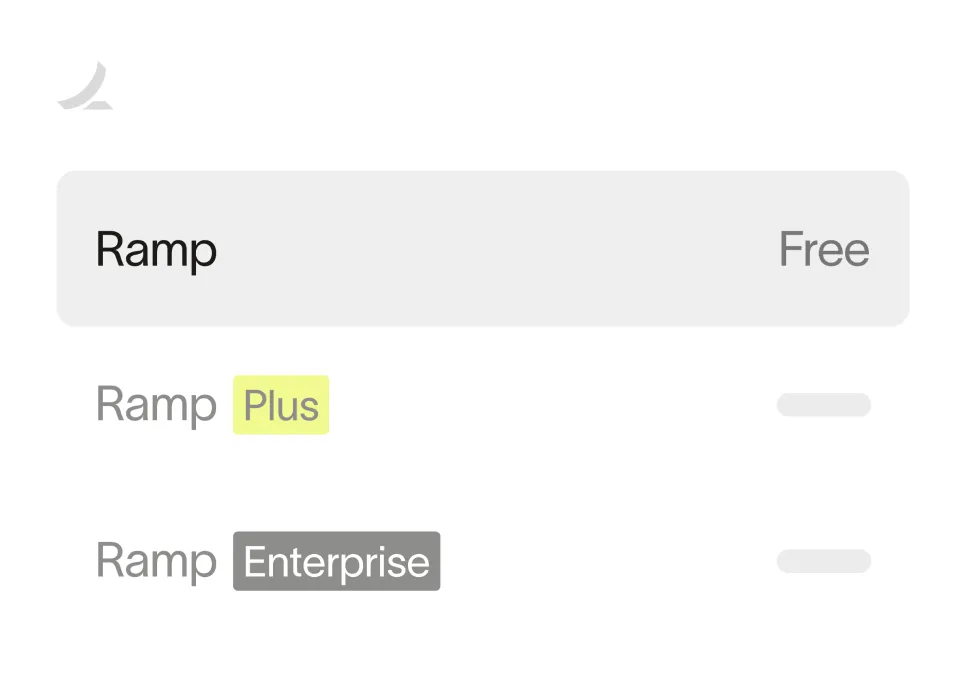
Ramp’s platform is free, with no subscription fees for core features including unlimited corporate cards, accounts payable automation, accounting, and procurement. Ramp earns revenue from interchange, so there's no cost to you. Ramp Plus adds advanced features for $15 per user per month, and Ramp Enterprise pricing requires a custom quote.
For a detailed comparison of Ramp against Mercury, refer to Ramp vs. Mercury.
Ready to take control of your finances?
Learn about Ramp's pricing plans and start saving today.
Brex

Brex is a financial platform built specifically for venture-backed startups that need high credit limits and a startup-friendly ecosystem. It combines corporate cards, business accounts, and expense management into a single platform designed around the needs of funded companies.
Brex features
- Corporate cards: High credit limits based on your cash balance, not personal credit scores. Ideal for startups with significant funding but limited credit history.
- Business accounts: FDIC-insured through partner banks, with the ability to hold and manage cash across multiple accounts
- Expense management: Receipt tracking, policy enforcement, and automated categorization to keep spending organized
- Venture debt: Access to additional financing products and startup perks like AWS credits, which can offset early infrastructure costs
Mercury vs. Brex comparison
Brex and Mercury both target startups, but they serve different needs. Brex offers significantly higher card limits and a richer ecosystem of startup perks—think credits for cloud services, recruiting tools, and more. Mercury is simpler and better suited for basic banking needs like holding deposits and making transfers.
The trade-off: Brex typically requires a minimum cash balance and caters primarily to VC-backed companies. If you're bootstrapped or pre-revenue, Mercury's lower barrier to entry may still make more sense.
Brex pricing
Brex's Essentials tier is free and covers core card and expense features. The Premium tier adds advanced controls, approval workflows, and integrations for a monthly per-user fee.
Brex limitations
- Minimum cash balance requirements can exclude bootstrapped or early-revenue startups
- Primarily designed for VC-backed companies, so the feature set may not align with every business model
- Less useful as a standalone banking platform compared to Mercury or Bluevine
Ready to take control of your finances?
Learn about Ramp’s pricing plans and start saving today.
Rho

Rho combines corporate banking, treasury management, and AP automation into one platform. It's a strong fit for high-growth businesses that want to centralize their financial operations without stitching together multiple tools.
Rho features
- Business checking: FDIC-insured accounts with competitive yield on deposits, so your idle cash works harder
- Treasury management: Higher yields on cash reserves through Rho's treasury services, a direct alternative if you're looking for better returns than Mercury offers on deposits
- AP automation: Automated bill pay with approval workflows, supporting ACH, checks, and wire payments. Schedule, approve, and pay vendors from a single dashboard.
- Corporate cards: Integrated with banking for unified cash management, with customizable spending controls that tie directly to your budget
- Financial reporting: Real-time reporting and insights that integrate with QuickBooks and NetSuite for easier bookkeeping
Why users prefer Rho over Mercury
Rho's biggest advantage is that it combines banking with finance automation in one place. With Mercury, you'd need separate tools for AP, expense management, and treasury optimization. Rho handles all of that natively, which means fewer integrations to manage and a more unified view of your cash position.
Rho also offers competitive treasury yields on deposits, which can make a meaningful difference if you're sitting on significant cash reserves between funding rounds.
Rho pricing
Rho offers free checking accounts. Premium features such as advanced AP automation and treasury management may carry additional costs depending on your usage and company size.
Rho limitations
- Smaller ecosystem and less brand recognition than Mercury or Ramp
- Fewer third-party integrations, which may require workarounds for niche tools
- Treasury features are most valuable for companies with significant cash on hand
Bluevine

Bluevine is a business banking platform that stands out for its high-yield checking account and built-in access to credit. It's a strong choice if you're a cash-heavy small business that wants your deposits earning competitive interest without jumping through hoops.
Bluevine features
- High-yield checking: Bluevine's business checking account offers up to 3% APY on balances up to $250,000
- Lines of credit: Access up to $250,000 in working capital without a separate application process, and applying won't affect your personal credit score
- Bill pay: Basic payment capabilities for handling vendor invoices and recurring expenses
- Cashback: The Business Cash Back Mastercard provides unlimited cashback on purchases with no annual fee
- Integrations: Connects with QuickBooks Online and other accounting tools, allowing you to manage accounts payable and receivable from one platform
- Security: Two-factor authentication, data encryption, and text alerts for suspicious activity, plus FDIC-insured deposits
Why users prefer Bluevine over Mercury
Bluevine's APY on checking deposits is the better choice if you keep substantial cash on hand and want it earning interest. The built-in line of credit is also a differentiator. Mercury doesn't offer direct lending products, so you'd need to go elsewhere for working capital.
For cash-heavy businesses that prioritize yield and access to credit over advanced spend management tools, Bluevine delivers more value per dollar deposited.
Bluevine pricing
No monthly fees on checking accounts. No minimum balance requirements. Unlimited transactions and free standard ACH transfers.
Bluevine limitations
- Limited expense management features—you won't get the spend controls or automation that platforms like Ramp provide
- Less startup-focused than Mercury; better suited for established small businesses
- Basic spend controls compared to dedicated financial operations platforms
Novo

Novo is a no-frills business banking platform built for freelancers and solopreneurs who want simple, fee-free banking without the complexity of a full financial operations suite.
Novo features
- Free business checking: No minimum balance, no monthly fees, and no hidden charges. Set up an account in minutes.
- Invoicing: Built-in invoicing tools let you create and send customized invoices directly from your account—no extra software needed
- Integrations: Native connections with Stripe, Shopify, PayPal, and QuickBooks make it easy to sync your payment and accounting workflows
- Mobile app: A clean, user-friendly interface for managing your banking on the go
- Novo Boost: Accelerates Stripe payment processing, plus Express ACH payments for faster access to funds
- Money management: The Reserves feature lets you automatically allocate funds for taxes, future purchases, or other obligations, reducing the need for manual tracking
- Safe banking: FDIC-insured deposits up to $250,000 through Middlesex Federal Savings, with bank-grade encryption and Mastercard's Zero Liability and ID Theft Protection
Mercury vs. Novo comparison
Novo and Mercury both offer clean digital banking experiences, but they're designed for different stages of business. Novo is simpler and purpose-built for freelancers and solopreneurs who need straightforward checking, invoicing, and payment integrations. Mercury offers more advanced features for growing startups, things like team management, API access, and treasury tools.
If you're a solo operator or running a very small business, Novo gives you everything you need without the complexity. If you're building a team and need more sophisticated financial tools, Mercury has the edge.
Novo pricing
Completely free—no monthly fees, no minimum balance requirements, no hidden charges.
Novo limitations
- Basic features only; not designed for businesses with multiple team members or complex financial needs
- No corporate card offering, which means no proactive spend controls
- Minimal expense management capabilities beyond basic transaction tracking
- Limited to very small businesses and solo operations
Relay

Relay is a banking and money management platform designed for businesses that take a hands-on approach to cash flow. Its multiple-account structure makes it especially popular with businesses using profit-first budgeting methodology.
Relay features
- Multiple checking accounts: Create up to 20 individual checking accounts to allocate cash for taxes, payroll, operating expenses, and savings, all without opening separate bank accounts
- Profit-first budgeting: Envelope-style budgeting built directly into your banking, so you can segment funds by purpose and always know where your money is going
- Fast onboarding: Quick account setup with no account fees, overdraft fees, or minimum balance requirements
- Basic cards: Issue up to 50 virtual or physical Visa debit cards with customizable spending limits, assigned to specific team members
- Payment options: Supports ACH transfers, wires, and checks, with integrations for payment processors such as PayPal, Stripe, and Square
- Bookkeeping and integration: Integrates with QuickBooks Online and Xero to sync transactions, standardize vendor data, and capture receipts
- Security: FDIC insurance up to $3 million through Thread Bank, Visa Zero Liability Protection, two-factor authentication, and biometric security
- Team access: Role-based user permissions let you give accountants, bookkeepers, or team members access to the specific accounts they need
Why users prefer Relay over Mercury
Relay's multi-account structure is the key differentiator. Instead of managing one checking account and mentally tracking how much is earmarked for taxes versus payroll versus operating costs, you can physically separate those funds into dedicated accounts. This makes profit-first budgeting practical without spreadsheets or manual tracking.
Mercury offers a more traditional single-account banking experience. If cash allocation and budgeting discipline are priorities for your business, Relay gives you better built-in tools for that.
Relay pricing
Free for basic features including multiple checking accounts and debit cards. The Grow and Scale tiers add advanced functionality like automated transfers and priority support.
Relay limitations
- No credit products—you won't find corporate cards or lines of credit here
- Basic expense management compared to platforms like Ramp or Airbase
- Limited for companies that need corporate cards, spend automation, or AP workflows
- Debit cards only, which means no cashback rewards or credit-based spending controls
Airbase by Paylocity

Airbase, now a Paylocity company, is a comprehensive spend management platform built for mid-market companies that need more control over procurement, AP, and expense workflows. It's a strong fit if you've outgrown basic banking tools and need granular financial controls for a growing finance team.
Airbase features
- Corporate cards: Physical and virtual cards with detailed spend controls, category restrictions, and approval requirements built in
- AP automation: Full accounts payable workflows including invoice capture, approval routing, and payment execution, replacing the manual processes you'd need to manage separately with Mercury
- Procurement: Purchase request and approval workflows that give finance teams visibility into spending before it happens
- Expense management: Receipt capture, reimbursement processing, and policy enforcement across your entire organization
Why users prefer Airbase over Mercury
Airbase is a complete spend management platform while Mercury is primarily a bank. If your finance team needs to manage procurement approvals, automate bill payments, enforce spending policies, and handle employee reimbursements, Airbase covers all of that in one place. Mercury would require you to piece together multiple tools to achieve the same coverage.
For mid-market companies with growing finance teams, Airbase provides the granular controls and workflow automation that Mercury simply wasn't designed to offer.
Airbase pricing
Custom pricing based on company size and feature requirements. You'll need to contact their sales team for a quote.
Airbase limitations
- More complex implementation than simpler banking alternatives—expect a longer setup process
- Better suited for mid-market companies; may be overkill for early-stage startups with lean finance teams
- Custom pricing means less transparency up front compared to free platforms like Ramp or Novo
How to choose the right Mercury alternative for your startup
Picking the right platform depends on where your business is today and where it's headed. Here's a framework to help you narrow down the options.
Evaluate your growth stage
Early-stage startups and solopreneurs often prioritize simplicity and low cost. Novo and Relay fit that profile well. Once you're scaling and need spend controls, automation, and multi-entity support, platforms like Ramp, Brex, and Rho become more relevant.
Assess which financial workflows you need to replace
Are you replacing just a bank account, or do you need expense management, bill pay, and AP automation too? If Mercury was your only financial tool, you'll want a platform that covers more ground. If you already have separate tools for expenses and AP, a banking-focused alternative like Bluevine might be enough.
Consider global payment requirements
If you pay international contractors or vendors regularly, prioritize platforms with multi-currency support and lower international fees. For example, Ramp supports transactions in 40 currencies across 200+ countries.
Compare accounting integrations
Make sure your chosen alternative integrates directly with your accounting software. Manual data entry between your bank and your books adds hours to every close and increases error risk. Ramp, Rho, and Airbase all offer deep integrations with major ERPs and accounting systems such as QuickBooks, NetSuite, and Xero.
Why Ramp is the best Mercury alternative for businesses
Ramp stands out as an ideal choice for businesses of all sizes due to its comprehensive approach to expense management and financial automation. With cost-saving features, advanced spending controls, and a no-fee policy, Ramp delivers unparalleled value to its users.
Additionally, Ramp offers tools for managing vendor relationships and a highly intuitive platform that simplifies financial management. This combination allows you to manage your finances more efficiently, freeing up resources to focus on growth and innovation.
Ready to transform your business finances? Get started with Ramp.

FAQs
Most migrations take 1–3 weeks depending on your transaction volume and integration complexity. Plan for an overlap period while you verify the new platform works for your workflows.
Yes, many companies run both accounts during a transition period. You can also use Mercury for banking while using Ramp for spend management and expense automation.
Requirements vary by provider. Some require minimum cash balances while others underwrite based on revenue or funding. Ramp and Brex don't require personal credit checks for corporate cards.
Rho and Bluevine both offer competitive yields on deposits, with Bluevine typically offering higher APY on checking accounts up to a certain balance. Your best option depends on how much cash you keep on hand.


“I assumed I would have to choose between speed and control. What I found is that you can have both. A well-designed system takes friction out, for the finance function and for everyone else.”
Justin Webster
CFO, Denver Broncos

“A well-run district should not have to choose between getting work done at the school site and keeping control of the dollars behind it. We're not hiring more people to do more jobs, so we have to be smarter about the process. With Ramp, the purchase, the receipt, and the record stay together from the start. ”
Nick Brizeno
Director of Purchasing, San Marcos Unified School District

“In senior living, scale only works if the communities still feel personal. We needed the back office to carry more of the complexity, not the people serving residents. Ramp helped us build that infrastructure, so the experience in the community could stay human.”
Ryan Cole
CFO, Agemark Senior Living

“AI is moving faster than the finance context around it. Prices change, models change, and the value is not always obvious from an invoice. We needed enough detail to know which bets deserved more investment — and which ones did not.”
Greg Cooley
Controller, AngelList

“Invoices, cards, tokens. The categories change but the principle doesn't: know where the money is going, remove the work around it, and make sure the spend is worth it.”
Maciej Mylik. Finance
ElevenLabs

“We weren’t trying to retrofit an old finance system. We had a blank canvas, and Ramp gave us the foundation to build a global finance function of the future.”
Justin Dourado
Director of Finance, Othership

“There's just no surprises anymore. No more waiting two months to find out how a job did. We know how it's doing as it's happening.”
Erich Kuss
Financial Systems Manager, Infinity Home Services

“More token spend isn’t proof that AI is working. Less isn’t proof that it isn’t. What matters is whether we’re buying the right level of intelligence for the work. Ramp lets us make that judgment in the same place we manage every other type of spend.”
Cody Nutt
Senior Director of Business Systems, Daxko
