Vendor consolidation: What it is, benefits, and strategy

- What is vendor consolidation?
- When to pursue vendor consolidation
- Benefits of vendor consolidation
- How to conduct a vendor spend analysis
- Vendor consolidation strategy: Step-by-step process
- Common challenges to vendor consolidation
- Streamline your operations with a smarter vendor strategy
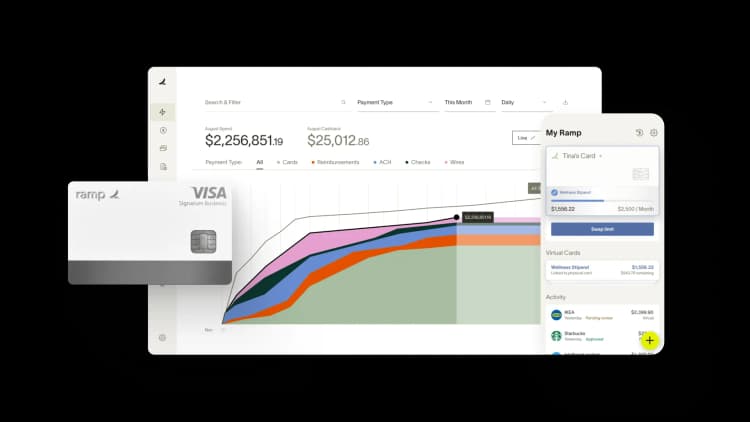
Vendor consolidation reduces the number of suppliers your business relies on, making it easier to manage supplier relationships and cut down on invoices, tools, and compliance tasks. With fewer vendors, you simplify workflows, lower administrative overhead, and gain more control over spend. As your business grows, consolidating vendors becomes a strategic way to streamline operations and strengthen your financial processes.
What is vendor consolidation?
Vendor consolidation is the process of strategically cutting the number of third-party vendors your business uses by bringing overlapping tools and services under fewer trusted providers. Companies typically see 10–20% cost savings by eliminating duplicate systems, simplifying contracts, and strengthening their position in pricing negotiations.
Instead of managing multiple vendors with similar functions, you centralize core needs with a smaller group of suppliers. For example, if your business uses separate platforms for expense management, bill pay, and credit cards, you’d replace them with just a single system. You deal with a smaller number of contracts, train your team on fewer platforms, and manage less risk across security and contract compliance. This strategy streamlines administrative work and can be cost-effective for your scaling business.
When to pursue vendor consolidation
Deciding when to consolidate vendors usually falls to your finance, procurement, or operations leaders. These teams look at how tools are used, where inefficiencies occur, and whether vendors remain aligned with business goals. Vendor consolidation often makes sense when you see signs like these:
- Different departments use separate tools for the same purpose: Multiple tools doing the same job can lead to inconsistent and duplicate work. Consolidating these tools aligns teams and improves data accuracy across your company.
- You can’t easily access your total vendor spend: If you can’t easily answer how much your company is spending across all vendors or where that spending is going, then you lack centralized visibility. Vendor consolidation makes tracking costs, enforcing limits, and making informed decisions easier.
- Vendor management is pulling time away from high-impact work: If your finance or operations team spends too much time reviewing contracts, managing renewals, or resolving service-related issues, consolidation can help free up that time for strategic budgeting and planning
- You’re scaling, and your current systems aren’t built to grow: As your company grows, disconnected systems become harder to manage. Consolidating vendors before expansion helps you scale with a stronger foundation and avoids operational slowdowns later.
- You’re experiencing compliance or security risks: Managing multiple vendors increases exposure to potential risks, especially when access, data handling, and compliance standards vary across platforms. Fewer vendors means fewer compliance gaps and a more controlled environment.
What’s the difference between vendor consolidation and vendor rationalization?
Vendor consolidation is the act of reducing the number of vendors your business uses by combining services under a core group of providers. Vendor rationalization is the process you use to evaluate your current vendors and decide which ones to keep, replace, or eliminate. Rationalization is the analysis; consolidation is the outcome.
Benefits of vendor consolidation
As your vendor list shrinks, you’ll notice lower costs, stronger negotiating power, and improved efficiency across your organization. Here are four key benefits to expect when you consolidate vendors:
Cost savings
Consolidating vendors can reduce your procurement costs, especially for SaaS and professional services, by eliminating duplicate tools and cutting administrative overhead. With fewer invoices, fewer contracts, and less time spent resolving issues, procurement, finance, and accounts payable (AP) teams can redirect hours toward higher-impact work.
Stronger negotiation power
Vendor consolidation strengthens your negotiating position by increasing your total spend with fewer suppliers. With higher volume and the potential for longer contracts, vendors are more likely to offer better pricing and customized solutions for your business.
Prepare for vendor negotiations with data, such as total annual spend, current pricing structures, and competitor benchmarks. This helps you negotiate volume-based discounts, bundled services, or multi-year agreements. Beyond price, you can also secure improved terms such as shorter payment cycles, dedicated support, or more flexible contracts.
Improved operational efficiency
Operational efficiency increases when major finance tasks like expense reporting and bill pay live in one place, allowing for smoother automation and fewer platforms to coordinate. Consolidation also reduces the number of renewals you manage and the time spent renegotiating contracts throughout the year.
Vendor onboarding becomes simpler with fewer contractors to train, and compliance improves when there are fewer systems to audit and fewer points of access to secure.
Enhanced vendor relationships
Concentrating spend with fewer suppliers allows your business to build stronger, more strategic partnerships. Vendors gain clearer visibility into your needs, and your team can dedicate more time to evaluating performance and strengthening the relationship. This often leads to smoother communication, faster support, and improved alignment between your business goals and the services your vendors provide.
How to conduct a vendor spend analysis
A vendor spend analysis helps you understand where your money is going so you can identify overlapping vendors, underused contracts, and clear opportunities for consolidation. This process begins with gathering accurate data, organizing your vendors into meaningful categories, and evaluating where consolidation will have the most impact.
Gather vendor data
Collect key data points for every vendor to understand usage, contract terms, and performance. Pull information from your enterprise resource planning (ERP) system, procurement software, AP automation tools, and contract management platforms to ensure accuracy. Important data points include:
- Total annual spend
- Contract terms
- Renewal dates
- Scope of service
- Performance metrics
- Invoice history
Centralizing this information gives you a complete view of your vendor ecosystem and eliminates blind spots that could affect future consolidation decisions.
Categorize and analyze your spend
Once you’ve collected your data, organize vendors into clear categories, such as IT, marketing, facilities, or SaaS subscriptions. Use your internal category structure or supplier classification tools within your ERP to identify your top vendors by spend and uncover those providing similar products or services.
Look for fragmented spend across smaller suppliers, low contract utilization, and duplicate tools. These redundancies are strong signals that consolidation could reduce cost and complexity.
Identify vendor consolidation opportunities
After categorizing your vendors, determine which suppliers align best with your business goals and where consolidating would provide the most value. If multiple teams rely on different vendors for the same purpose, consolidating under one supplier can streamline procurement and AP processes and may unlock bundled savings or better service terms.
Vendor consolidation strategy: Step-by-step process
A vendor consolidation strategy helps finance and operations teams reduce complexity, strengthen vendor relationships, and lower costs. These steps provide a structured approach to identifying the right vendors to keep, streamlining your stack, and tracking results over time.
Step 1: Set clear goals
Start by defining what you want to achieve with vendor consolidation. Goals may include cutting costs, reducing complexity, improving adoption, or increasing data visibility. Establish specific KPIs so you can measure progress and ensure you’re not just removing tools but improving how your systems work together.
Step 2: Perform a vendor spend analysis
Map out every vendor your company is currently paying. This includes software tools, service providers, and any platform used across finance, operations, or individual teams. Then you’re ready to conduct a vendor spend analysis. Include tools that individuals may have expensed or adopted without oversight from procurement.
Use a scoring model to evaluate vendors objectively, assigning numerical values to criteria like spend, renewals, usage, performance, and contractual commitments. You can also distinguish between strategic suppliers that support critical workflows and tactical suppliers that are easier to consolidate or replace.
Step 3: Identify high-impact areas for vendor consolidation
Prioritize vendors that would create the most impact if consolidated. These may include high-cost tools with low usage, platforms with duplicated functionality, or systems that slow down daily workflows. Look for tools that frequently require support, cause reporting delays, or create confusion due to inconsistent adoption across teams.
Step 4: Develop a transition plan
Avoid cancelling multiple vendor contracts or replacing several services at once. A phased rollout reduces risk and helps teams adapt gradually. Start with one department or use case, monitor the transition closely, and make adjustments based on real usage.
Communicate clearly with each team about what’s changing, why it matters, and how it will improve their workflow. Offer training as needed to reduce compliance risks and check in regularly throughout the rollout to support adoption.
Step 5: Monitor and measure KPIs for vendor consolidation
Tracking the right KPIs ensures you can measure both the financial and operational impact of consolidation. Establish reporting cycles, such as monthly, quarterly, or semiannual, to evaluate vendor performance against expectations.
You can monitor these common metrics to assess vendor performance:
- Total vendor count reduction
- Percentage cost savings
- Average spend per vendor
- Contract compliance rates
- Service delivery accuracy
- Vendor performance scores
Together, these indicators help you evaluate the success of consolidation and guide future vendor strategy decisions.
Common challenges to vendor consolidation
Vendor consolidation can streamline your business and reduce costs, but it also introduces challenges that require careful planning. Understanding these hurdles upfront makes it easier to manage risk and support a smooth transition.
Resistance to change
Teams often resist vendor consolidation because it disrupts familiar processes or established vendor relationships. Involve stakeholders early, share data that illustrates the benefits, and highlight how consolidation will simplify their daily workflows. Transparency and consistent communication help build trust and encourage buy-in across departments.
Risk management
Consolidation increases dependency on fewer suppliers, which heightens operational and security risks if one fails to deliver. You can reduce this dependency by establishing clear backup vendors, conducting regular vendor risk assessments, and including contingency clauses in your contracts. Ongoing performance monitoring helps you identify issues early and respond before they affect critical workflows.
Implementation hurdles
Complex termination requirements, data migration needs, and integration work can make execution challenging. Review each vendor agreement to understand notice periods, fees, and obligations before ending contracts. Plan data migration carefully to ensure secure and accurate transfers, and collaborate with IT teams to validate compatibility and test workflows before going live. These steps minimize disruption and support a smoother transition.
Streamline your operations with a smarter vendor strategy
A bloated vendor stack creates friction your business doesn’t need. It drives up costs, complicates workflows, and limits visibility. A smarter vendor strategy helps you cut unnecessary systems, streamline processes, and improve control across teams.
Consolidation is about removing tools that no longer serve your goals and replacing them with platforms that scale as your business grows. When done well, it leads to clearer processes, stronger spend control, and faster execution.
Ramp can help you implement your vendor consolidation strategy with tools that centralize vendor data, flag opportunities to save, and support more confident, data-driven decisions. Ramp’s vendor management system includes the following analytics that can support your business’s vendor consolidation:
- Pricing and savings insights
- Real-time spend reporting
- Vendor contract price comparison
Check out Ramp’s vendor management tools so that you can start optimizing your vendor relationships, cut costs, and gain full visibility into your day-to-day spend.

FAQs
Most businesses benefit from reviewing their vendor list at least once a year, especially during budget planning or after major operational changes.
Finance, procurement, IT, and legal teams should all be part of the process, along with department leads who rely on specific tools.
Look at usage data, team feedback, system dependencies, and integration requirements to determine if a vendor adds strategic value or can be replaced.
Fewer systems reduce the number of access points and data flows, making it easier to monitor compliance, track access, and complete audits.


“I assumed I would have to choose between speed and control. What I found is that you can have both. A well-designed system takes friction out, for the finance function and for everyone else.”
Justin Webster
CFO, Denver Broncos

“A well-run district should not have to choose between getting work done at the school site and keeping control of the dollars behind it. We're not hiring more people to do more jobs, so we have to be smarter about the process. With Ramp, the purchase, the receipt, and the record stay together from the start. ”
Nick Brizeno
Director of Purchasing, San Marcos Unified School District

“In senior living, scale only works if the communities still feel personal. We needed the back office to carry more of the complexity, not the people serving residents. Ramp helped us build that infrastructure, so the experience in the community could stay human.”
Ryan Cole
CFO, Agemark Senior Living

“AI is moving faster than the finance context around it. Prices change, models change, and the value is not always obvious from an invoice. We needed enough detail to know which bets deserved more investment — and which ones did not.”
Greg Cooley
Controller, AngelList

“Invoices, cards, tokens. The categories change but the principle doesn't: know where the money is going, remove the work around it, and make sure the spend is worth it.”
Maciej Mylik. Finance
ElevenLabs

“We weren’t trying to retrofit an old finance system. We had a blank canvas, and Ramp gave us the foundation to build a global finance function of the future.”
Justin Dourado
Director of Finance, Othership

“There's just no surprises anymore. No more waiting two months to find out how a job did. We know how it's doing as it's happening.”
Erich Kuss
Financial Systems Manager, Infinity Home Services

“More token spend isn’t proof that AI is working. Less isn’t proof that it isn’t. What matters is whether we’re buying the right level of intelligence for the work. Ramp lets us make that judgment in the same place we manage every other type of spend.”
Cody Nutt
Senior Director of Business Systems, Daxko
