The 10 best receipt scanner apps for 2026

- Best receipt scanner apps compared
- Best receipt scanner app by use case
- What is a receipt scanner app?
- Why use a receipt scanning app
- What to look for in a receipt scanner app
- Best receipt scanner apps for business
- Best free receipt scanner apps
- How to scan a receipt on your phone
- How to choose the best receipt scanner app for your business
- Simplify receipt scanning with Ramp

AI Summary
At month-end, someone is always chasing a missing receipt. According to Ramp's research, the average 200-person company burns 330 hours a year on expense reports, much of it tracking down, attaching, and reviewing paper slips. A receipt scanner app turns that scramble into a photo and a few seconds of OCR, and the best ones match each receipt to the right transaction for you.
Best receipt scanner apps compared
| App | Best for | Starting price | Free trial/Version | Key feature |
|---|---|---|---|---|
| Ramp | Mid-market companies wanting expense management and corporate cards in one platform | Free | Free tier available | Auto-matches receipts to corporate card transactions |
| Expensify | Business travelers with simple expense reporting needs | $5/user/mo | Free plan for individuals | SmartScan OCR with automated expense reports |
| BILL Spend & Expense | Businesses already using BILL for accounts payable | Contact for pricing | Demo available | Combined receipt scanning and AP automation |
| QuickBooks Online | Businesses already using QuickBooks for accounting | $38/mo | 30-day free trial | Receipt scanning within the QuickBooks ecosystem |
| Zoho Expense | Small to mid-sized teams needing multilingual support | $3/user/mo | Free tier (3 users) | Autoscan in 12+ languages |
| Shoeboxed | Businesses with lots of existing paper receipts | $8/mo | Free trial available | Mail-in scanning via Magic Envelope |
| Dext | Accounting firms managing multiple clients | $21/mo | Demo available | Strong data extraction for invoices and receipts |
| Neat | Small businesses focused on tax compliance | $17/mo | Free trial available | Tax preparation software integrations |
| Veryfi | Companies building receipt scanning into custom workflows | $500/mo | Free developer sandbox | API-first OCR with high accuracy |
| Wave | Freelancers and very small businesses on a budget | Free | Free | No-cost receipt scanning and bookkeeping |
Best receipt scanner app by use case
The best receipt scanner app depends on your goal.
For business expense tracking and reimbursement, Ramp is the best all-in-one pick for teams with corporate cards, and Expensify is a strong alternative. On Ramp, receipts auto-match to card transactions in real time, and scanning is free on Ramp's core tier with no per-scan cap and no per-user fee.
For bookkeeping and accountants, Dext and Wave lead. Both feed clean data into your ledger without much manual cleanup.
For free and freelance use, Wave and Zoho Expense's free tier cover the basics at no cost. They're the receipt scanning apps to start with when budget matters most.
| Your goal | Best pick(s) |
|---|---|
| Business expense tracking and reimbursement | Ramp, Expensify |
| Bookkeeping and accountants | Dext, Wave |
| Free and freelancers | Wave, Zoho Expense free tier |
What is a receipt scanner app?
A receipt scanner app is software that photographs your paper or digital receipts and automatically extracts the vendor, date, and amount into structured expense records. Instead of sorting, stapling, and filing paper receipts by hand, these apps handle the entire process digitally.
The technology behind it comes down to two core capabilities:
- Optical character recognition (OCR) technology: Reads printed text from receipt images and converts it into searchable, editable data
- Data extraction: Automatically pulls vendor name, date, amount, and expense category without manual entry
By automating data entry and using cloud storage, receipt scanner apps turn expense tracking into an efficient, virtually error-free process. They help you save time, improve accuracy, and gain better visibility into your business finances.
Why use a receipt scanning app
Receipt scanning solves real, everyday problems for finance teams and business owners. Here's what you stand to gain.
Save time on manual expense tracking
Manually typing receipt data into spreadsheets or accounting software is tedious and slow. Based on Ramp's own research, the average 200-person company spends 330 hours per year processing expense reports, including the time it takes to track down, attach, and review receipts. A receipt scanner captures that information in seconds. With automated review, finance teams reclaim 4–5 hours per week from manual expense checks.
Improve data accuracy with OCR technology
Human data entry leads to typos and miscategorized expenses. OCR extracts data consistently from each receipt scan, reducing errors and improving compliance with company policies, accounting standards, and tax filing regulations.
Stay organized for taxes and audits
You're required to keep records of your tax-deductible business expenses for at least 3 years. Digital receipt apps store images securely in the cloud so you can retrieve documentation during tax season or audits. No more digging through shoeboxes of faded paper receipts.
Speed up employee reimbursements
Employees can scan receipts on their phone immediately after a purchase. This eliminates the delays that come from collecting paper receipts at month-end and speeds up your company's entire expense reimbursement process. With Ramp, reimbursements reach employee bank accounts in 1–2 business days across 70+ countries.
What to look for in a receipt scanner app
Not all receipt scanner apps are created equal. Evaluate these key features when comparing your options.
- High-accuracy OCR: OCR quality varies, so look for apps that accurately read faded, crumpled, or low-contrast receipts. Poor OCR creates more manual cleanup work than it saves.
- Automatic expense categorization: The best apps assign expense categories automatically based on vendor or merchant type, which keeps your records consistent. Ramp goes further and auto-codes expenses from context, then syncs them to your ERP in real time.
- Accounting software integrations: Your receipt management app should sync with QuickBooks, Xero, NetSuite, Sage, or whatever accounting system you already use. Without this integration, you're stuck with duplicate data entry.
- Mobile and desktop access: You need a mobile app so employees can scan receipts on the go and desktop access so finance teams can review and approve expenses efficiently. If the mobile app lacks key features found on the desktop version, that's a red flag.
- Secure cloud storage: Receipts should be stored with encryption and accessible for IRS compliance, which typically requires 3–7 years of records. Verify the app's security certifications before uploading sensitive financial documents.
Best receipt scanner apps for business
Here's a closer look at each app, including what it does best, who it's for, and how it's priced:
Ramp
G2: 4.8 out of 5 | Capterra: 4.8 out of 5
Ramp is the best all-in-one receipt scanner for finance teams that run on corporate cards. It's a full finance operations platform with OCR-powered receipt scanning built in. Employees submit receipts by SMS, mobile app, web app, email, Slack, or Teams, and each receipt auto-matches to its corporate card transaction in real time at swipe, so no one chases paperwork after the fact. Policy Agent, an always-on AI reviewer, checks 100% of transactions and catches 7x more out-of-policy spend than rule-based systems at 99%+ accuracy.
- Standout feature: Receipts and coded data feed the Accounting Agent, so your finance team closes the books 3x faster, and receipt scanning is included free on Ramp's core tier
- Best for: Mid-market companies wanting expense management and corporate cards in one platform
- Integrations: QuickBooks, NetSuite, Xero, Sage Intacct
Pros:
- Complete finance platform for expense tracking, reporting, and planning
- OCR-powered receipt scanning with document management included
- Integrated corporate cards with customizable spending limits
- Automated expense approval workflows
- Unlimited free tier with access to receipt scanning, travel booking, expense management, and more
Cons:
- Requires use of Ramp's corporate cards
- U.S. applicants need at least $25,000 in a business bank account to qualify
- Auto-enforced spending limits can leave employees with a card that doesn't work
Pricing:
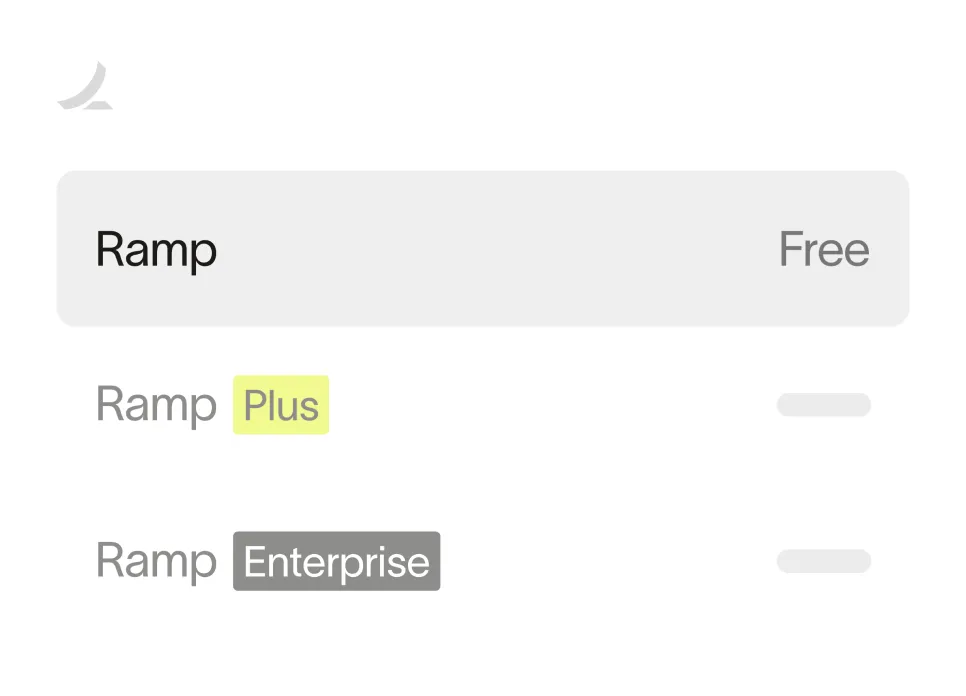
Ramp offers the majority of its expense management features for free, including its receipt scanner app. Upgrade to Ramp Plus for $15 per user per month for additional controls and customization. For Enterprise pricing, reach out directly.
Ready to take control of your finances?
Learn about Ramp’s pricing plans and start saving today.
Expensify
Expensify is a popular choice for businesses of all sizes thanks to its user-friendly interface and convenient mobile app. Its SmartScan OCR captures receipt details and prepares expense reports automatically, making it a solid option for companies focused primarily on employee expense reimbursement.
- Standout feature: One-click SmartScan receipt capture with automated expense report generation
- Best for: Business travelers with straightforward expense reporting needs
- Integrations: Popular HR and accounting software including QuickBooks, Xero, and NetSuite
Pros:
- Intuitive mobile app for on-the-go expense reporting
- AI-powered receipt auditing
- Scales easily as your business grows
Cons:
- No document management
- Per-user pricing can add up quickly
- Free tier is aimed at individuals rather than small businesses
Pricing:
Expensify's Collect plan starts at $5 per user per month, and its Control plan runs $9 per user per month.
BILL Spend & Expense
BILL Spend & Expense (formerly Divvy) combines receipt scanning with accounts payable automation. If you already use BILL for AP workflows, adding receipt scanning within the same platform eliminates the need for a separate tool and keeps your expense data in one place.
- Standout feature: Unified receipt scanning and AP automation in a single platform
- Best for: Businesses already using BILL for accounts payable
- Integrations: QuickBooks, NetSuite, Sage Intacct
Pros:
- Corporate cards with built-in budgeting controls
- Real-time expense tracking and reporting
- No additional cost for receipt scanning if you're already a BILL customer
Cons:
- Most valuable if you're already in the BILL ecosystem
- Receipt scanning features are less robust than dedicated scanning apps
- Limited customization for expense categories
Pricing:
Contact BILL for current pricing. Plans vary based on the combination of AP, AR, and spend management features you need.
QuickBooks Online
QuickBooks Online offers built-in receipt scanning for businesses that already use QuickBooks for accounting. Since it's owned by Intuit, it integrates naturally with tools such as TurboTax and Mailchimp. It's a convenient option if you want scanning within the same ecosystem you already use to automate bookkeeping.
- Standout feature: Receipt scanning natively integrated into your accounting software
- Best for: Businesses already using QuickBooks for accounting
- Integrations: TurboTax, Mailchimp, PayPal, Shopify, and 800+ other apps
Pros:
- Straightforward user interface
- Automatic data backup
- Strong reporting capabilities
Cons:
- One of the more expensive tools on this list
- Limited customization for complex business needs
- User limits vary by plan
- Mobile app lacks features found on the desktop version
Pricing:
QuickBooks offers multiple tiers ranging from $38 per month for 1 user to $275 for 25 users.
Zoho Expense
Zoho Expense is a cost-effective option for small to mid-sized teams, particularly those already using other Zoho products. Its advanced autoscan processes receipts in 12+ different languages, making it a strong choice for companies with international operations.
- Standout feature: Autoscan supports 12+ languages for multilingual receipt processing
- Best for: Small to mid-sized teams needing affordable, multilingual expense tracking
- Integrations: Zoho Books, QuickBooks, Xero, and other popular accounting software
Pros:
- Multiple methods for uploading expense receipts
- Multi-currency and multilingual support
- Broad app support across web, mobile, and desktop platforms
Cons:
- No document management
- Free-tier usage limits may push small businesses into a paid plan
- Multi-entity management only available on Enterprise plans
- Mobile apps lack many features available on web
Pricing:
Free tier for up to 3 users and 20 scans a month. Standard plan starts at $3 per user per month, and Premium costs $5 per user per month (both billed annually).
Shoeboxed
Shoeboxed takes a unique approach to receipt scanning. Its Magic Envelope service lets you mail physical receipts directly to Shoeboxed, and they'll digitize, categorize, and make them IRS-compliant for you. It's a great fit if you have boxes of paper receipts and limited time to scan them yourself.
- Standout feature: Mail-in Magic Envelope service for bulk paper receipt digitization
- Best for: Businesses with large volumes of existing paper receipts
- Integrations: QuickBooks, Xero, Wave, and other popular accounting software
Pros:
- Convert paper receipts into digital records in bulk
- Option to shred and recycle submitted paper documents
- Unlimited file storage even on the lowest-tier paid plan
- Mobile app doubles as a mileage tracker
Cons:
- Can't scan anything other than receipts and business cards
- Not suited for businesses with complex accounting needs
- Lacks modern expense management features
- No expense reporting automation
Pricing:
Starts at $8 per month (annual billing) for the Starter tier. Pro costs $25 per month, and Plus runs $66 per month (both billed annually).
Dext
Dext (formerly Receipt Bank) is a top choice for accountants and bookkeepers managing multiple clients. Its document scanner extracts financial data from receipts and invoices with strong accuracy, and it can automatically pull bills from your suppliers directly into the platform.
- Standout feature: Multi-client management with strong data extraction for invoices and receipts
- Best for: Accounting firms and bookkeepers managing client expenses
- Integrations: QuickBooks, Xero, Sage, and extensive bank integrations
Pros:
- Competitive receipt scanning features
- Document management system with file storage integrations
- Automatic expense categorization
- Multiple submission methods (mobile app, email, and more)
Cons:
- Pricing structure can be confusing
- Seat and usage limits across plans can be restrictive and costly
- No free plan available
- Users report lengthy processing times for document scans
Pricing:
Contact Dext for current pricing. Plans are tiered separately for businesses and for accounting firms managing multiple clients.
Neat
Neat is designed with tax compliance in mind. It integrates well with tax preparation software, making it a practical choice for small businesses focused on maximizing deductions and keeping clean records for filing season.
- Standout feature: Tax preparation software integrations for deduction tracking
- Best for: Small businesses focused on tax compliance and deduction tracking
- Integrations: QuickBooks, Xero, and popular tax preparation tools
Pros:
- Strong focus on tax-ready record keeping
- Clean interface for organizing receipts by category
- Searchable digital archive of all scanned documents
Cons:
- Fewer expense management features than broader platforms
- Limited collaboration tools for larger teams
- No corporate card offering
Pricing:
Neat starts at $200 per year (about $17 per month), billed annually. Contact Neat for details on higher-tier plans.
Veryfi
Veryfi takes an API-first approach to receipt scanning, making it the best option for companies that want to build OCR-powered receipt capture into custom workflows or proprietary apps. Its OCR engine is highly accurate and processes receipts in real time without human intervention.
- Standout feature: API-first architecture with highly accurate, real-time OCR
- Best for: Companies building receipt scanning into custom workflows or apps
- Integrations: API-based, so it connects to virtually any system you build against
Pros:
- Extremely accurate OCR, even on low-quality receipt images
- No human-in-the-loop processing means faster results and better data privacy
- Flexible API supports custom integrations
- Supports receipts, invoices, and other financial documents
Cons:
- Requires developer resources to implement
- Not a plug-and-play solution for non-technical teams
- No built-in expense management or reporting features
Pricing:
$500 per month minimum for up to 5,000 documents. Volume discounts are available.
Wave
Wave provides free receipt scanning alongside free bookkeeping software, making it a solid starting point for freelancers and very small businesses. Features are basic compared to paid alternatives, but you can't beat the price.
- Standout feature: Completely free receipt scanning and bookkeeping
- Best for: Freelancers and very small businesses with simple needs
- Integrations: Shoeboxed, Etsy, PayPal
Pros:
- No cost for receipt scanning or core bookkeeping features
- Simple, clean interface
- Invoicing and payment processing included
Cons:
- Limited expense management features
- No corporate card or spend controls
- Fewer integrations than paid competitors
- Customer support is limited on the free plan
Pricing:
Free for receipt scanning and bookkeeping. Wave charges for payroll and payment processing.
Best free receipt scanner apps
If budget is your primary concern, a few apps offer legitimate free receipt scanning, and it helps to know how they stack up against paid expense trackers for business. Here's what's actually free versus freemium:
Wave
Wave is completely free with no paid tier required for basic receipt scanning and bookkeeping. Features are limited compared to paid options, but they're sufficient for freelancers and very small businesses tracking straightforward expenses.
Zoho Expense free tier
Zoho Expense offers a free plan for up to 3 users with receipt scanning included (limited to 20 scans per month). It's a good entry point if you want to test the platform before upgrading to a paid plan.
Expensify free plan
Expensify is free for individuals tracking personal expenses. If you need business features such as team expense reports or policy enforcement, you'll need to move to a paid plan.
Smart Receipts
Smart Receipts is a free mobile app for Android and iOS that lets individuals and sole proprietors scan, categorize, and export receipts as PDFs or spreadsheets. It's a no-frills option for anyone who needs a basic digital record without a monthly subscription.
Truly free, device-native options
You already have a free receipt scanner app on most devices:
- Adobe Scan: Unlimited free PDF scans with built-in OCR
- Apple Notes: Scan receipts straight from the Notes app on iPhone
- Google Drive: Scan and save receipts as PDFs on Android
Free vs. freemium limits
Watch the fine print, because most "free" business apps cap usage. Zoho Expense's free plan covers 3 users and 20 scans per month, and Expensify's free plan is aimed at individuals rather than teams.
If you want scanning alongside corporate cards and expense management, Ramp includes receipt scanning free on its core tier, so growing teams get a free receipt scanner app without a separate subscription.
How to scan a receipt on your phone
Yes, you can scan receipts on your phone. Any modern receipt scanner app turns your camera into a scanner and reads the details for you, so you can digitize and organize receipts in about a minute.
- Open your scan receipts app and tap capture
- Photograph the receipt, holding steady while OCR reads faded or angled receipts
- Let the app extract the vendor, date, and amount automatically
- Confirm the details and sync them to your accounting software
With Ramp, the scanned receipt auto-matches to the corresponding card transaction, so there's no manual matching. Most business apps support both iOS and Android, so your team can scan from any device.
How to choose the best receipt scanner app for your business
With 10 solid options on the table, narrowing down your choice comes down to four practical steps:
1. Match the app to your primary use case
Are you tracking employee expenses across a growing team? Managing your own receipts for tax season? Or do you need a full expense management platform with corporate cards?
Different apps excel for different use cases. A freelancer's needs look nothing like those of a 200-person finance team.
2. Check accounting integrations
List your current accounting software, ERP, and other financial tools. Then eliminate any apps that don't integrate with your stack. Duplicate data entry is exactly the problem you're trying to solve, so don't create more of it.
3. Weigh pricing and scalability
Some apps charge per user, others charge per receipt volume, and a few are completely free. Calculate costs based on your current team size and expected receipt volume, then project what those costs look like in 12 months as you grow.
4. Test OCR accuracy before you commit
Most apps offer free trials or free tiers. Test them with your actual receipts, especially faded, crumpled, or low-contrast ones, to evaluate OCR accuracy before committing. The best OCR on paper means nothing if it can't read your receipts in practice.
Match your situation to the right pick before you commit.
| Your situation | Recommended app(s) |
|---|---|
| Freelancer or solo | Wave or Adobe Scan |
| Small team on a budget | Zoho free tier or Wave |
| Mid-market with corporate cards | Ramp |
| Accountant managing multiple clients | Dext |
| Heavy volume of paper receipts | Shoeboxed |
Simplify receipt scanning with Ramp
Ramp combines receipt scanning with corporate cards, expense policies, and accounting automation in one platform. Employees snap photos of receipts that auto-match to card transactions. Finance teams save time on reconciliation and close books faster.
Ramp's expense management software automates receipt collection by pulling digital receipts from user inboxes and matching them to the corresponding transactions in real time. For paper receipts, Ramp's mobile app uses OCR to scan the relevant data and pair it with the right transaction automatically.
By centralizing receipts and transaction data in one platform, you get real-time visibility into company spend, search to find any receipt instantly, and secure cloud storage so you never lose critical documentation. Required receipt collection becomes automatic, and your expense records stay complete and audit-ready.
Ready to say goodbye to that file cabinet full of paper receipts? Try an interactive demo and see how our customers save an average of 7.5% a year.

FAQs
Yes for most businesses. A receipt scanner app removes manual data entry, keeps digital records that are audit-ready, and speeds reimbursements. For teams with corporate cards, the bigger payoff is auto-matching receipts to transactions so no one chases paper at month-end.
Yes. Every business receipt scanner app on this list has a mobile app that captures receipts with your phone camera and uses OCR to pull vendor, date, and amount. Most support both iOS and Android.
Snap a photo in a receipt scanner app right after a purchase and let OCR extract the details automatically. With a connected platform like Ramp, the receipt matches itself to the card transaction, so there's nothing left to file.
Yes. Digital receipts are generally accepted as proof of purchase as long as vendor, date, amount, and items are legible. Keep records for at least 3 years and store them in an app with secure, encrypted cloud storage.
Usually, but OCR accuracy varies by print quality, format, and language. Most major apps support multiple currencies and languages. If you have international or low-quality receipts, test the app with your actual receipts before committing.
Ramp is available to businesses registered in the United States and Canada, and cards can be used for purchases in over 200 countries through the Visa network. U.S. businesses need at least $25,000 in a business bank account to qualify; Canadian businesses need at least CA$25,000 across their connected accounts and must be registered in a supported province. See Ramp’s Canadian eligibility requirements for the full details.


“I assumed I would have to choose between speed and control. What I found is that you can have both. A well-designed system takes friction out, for the finance function and for everyone else.”
Justin Webster
CFO, Denver Broncos

“A well-run district should not have to choose between getting work done at the school site and keeping control of the dollars behind it. We're not hiring more people to do more jobs, so we have to be smarter about the process. With Ramp, the purchase, the receipt, and the record stay together from the start. ”
Nick Brizeno
Director of Purchasing, San Marcos Unified School District

“In senior living, scale only works if the communities still feel personal. We needed the back office to carry more of the complexity, not the people serving residents. Ramp helped us build that infrastructure, so the experience in the community could stay human.”
Ryan Cole
CFO, Agemark Senior Living

“AI is moving faster than the finance context around it. Prices change, models change, and the value is not always obvious from an invoice. We needed enough detail to know which bets deserved more investment — and which ones did not.”
Greg Cooley
Controller, AngelList

“Invoices, cards, tokens. The categories change but the principle doesn't: know where the money is going, remove the work around it, and make sure the spend is worth it.”
Maciej Mylik. Finance
ElevenLabs

“We weren’t trying to retrofit an old finance system. We had a blank canvas, and Ramp gave us the foundation to build a global finance function of the future.”
Justin Dourado
Director of Finance, Othership

“There's just no surprises anymore. No more waiting two months to find out how a job did. We know how it's doing as it's happening.”
Erich Kuss
Financial Systems Manager, Infinity Home Services

“More token spend isn’t proof that AI is working. Less isn’t proof that it isn’t. What matters is whether we’re buying the right level of intelligence for the work. Ramp lets us make that judgment in the same place we manage every other type of spend.”
Cody Nutt
Senior Director of Business Systems, Daxko
