
- What to look for in an e-commerce credit card
- Best e-commerce business credit cards compared
- Why e-commerce businesses need a dedicated business credit card
- How to choose the right e-commerce credit card for your business
- Simplify your e-commerce finances with Ramp
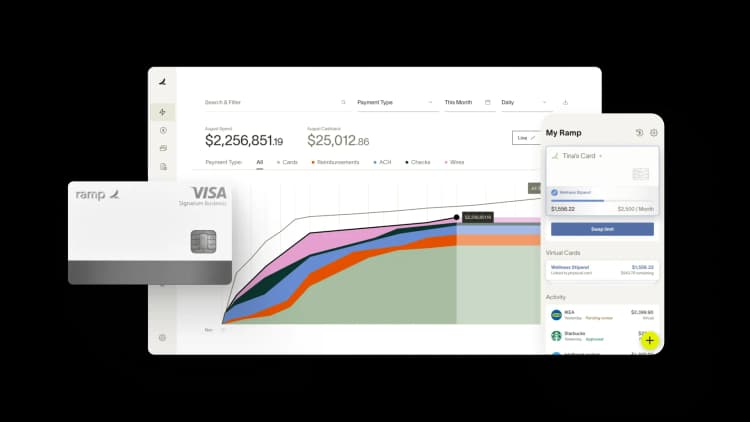
A credit card for e-commerce supports the specific financial needs of online businesses. These cards often include features such as higher transaction limits, payment flexibility, and rewards on common e-commerce expenses such as shipping, digital advertising, and inventory purchases. Unlike general-purpose business credit cards, e-commerce cards are built around frequent spending and fast-moving cash cycles.
Note: The cashback percentages, limits, fees, and other figures mentioned in this article are for illustrative purposes only. They do not represent guaranteed or expected rates. Actual terms, credit limits, rewards, and approval criteria vary by card issuer and may change at any time. Readers should verify current details directly with each issuer before applying.
What to look for in an e-commerce credit card
Your credit card should support daily operations, improve cash flow, and give you control as you grow.
- Reward categories that match e-commerce spending: For most online businesses, key expenses include shipping, software tools, and digital ads. A card that gives cashback or credits in these categories helps you lower your cost of doing business without extra effort.
- Revenue-based credit limits: Your business needs flexibility as it scales. A card that adjusts your credit limit based on sales activity lets you spend in line with demand. This helps you stock up on inventory, invest in ads, or handle unexpected costs without getting blocked by a fixed credit cap.
- Built-in expense management tools: With frequent purchases across multiple platforms, visibility matters. Real-time payment tracking lets you see every charge as it happens. Spend controls let you set limits by user, vendor, or category, keeping your team on track while reducing risk.
- Integration with your accounting software: Manual work slows you down. A card that integrates with platforms such as QuickBooks, Xero, or NetSuite reduces errors and saves time. You get cleaner books, faster reporting, and fewer reconciliation headaches.
- No foreign transaction fees: If you pay international suppliers or use global tools, foreign transaction fees can eat into your profit. Some cards charge up to 3% on every overseas purchase. Choosing a card with no foreign fees protects your margins and keeps costs predictable.
- Flexible payment terms: You often pay for inventory or ads before you earn from sales. A card that offers extended payment windows helps you manage that gap and keep operations running without dipping into cash reserves.
- Support for multiple users with permission settings: As your team grows, roles become more specialized. You need the ability to give access without handing over full control. Role-based permissions let team members spend where needed while keeping sensitive data secure.
The right e-commerce credit card reduces costs, simplifies operations, and scales with your business, turning everyday spending into a strategic advantage.
Best e-commerce business credit cards compared
Not all e-commerce business owners spend the same way. A brand managing global suppliers has different needs than a startup focused on digital ads. The right credit card depends on how your business operates, where your money goes, and how fast you need to move.
| Card name | Best for | Key benefit | Annual fee | Foreign transaction fee |
|---|---|---|---|---|
| Ramp Corporate Card | Overall e-commerce | Cashback on every purchase + expense automation | $0 | None |
| Chase Ink Business Premier® | High advertising spend | 2.5% back on purchases of $5,000 or more | $195 | None |
| U.S. Bank Triple Cash Rewards Visa | Growing teams | 3% back on office supplies, restaurants, phone, and gas | $0 | 3% |
| Capital One Spark Cash Select | Simple cashback | 1.5% unlimited cashback, no categories to track | $0 | None |
| Capital One Venture X Business | International suppliers | 2X miles on every purchase, no foreign fees | $395 | None |
| Amazon Business Prime Amex | Amazon-reliant businesses | 5% back on Amazon Business and AWS | $0 | None |
Best overall e-commerce credit card
Ramp Corporate Card
The Ramp Corporate Card is built for fast-moving online businesses that need control, visibility, and efficiency in their spending. For e-commerce companies dealing with frequent purchases and tight margins, Ramp simplifies expense management while keeping costs down. It functions as both a charge card and a finance automation platform, helping you make smarter decisions with every dollar spent.
Key benefits:
- Earn cashback on every transaction without worrying about rotating categories
- Get real-time visibility into spending across your team and vendors
- Issue unlimited physical and virtual cards with custom controls
- Eliminate annual fees, foreign transaction fees, and employee card fees
- Connect Ramp to QuickBooks, Xero, or others for clean books and faster closes
- Spot duplicate subscriptions and vendor overlaps with built-in savings insights
Drawbacks:
- Only available to companies with $25,000+ in the bank
- Not available to sole proprietors
Ramp is ideal for e-commerce businesses looking to tighten spending controls, save on transaction costs, and automate finance workflows. It works especially well for high-growth teams that value real-time insights and integration with the tools they already use.
Best for high advertising spend
Chase Ink Business Premier® Credit Card
The Chase Ink Business Premier Card caters to e-commerce businesses that make large-scale purchases. If you regularly place substantial inventory orders, invest heavily in digital ads, or manage high-ticket vendor payments, this card gives you strong cashback on big transactions. It rewards high-volume spenders who want a simple, value-driven return without managing rotating categories.
Key benefits:
- Earn 2.5% cashback on purchases of $5,000 or more, which can add up quickly for bulk inventory or ad buys
- Get 2% cashback on all other business purchases with no cap
- Access a $1,000 welcome bonus after spending $10,000 in the first 3 months
- Use the card anywhere Visa is accepted, with no foreign transaction fees
- Receive purchase protection and extended warranty coverage on business-related items
Drawbacks:
- Requires full payment monthly
- Carries a $195 annual fee
- Lacks built-in expense controls or e-commerce accounting integrations
This card is a strong fit for e-commerce businesses that regularly make large payments, whether for ad campaigns or software subscriptions. If your business consistently spends more than $5,000 per transaction, the high cashback rate can deliver real value month after month.
Best for expense management and growing teams
U.S. Bank Triple Cash Rewards Visa Business Card
The U.S. Bank Triple Cash Rewards Card caters to businesses that consistently spend on essential operational needs. If you're running an e-commerce business with regular expenses on phone services, software, office supplies, and gas for delivery or logistics, this card gives you cashback where it counts. It's a straightforward rewards card that fits well into predictable monthly spending habits.
Key benefits:
- Earn 3% cashback on eligible purchases such as office supplies, phone services, restaurants, and gas
- Get 1% back on all other categories without limits
- Receive a $750 welcome bonus after spending $6,000 in the first 180 days
- Enjoy 0% intro APR on purchases for the first 12 billing cycles
- Redeem cashback as a statement credit to lower your monthly balance
- Pay no monthly fee, which helps reduce overhead costs
Drawbacks:
- Limited to specific 3% categories without elevated rewards for ads or inventory
- Intro APR is temporary, and interest applies after the first 12 billing cycles
- No built-in spend controls or finance automation features
This card is a solid fit for e-commerce businesses with consistent monthly spending in service categories such as internet, office supplies, and software. If your operations don't rely heavily on paid ads or international suppliers and you're looking for straightforward cashback with no annual fee, this card delivers solid value.
Best for simple cashback rewards
Capital One Spark Cash Select
The Capital One Spark Cash Select is well suited if you want to earn consistent cashback without tracking categories or incurring fees. This card rewards every purchase, whether you're spending on inventory, software, subscriptions, or shipping. It's a strong entry-level option for e-commerce operators who value predictability and ease.
Key benefits:
- Earn 1.5% unlimited cashback on every purchase, no matter the category
- Get a $750 welcome bonus after spending $6,000 in the first 3 months
- Pay no annual fee, which helps keep your overhead low
- Access free employee cards to simplify team purchases
- Enjoy no foreign transaction fees for international vendor or supplier payments
Drawbacks:
- No bonus categories for e-commerce-specific expenses like advertising or shipping
- The cashback rate is lower than some premium business cards
- No built-in finance tools or expense management features
This card is a good fit for e-commerce businesses with steady, diversified spending that want reliable rewards without added complexity. If you're just starting out or want a no-fee card that keeps things simple, Spark Cash Select is an easy choice.
Best for international supplier payments
Capital One Venture X Business Card
The Capital One Venture X Business Card is built for e-commerce companies with international reach. Whether you're attending trade shows, visiting suppliers overseas, or managing cross-border logistics, this card helps you earn travel rewards while reducing fees that cut into your margins. It blends premium travel perks with flat-rate rewards, making it a strong option for businesses with global operations.
Key benefits:
- Earn 2X miles on every purchase, with no caps or categories to track
- Receive 10X miles on hotels and rental cars booked through Capital One Business Travel
- Get a 150,000-mile welcome bonus after spending $30,000 in the first 3 months
- Pay no foreign transaction fees, which helps lower international supplier costs
- Access airport lounge benefits, cell phone protection, and travel insurance coverage
Drawbacks:
- Requires high spend to unlock full value
- Comes with a $395 annual fee
- Rewards are travel-focused, not cashback
This card is a strong fit for e-commerce businesses that travel frequently or manage global supply chains. If you attend sourcing events, pay vendors overseas, or ship internationally, the travel benefits and fee savings make this card worth considering.
Best for businesses that rely on Amazon for inventory
Amazon Business Prime American Express Card
The Amazon Business Prime American Express Card is designed for e-commerce businesses that regularly purchase from Amazon and AWS. If you use Amazon as a core part of your supply chain, this card turns that spend into real value. It gives you the flexibility to earn rewards or extend payment terms, depending on your needs.
Key benefits:
- Earn 5% back or get 90-day payment terms on Amazon Business, AWS, and Whole Foods purchases (with a Prime membership)
- Receive 2% back at restaurants, gas stations, and wireless services
- Earn 1% back on all other eligible purchases
- Upon approval, get a $125 Amazon gift card with an eligible Prime membership, without any minimum spend required
- Pay no annual fee, which helps keep overhead low
Drawbacks:
- Requires an Amazon Business Prime membership to access full benefits
- Limited rewards outside of Amazon and partner categories
- Offers no bonus categories for digital ads or e-commerce platforms
This card works best for e-commerce businesses that purchase inventory, packaging, or business supplies through Amazon Business or AWS. If Amazon is a major vendor in your operation, the 5% cashback or 90-day float gives you flexibility that can directly support cash flow and margins.
Why e-commerce businesses need a dedicated business credit card
Your e-commerce brand doesn't spend like a traditional company. You move quickly, manage tight margins, and deal with expenses that shift week to week. A dedicated business credit card addresses those challenges in ways a personal card or general-purpose card can't.
Earn rewards on advertising and inventory purchases
Advertising and inventory are likely your two biggest expenses. Most e-commerce brands spend 10% to 20% of their revenue on marketing alone. The right card turns those costs into cashback or points, putting money back into your operations without extra effort.
Automate expense tracking and accounting integration
Manual receipt tracking wastes hours every month. Modern business cards auto-categorize transactions and sync directly with QuickBooks, Xero, or NetSuite. That means cleaner books, faster month-end closes, and fewer reconciliation errors.
Manage cash flow with flexible payment terms
You often pay for inventory before you earn revenue. That means cash goes out long before customers place their orders. Cards with extended payment windows or charge card structures help you bridge that gap without dipping into reserves.
Protect against fraud with virtual cards
Virtual cards generate unique card numbers for each vendor or transaction. If one number is compromised, your main account stays secure. For e-commerce businesses making frequent online purchases across multiple platforms, this adds a critical layer of protection.
Support global transactions without high fees
You may work with international suppliers or serve customers in multiple countries. Many traditional cards charge foreign transaction fees of up to 3%. Over time, that directly hits your profitability with no added benefit. A card with no foreign fees keeps your costs predictable.
Keep business and personal spending separate
Using a personal card for business expenses makes accounting harder and can create tax and liability issues. A dedicated business card keeps expenses clean, simplifies tax prep, and builds business credit separately from your personal score. It also looks more professional to investors and auditors.
How to choose the right e-commerce credit card for your business
Picking the right card comes down to understanding your spending patterns and operational needs. Here's how to narrow it down.
Match reward categories to your spending patterns
Start by looking at where your money actually goes each month. Common e-commerce spending categories include:
- Digital advertising (Meta, Google, TikTok)
- Shipping and fulfillment
- Software subscriptions and SaaS tools
- Inventory and supplier payments
If 60% of your spend goes to ads, a card with elevated rewards on advertising delivers more value than a flat-rate option. Match the card to your biggest expense categories first.
Evaluate credit limits for seasonal inventory needs
E-commerce has seasonal spikes. Whether it's Black Friday, back-to-school, or a product launch, you need a credit limit that can flex with demand. Look for cards with revenue-based limits that adjust as your sales grow, or cards with no preset spending limit that scale with your payment history.
Prioritize integration with your accounting software
A card that syncs automatically with your accounting platform reduces reconciliation time and manual data entry. If you're using QuickBooks, Xero, or NetSuite, check whether the card offers a native integration. This one feature can save your finance team hours every month.
Compare annual fees and foreign transaction costs
A $195 annual fee might seem steep, but if you're earning 2.5% back on $100,000 in annual ad spend, that's $2,500 in cashback against a $195 cost. Run the math on your actual spending volume. For international purchases, even a 1% foreign transaction fee adds up fast when you're paying overseas suppliers regularly.
Simplify your e-commerce finances with Ramp
Ramp's corporate card is worth considering if you're looking for a card that combines spend management with simple, flat-rate rewards and fits into how modern teams work. It offers real-time visibility, built-in controls, and smart savings insights that help you manage spend without adding complexity. For growing e-commerce businesses, that kind of automation can save time and protect margins as you scale.
- Unlimited employee cards: Issue virtual and physical cards with custom spending limits for every team member
- Automated expense tracking: Receipts auto-match to transactions, eliminating manual data entry
- Real-time visibility: See all spending across your team instantly, not at the end of the month
- Accounting integrations: Syncs with QuickBooks, Xero, NetSuite, and Sage for faster closes
Try an interactive demo to see what Ramp can do for you.

FAQs
No, you can apply with your Social Security Number as a sole proprietor. However, having an EIN strengthens your application and separates your business credit history from your personal profile.
A charge card requires you to pay the balance in full each month, while a traditional credit card lets you carry a balance with interest. Charge cards often come with higher limits and better cash flow tools, which can help fast-growing e-commerce teams with variable, high-volume spending stay liquid.
Virtual cards generate unique card numbers for each vendor or transaction. If one number is compromised, your main account stays secure. This is especially useful for e-commerce businesses making frequent purchases across multiple online platforms.
Yes, most business credit cards work internationally. However, check for foreign transaction fees first. Some cards charge up to 3% per transaction, while others like Ramp and Capital One charge nothing.
Most business credit cards require good to excellent personal credit, typically a score of 670 or higher. Some cards designed for startups or newer businesses have more flexible requirements, so it's worth checking eligibility before you apply.


“I assumed I would have to choose between speed and control. What I found is that you can have both. A well-designed system takes friction out, for the finance function and for everyone else.”
Justin Webster
CFO, Denver Broncos

“A well-run district should not have to choose between getting work done at the school site and keeping control of the dollars behind it. We're not hiring more people to do more jobs, so we have to be smarter about the process. With Ramp, the purchase, the receipt, and the record stay together from the start. ”
Nick Brizeno
Director of Purchasing, San Marcos Unified School District

“In senior living, scale only works if the communities still feel personal. We needed the back office to carry more of the complexity, not the people serving residents. Ramp helped us build that infrastructure, so the experience in the community could stay human.”
Ryan Cole
CFO, Agemark Senior Living

“AI is moving faster than the finance context around it. Prices change, models change, and the value is not always obvious from an invoice. We needed enough detail to know which bets deserved more investment — and which ones did not.”
Greg Cooley
Controller, AngelList

“Invoices, cards, tokens. The categories change but the principle doesn't: know where the money is going, remove the work around it, and make sure the spend is worth it.”
Maciej Mylik. Finance
ElevenLabs

“We weren’t trying to retrofit an old finance system. We had a blank canvas, and Ramp gave us the foundation to build a global finance function of the future.”
Justin Dourado
Director of Finance, Othership

“There's just no surprises anymore. No more waiting two months to find out how a job did. We know how it's doing as it's happening.”
Erich Kuss
Financial Systems Manager, Infinity Home Services

“More token spend isn’t proof that AI is working. Less isn’t proof that it isn’t. What matters is whether we’re buying the right level of intelligence for the work. Ramp lets us make that judgment in the same place we manage every other type of spend.”
Cody Nutt
Senior Director of Business Systems, Daxko
