
- How Navan, Brex, and Ramp compare at a glance
- Corporate cards and rewards
- Travel management
- Expense management and automation
- Pricing structure
- Accounting integrations
- Navan vs Brex vs Ramp: full comparison
- Which platform fits your team?
- See how Ramp brings it all together
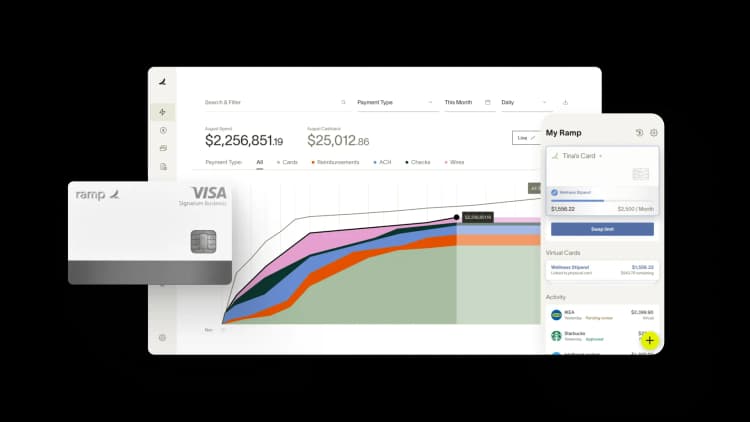
Navan, Brex, and Ramp all offer tools for managing company spending, travel, and expenses, but they take different approaches to how finance teams operate. Navan integrates travel booking with expense management, Brex combines corporate cards and spend management, and Ramp brings together finance workflows into a single platform.
This guide compares pricing, travel features, expense management, accounting integrations, and corporate cards across all three platforms.
How Navan, Brex, and Ramp compare at a glance
Start with the quick comparison table below for a high-level overview of pricing, travel features, cards, and integrations.
| Feature | Navan | Brex | Ramp |
|---|---|---|---|
| Best for | Companies prioritizing managed business travel with expense management | Companies scaling with high-limit corporate cards and built-in spend management | Companies that want cards, travel, expense, and AP working as one platform |
| Pricing | Travel free; expense $15/user/month (first 5 free); Enterprise custom | Essentials free; Premium $12/user/month; Enterprise custom | Free tier; Plus $15/user/month + platform fee |
| Core platform | Managed travel and expense management | Corporate cards and spend management | Finance automation (cards, expense, AP, travel) |
| Corporate cards | Physical and virtual, travel-linked rewards | Physical and virtual, high-limit, no personal guarantee | Physical and virtual, unlimited, cashback on all spend |
| Travel booking | Full managed (24/7 support, duty of care) | Integrated (airlines and hotels) | Included free, real-time policy enforcement |
| Expense management | Travel-tied; limited for non-travel spend | Full platform | Full platform, AI-powered |
| Accounts payable | Yes | Yes | Yes |
| Accounting integrations | Yes | Yes | Yes |
| Free tier | Yes (travel free) | Yes (Essentials) | Yes |
Next, we break down each feature to show how the platforms differ in practice.
Corporate cards and rewards
Corporate cards sit at the center of any spend management platform. How each provider structures card programs and rewards affects how much value you actually capture from everyday purchases.
Navan
Navan issues the Navan Card, which works best alongside travel bookings made through the platform. You earn rewards primarily on travel purchases booked in Navan's system. Card transactions automatically categorize and reconcile within Navan's expense management. That said, the rewards structure leans heavily toward travel spending rather than general corporate purchases like software subscriptions or office supplies.
Brex
Brex built its card program around high credit limits and a flexible points system. You can earn up to 7x points on certain categories, with 1x on everything else. Brex offers both physical and virtual cards with customizable spending limits per card. Startups often gravitate toward Brex because the underwriting model doesn't require personal guarantees, which means founders don't put their own credit on the line.
Ramp
Ramp offers cashback on purchases. You can issue unlimited virtual and physical cards, each with its own budget, merchant restrictions, and approval rules baked in. Ramp's cashback applies automatically across all spending categories. If your team spends on software, marketing, travel, and office supplies, you capture value on every transaction.
Travel management
Travel and expense management often tips the scale when choosing a platform. Navan, Brex, and Ramp take different approaches to booking, policy enforcement, and traveler support.
Navan
Navan's travel offering centers on full-service booking with in-app support agents, negotiated hotel and airline rates, and duty of care features that let you track employee locations during trips. Travel managers can set policies that nudge employees toward preferred options before they book.
If your team travels frequently and you want a managed travel program with hands-on support, Navan suits teams with road warriors and complex travel policies. The tradeoff is that the platform's other features, like expense management and payments, feel secondary to the travel experience.
Brex
Brex offers travel booking within the platform, giving you access to flights, hotels, and rental cars. Travel expenses flow directly into Brex's spend management, so you don't have to manually reconcile trip costs. The experience works well enough for occasional travelers, though it functions more as a complement to Brex's core card offering than a standalone travel management solution.
Ramp
Ramp includes travel booking directly in the platform at no extra cost. You can book flights, hotels, and rental cars while enforcing your travel policy in real time. Out-of-policy bookings get flagged before they happen, which cuts down on the back-and-forth of approvals and reimbursement requests.
Because travel connects to the same card and expense management infrastructure, everything reconciles automatically. You don't end up with travel data in one system and expense data in another.
Expense management and automation
How quickly your team submits expenses and how much time finance spends on reconciliation directly impacts your month-end close. Each platform handles expense workflows differently.
Navan
Navan's expense management ties closely to travel booking. When employees book through Navan, expenses populate automatically with receipt data attached. For non-travel expenses, employees submit receipts through the mobile app. The system works well when most of your expenses come from travel. If your team has diverse spending categories like software, marketing, or equipment, the expense tools may feel less robust.
Brex
Brex offers expense management with receipt matching, approval workflows, and policy enforcement. Employees can forward receipts via email or upload through the app. The platform flags potential policy violations and routes expenses for approval based on rules you configure. Card transactions automatically appear for reconciliation, which reduces manual data entry.
Ramp
Ramp automates expense management from submission to close. The platform uses AI to match receipts to transactions, auto-categorize expenses, and flag duplicates or policy violations before they reach your desk.
Employees can text receipts to Ramp or snap photos in the app. Ramp automatically prompts cardholders to submit missing receipts, which reduces the chase at month-end. Finance teams using Ramp often report closing books faster because the manual reconciliation work drops.
Pricing structure
Pricing models vary across platforms, and the total cost depends on which features you use and how many employees access the system.
Navan
Navan Business is free for companies with up to 300 employees — travel booking comes at no cost, with expense management free for the first five users and $15 per user per month after that. Companies exceeding 300 employees move to Navan Enterprise, which requires a custom quote. If your team relies heavily on non-travel expense management across a large headcount, the per-user expense fee can add up as you grow.
Brex
Brex offers a free Essentials tier that includes basic card and expense features. The Premium tier costs $12 per user per month and adds advanced controls, integrations, and support. Enterprise pricing is custom and includes dedicated account management.
The tiered approach lets you start free and upgrade as your needs grow. If you're a small team testing spend management platforms, the free tier lets you experiment without committing.
Ramp
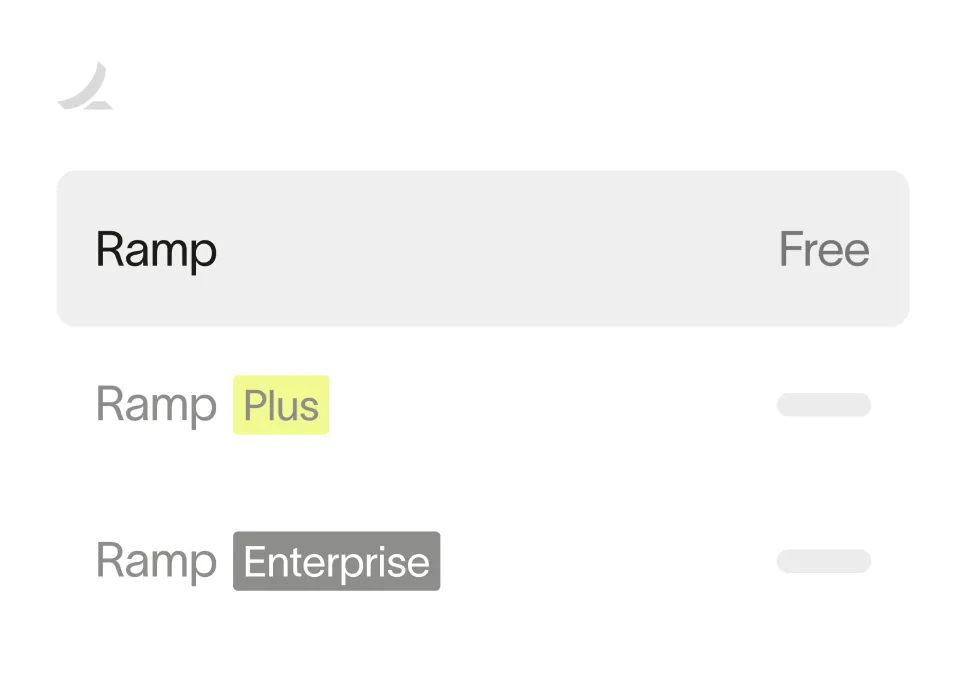
Ramp provides a free tier with corporate cards, expense management, and basic accounts payable features. The Plus tier costs $15 per user per month plus a platform fee and unlocks advanced automation, custom workflows, and premium integrations.
You can access core functionality for free, making Ramp accessible to teams that want to test the platform before committing.
Ready to take control of your finances?
Learn about Ramp’s pricing plans and start saving today.
Accounting integrations
Your spend management platform only works if it connects to your accounting system. Integration depth determines how much manual work remains after expenses are approved.
Navan
Navan integrates with QuickBooks, NetSuite, Xero, and Sage Intacct. The connections sync travel and expense data to your general ledger, and you can map expense categories to your chart of accounts. The integrations handle standard use cases well. Complex multi-entity setups or custom field requirements may require additional configuration or workarounds.
Brex
Brex connects to QuickBooks, NetSuite, Xero, and Sage Intacct. The platform syncs transactions, receipts, and expense data automatically. Brex also offers an API for custom integrations if your tech stack requires something beyond the standard connectors. The accounting connections work well for companies using mainstream ERP systems.
Ramp
Ramp's accounting automation connects to QuickBooks, Xero, NetSuite, and Sage Intacct with deep, bidirectional syncing. The platform auto-codes transactions based on rules you set and learns from corrections over time, so coding accuracy improves the longer you use it.
For finance teams tired of exporting CSVs and manually matching transactions, Ramp's accounting automation makes a noticeable difference. You spend less time on data entry and more time on analysis.
Navan vs Brex vs Ramp: full comparison
| Feature | Navan | Brex | Ramp |
|---|---|---|---|
| Corporate cards | Yes (travel-linked rewards) | Yes (high-limit, no personal guarantee) | Yes (unlimited, cashback on all spend) |
| Virtual cards | Yes | Yes | Yes |
| Travel booking | Yes (managed, 24/7 support) | Yes (integrated with cards) | Yes (free, policy enforced at booking) |
| Expense management | Yes (travel-tied) | Yes | Yes (AI-powered) |
| Receipt matching | Yes | Yes | Yes |
| Accounts payable | Yes | Yes | Yes |
| Vendor management | Limited | Limited | Yes |
| Accounting integrations | Yes | Yes | Yes |
| Accounting automation | Basic | Standard | Advanced |
| Free tier | Yes (travel free) | Yes (Essentials) | Yes |
Which platform fits your team?
Navan makes sense if travel represents a major operating expense and you want a managed travel program with dedicated support. The platform is well-suited for booking, traveler tracking, and travel-centric expense management. Companies with road warriors and complex travel policies often find Navan a good fit for managed travel, even if the other features feel secondary.
Brex works well for high-growth startups that want flexible credit limits and a straightforward card program. The free tier lets you get started quickly, and the rewards structure benefits companies with significant travel and rideshare spending. If you're scaling fast and want a card-first approach without personal guarantees, Brex fits that profile.
Ramp is a strong choice for finance teams that want cards, expenses, accounts payable, and travel working together without juggling multiple systems. The platform's automation reduces manual work across the entire spend lifecycle, from issuing cards to closing your books.
See how Ramp brings it all together
When Notion replaced Navan and other tools with Ramp, the company consolidated expense management for 1,000+ employees across 10+ countries into one platform. The finance team now saves 75+ hours per month and runs at 95% receipt compliance.
Over 85,000 businesses use Ramp to automate finance operations and reduce costs. The platform combines everything you need to manage spend in one place.
Try an interactive demo to see how Ramp can work for your team.


“I assumed I would have to choose between speed and control. What I found is that you can have both. A well-designed system takes friction out, for the finance function and for everyone else.”
Justin Webster
CFO, Denver Broncos

“A well-run district should not have to choose between getting work done at the school site and keeping control of the dollars behind it. We're not hiring more people to do more jobs, so we have to be smarter about the process. With Ramp, the purchase, the receipt, and the record stay together from the start. ”
Nick Brizeno
Director of Purchasing, San Marcos Unified School District

“In senior living, scale only works if the communities still feel personal. We needed the back office to carry more of the complexity, not the people serving residents. Ramp helped us build that infrastructure, so the experience in the community could stay human.”
Ryan Cole
CFO, Agemark Senior Living

“AI is moving faster than the finance context around it. Prices change, models change, and the value is not always obvious from an invoice. We needed enough detail to know which bets deserved more investment — and which ones did not.”
Greg Cooley
Controller, AngelList

“Invoices, cards, tokens. The categories change but the principle doesn't: know where the money is going, remove the work around it, and make sure the spend is worth it.”
Maciej Mylik. Finance
ElevenLabs

“We weren’t trying to retrofit an old finance system. We had a blank canvas, and Ramp gave us the foundation to build a global finance function of the future.”
Justin Dourado
Director of Finance, Othership

“There's just no surprises anymore. No more waiting two months to find out how a job did. We know how it's doing as it's happening.”
Erich Kuss
Financial Systems Manager, Infinity Home Services

“More token spend isn’t proof that AI is working. Less isn’t proof that it isn’t. What matters is whether we’re buying the right level of intelligence for the work. Ramp lets us make that judgment in the same place we manage every other type of spend.”
Cody Nutt
Senior Director of Business Systems, Daxko
