Which startup business credit cards don't require a credit check?

- How does a no credit check business credit card work?
- Comparing the best no credit check business credit cards for startups
- Best no credit check business credit cards for startups
- How to choose the right no credit check business card
- How to get a business credit card with no credit check
- Which business credit cards accept EIN-only applications
- Alternatives to no credit check business cards
- How startups got approved when traditional banks said no
- Skip the credit check and start spending smarter

Most startup founders assume they need a personal credit check to get a business card, but they don't. Corporate charge cards and certain secured cards evaluate your business financials instead.
Note: The cashback percentages, limits, fees, and other figures mentioned in this article are for illustrative purposes only. They do not represent guaranteed or expected rates. Actual terms, credit limits, rewards, and approval criteria vary by card issuer and may change at any time. Readers should verify current details directly with each issuer before applying.
How does a no credit check business credit card work?
A no credit check business credit card is a card that doesn't require a personal credit inquiry (hard pull) during the application process. Instead, the issuer evaluates your business's financial health, including bank balance, revenue, or funding history, to determine eligibility and spending limits.
You often lack the personal or business credit history that traditional underwriting requires. Your personal credit score shouldn't determine whether you can access basic business spending tools when you're building a company from scratch.
"No credit check" almost always means no personal credit check. Issuers still evaluate your business, whether that's reviewing your bank balance, revenue, or funding history. No card approves applicants with zero evaluation.
If you want to separate personal and business finances without a hard inquiry on your personal credit report, these cards are built for you.
Fast-growing startups like Brigit, Seed, and Fi all hit a similar wall with traditional business cards, whether that meant limits too low to scale, approvals that dragged on for weeks, or a bank that wouldn't work with an early-stage company at all. Each switched to a corporate card that evaluates business financials instead of a founder's personal credit, and got approved with limits that kept up with their growth.
Corporate cards vs. secured cards vs. traditional business cards
| Personal credit check | Personal guarantee | Collateral required | Underwriting basis | Best for | |
|---|---|---|---|---|---|
| Corporate charge cards (like Ramp) | No | No | No | Business financials | Startups avoiding personal credit inquiries |
| Secured business cards (like OpenSky) | Sometimes | No | Yes, refundable cash deposit sets credit limit | Deposit amount | Building credit history when not yet eligible for a corporate card |
| Traditional business credit cards | Yes | Yes | No | Personal credit + guarantee | Not ideal for startups wanting to avoid personal credit checks |
Corporate charge cards (like Ramp) evaluate your business financials to determine eligibility and set spending limits. There's no personal credit check, no personal guarantee, and no security deposit or collateral required. You pay your balance in full each billing cycle, so there are no interest charges.
Secured business cards (like OpenSky) require a refundable cash deposit that sets your credit limit. Some check personal credit during the application, others don't. They're a strong option for building credit history, especially if you can't qualify for a corporate card yet.
Traditional business credit cards require a personal credit check and a personal guarantee. They offer revolving credit with interest charges, meaning you can carry a balance month to month. For startups trying to avoid personal credit inquiries, these are usually the worst fit.
Hard pull vs. soft pull vs. no pull on your credit
| What it is | Credit score impact | Visible to other lenders | Example | |
|---|---|---|---|---|
| Hard pull | Full credit inquiry | Can temporarily lower score a few points | Yes | Most traditional business credit cards |
| Soft pull | Preliminary check | No impact | No | BILL Divvy |
| No pull | Personal credit skipped entirely; business financials only | None | N/A | Ramp |
A hard pull is a full credit inquiry that appears on your credit report and can temporarily lower your score by a few points. Most traditional business credit cards use a hard pull during the application process.
A soft pull is a preliminary check that doesn't affect your credit score and isn't visible to other lenders.
A no pull approach means the issuer skips personal credit checks entirely and evaluates business financials only.
Comparing the best no credit check business credit cards for startups
The cards below represent the strongest options across card types, fee structures, and credit check approaches.
| Card name | Card type | Personal credit check | Annual fee | Rewards | Best for |
|---|---|---|---|---|---|
| Ramp | Corporate charge card | No | $0 | Cashback on purchases | Funded startups needing spend controls, expense management |
| BILL Divvy | Corporate card | Soft pull | $0 | Cashback tiers | Mid-stage businesses with established revenue |
| Stripe Corporate Card | Charge card | No | $0 | 1.5% cashback | Startups already using Stripe's platform |
| Capital on Tap | Business credit card | Soft pull | $0 | 1% cashback | Small businesses, LLCs needing flexible credit |
| OpenSky Secured Visa | Secured credit card | No | $35 | None | Startups building credit from scratch |
Best no credit check business credit cards for startups
Disclaimer: The product information and rewards structures described below reflect issuer-published details at the time of writing. Terms, features, and eligibility criteria may change. Always verify current information directly with each issuer before applying.
1. Ramp
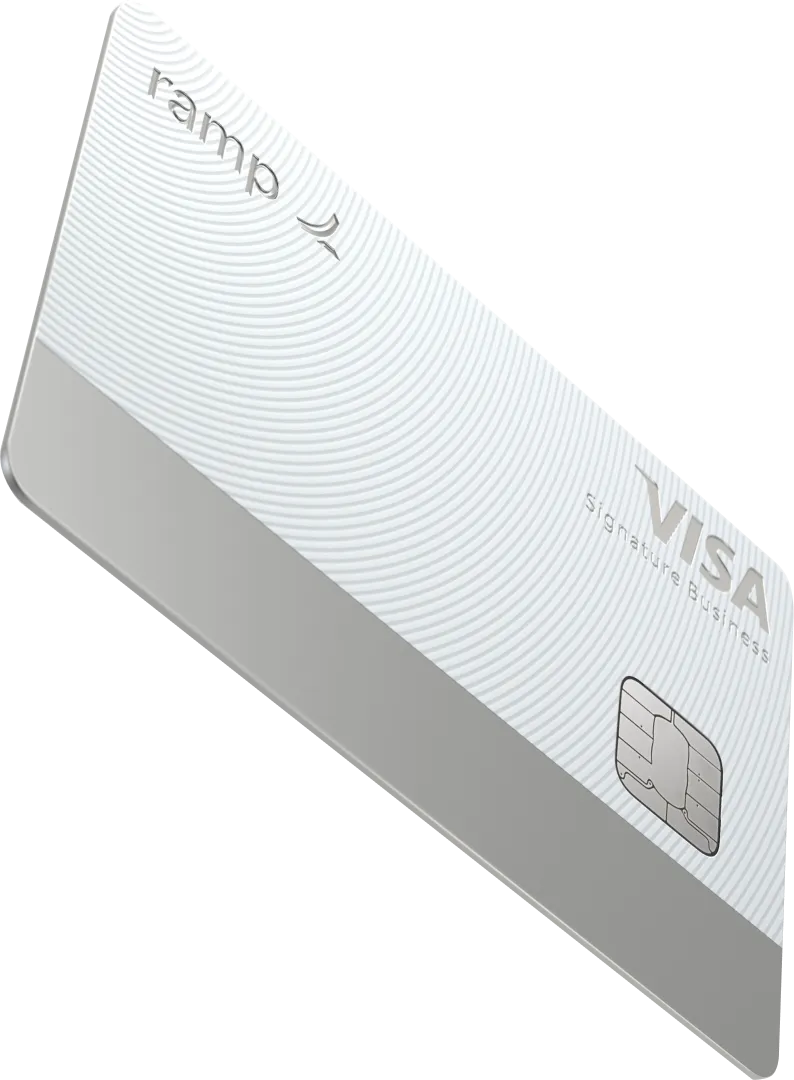
Ramp's cards for startups stand out for founders who want fast access to capital without sacrificing control. Ramp requires no personal credit check and no personal guarantee. You just need an EIN and $25,000 in a business bank account.
Beyond unlimited virtual and physical cards, Ramp offers advanced spending controls at the employee or vendor level, real-time alerts, and daily limits to prevent overspending.
The platform automates receipt capture, matches transactions, and integrates with major accounting tools, including QuickBooks and Xero. Ramp also includes corporate travel booking, policy enforcement, and AI-generated insights to flag savings opportunities. Ramp offers cashback rewards on purchases, and with zero fees, it simplifies spend management while helping early-stage teams stay lean.
Ramp evaluates your business's financial health, including bank balance and revenue, rather than personal credit. This makes it accessible to funded startups, venture-backed companies, and any business with cash in the bank.
Key features:
- No personal credit check, no personal guarantee, no annual fee
- Unlimited physical and virtual cards with per-merchant, category, and time-bound spend controls
- Automated receipt capture, transaction matching, and accounting integrations (QuickBooks, Xero, NetSuite, Sage)
- Corporate travel booking with built-in policy enforcement
- Up to 20x higher credit limits than traditional business credit cards
- Cashback rewards on purchases
Pros:
- Pre-spend controls block out-of-policy transactions before they happen
- 90% of transactions are auto-coded, reducing manual accounting work
- $350,000+ in partner perks from AWS, Notion, HubSpot, and more
- Full finance platform included: expense management, bill pay, reimbursements, and reporting
Cons:
- Requires $25,000 minimum in a business bank account
- Only available to corporations, LLCs, or LPs (sole proprietors are ineligible)
- Requires primary operations and corporate spending in the U.S.
- Balance must be paid in full each cycle (no revolving credit)
Best for: Funded startups and growing companies that want a corporate charge card with built-in expense management and no personal credit check.
Discover Ramp's corporate card for modern finance
2. BILL Divvy
BILL Divvy evaluates business financials to determine eligibility, typically requiring at least $20,000 in a business bank account and a good to excellent business credit score. The card offers credit lines ranging from $1,000 to $5 million, depending on your company's financial health.
Divvy provides both physical and virtual cards with customizable spend controls, enabling you to set budgets by team, department, or project. The integrated expense management software automates receipt capture and categorization. Unlike other options, BILL does require a credit check for approval, but it's only a soft credit check, so it won't affect your credit score.
Key features:
- Soft credit pull only (no hard inquiry on personal credit)
- Credit lines from $1,000 to $5 million
- Customizable spend controls by team, department, or project
- Integrated expense management with automated receipt capture
- Real-time budget tracking and reporting
Pros:
- Soft pull means no impact on your personal credit score
- Flexible credit lines that scale with your business
- Strong budgeting and spend control features
- Free to use with no annual fee
Cons:
- Requires good to excellent business credit score
- Requires $20,000 minimum in a business bank account
- Not a true "no credit check" option (soft pull still required)
- May not be accessible to very early-stage startups
Best for: Mid-stage businesses with established revenue that want flexible credit lines and strong budgeting tools without a hard credit inquiry.
3. Stripe Corporate Card
The Stripe Corporate Card is a no-fee charge card designed for startups already using Stripe. Stripe requires no personal credit check and no personal guarantee. It evaluates your Stripe account history and revenue to determine approval.
Startups earn unlimited 1.5% cashback on every purchase, with funds automatically applied to the account balance.
The card integrates directly with Stripe's dashboard for real-time expense tracking, receipt capture, and spend visibility. There are no annual, late, or foreign transaction fees. The card is invite-only and requires full monthly repayment, but it offers a credit-check-free way for Stripe users to manage business expenses.
Key features:
- No personal credit check, no annual fee, no foreign transaction fees
- 1.5% cashback on all purchases, automatically applied
- Direct integration with Stripe's dashboard for expense tracking
- Real-time spend visibility and receipt capture
- Approval based on Stripe account history and revenue
Pros:
- Straightforward 1.5% cashback with no category restrictions
- Tight integration with Stripe's existing platform
- No fees of any kind
- Fast approval for existing Stripe users
Cons:
- Invite-only (you must already use Stripe's platform)
- Full monthly repayment required
- Limited to businesses already on Stripe's ecosystem
- Fewer spend management features compared to dedicated corporate card platforms
Best for: Startups already using Stripe's payment platform that want a no-fee charge card with cashback and no personal credit check.
4. Capital on Tap
Capital on Tap offers a business credit card designed for small businesses and LLCs. The card provides credit lines up to $50,000 with a soft credit pull during the application process, meaning it won't impact your personal credit score.
Key features:
- Soft credit pull (no hard inquiry)
- Credit lines up to $50,000
- 1.5% unlimited cashback on all purchases (2% with weekly AutoPay)
- No annual fee
- Integrations with accounting software like QuickBooks and Xero
Pros:
- Accessible to LLCs and small businesses
- No annual fee with unlimited 1% cashback
- Quick online application with fast approval
- Revolving credit line for ongoing business expenses
Cons:
- Soft pull still evaluates personal credit (not a true "no credit check" option)
- Lower credit limits compared to corporate charge cards
- Interest charges apply on carried balances
- Fewer expense management features than dedicated corporate card platforms
Best for: Small businesses and LLCs that want a flexible credit line with cashback rewards and a soft credit pull, especially those looking to apply with an EIN only.
5. OpenSky Secured Visa
The OpenSky Secured Visa Credit Card requires no credit check or bank account to apply. You choose your credit limit by placing a refundable deposit between $200 and $3,000. The card reports to all three major credit bureaus, helping you build a credit profile with consistent on-time payments.
It has a $35 annual fee and a 23.89% variable APR. There are no rewards or signup bonuses on this card. You can make payments and deposits using non-traditional methods like money orders or wire transfers.
After 6 months of responsible use, you may qualify for an upgrade to an unsecured version. This card can help startups begin establishing credit history when traditional business credit cards are out of reach.
Key features:
- No personal credit check required
- Refundable security deposit sets your credit limit ($200 to $3,000)
- Reports to all three major credit bureaus (Equifax, Experian, TransUnion)
- $35 annual fee, 23.89% variable APR
- Accepts non-traditional payment methods (money orders, wire transfers)
Pros:
- True no credit check card, accessible to anyone regardless of credit history
- Helps build personal credit through bureau reporting
- Low minimum deposit ($200) to get started
- No bank account required to apply
Cons:
- $35 annual fee
- No rewards or cashback
- Credit limit tied to your deposit amount
- 24.64% variable APR on carried balances
- Not specifically a business card (personal card used for business purposes)
Best for: Startups and founders with no credit history or bad personal credit who need to build a credit profile from scratch. This is the secured card option in the lineup, offering a path to credit-building when other cards aren't accessible.
How to choose the right no credit check business card
If you're a pre-revenue startup with no business credit history and don't want to tie up cash in a deposit, then going with a corporate charge card is likely advantageous because approval is based on your business's financials rather than a personal credit check or collateral. Now, if you have almost no operating cash on hand yet still need a card immediately (say, to cover a single upfront vendor deposit before your first revenue lands), a secured card can work as a narrow bridge, even though it ties up cash as collateral and won't scale with you.
That said, there is more to consider. Evaluate your options against these six criteria to find the best fit for your startup.
Does the card run a hard or soft credit pull?
If protecting your personal credit score is your priority, look for cards that skip the personal credit check entirely. There are three levels: hard pull, soft pull, and no pull.
Corporate charge cards like Ramp use the "no pull" approach, meaning your personal credit score is irrelevant. BILL Divvy and Capital on Tap use a soft pull, which doesn't affect your score but still checks your credit profile. Traditional business cards require a hard pull.
Even cards that skip the credit check still review your financial activity. Issuers evaluate your business based on real-time data like cash flow, revenue, and banking history.
Many require a minimum balance in your business bank account or proof of steady sales through platforms like Stripe or Shopify. If your business is pre-revenue or inconsistent with cash, you may not qualify.
In that case, a secured card is a fallback. It also skips a personal credit check but requires a cash deposit (as low as $200 with issuers like OpenSky) instead of financial history.
What fees do no credit check business cards charge?
Charge cards like Ramp carry no interest because the balance must be paid in full each billing cycle. There's also no annual fee, no late fees, and no foreign transaction fees. This structure keeps costs predictable.
Traditional credit cards carry interest on revolving balances, which can add up if you don't pay in full each month. Secured cards may have annual fees (like OpenSky's $35) plus the deposit requirement.
Some issuers charge a flat monthly membership fee instead of interest. Other cards may be free but offer fewer features.
Only pay for a card if the value, whether credit reporting, tools, or integrations, supports your business needs.
How much can you spend on a no credit check business card?
Corporate cards typically set limits based on your business's cash position. Ramp offers up to 20x higher credit limits than traditional business credit cards because it evaluates your actual bank balance and revenue rather than a static credit score.
Secured cards limit spending to your deposit amount. If you deposit $1,000, your spending limit is $1,000. This gives you control but caps your capacity.
Your available spending adjusts based on your business activity. Your limit can increase as your revenue grows, helping you scale without relying on a static credit score.
Does the card offer rewards or cashback?
Ramp offers cashback rewards on purchases, which can offset business costs without the complexity of points programs or rotating categories. Other cards focus more on financial tools and credit-building.
If perks are important, look for a provider that balances rewards and financial tools. The bigger benefit of these cards, though, is access and spend control, especially for newer businesses.
What expense management features come with the card?
If you have limited finance staff, you'll benefit from automated receipt matching, real-time spend tracking, and accounting integrations. These features reduce manual bookkeeping and give you visibility into where every dollar goes.
Not all business cards offer these features. They're more common in corporate card platforms like Ramp and BILL Divvy, which bundle expense management into the card product. If you're choosing between a standalone card and a platform, consider how much time you spend on manual expense tracking.
Does the card report to business credit bureaus?
If building business credit is your goal, confirm the card reports to at least one commercial credit bureau before you apply. Not all cards build business credit, and using a card that doesn't report won't strengthen your credit file.
Some cards report to Dun & Bradstreet, Experian Business, and Equifax Business. Others, like prepaid cards, don't report at all. OpenSky reports to personal credit bureaus, which helps your personal credit but not your business credit profile.
How to get a business credit card with no credit check
Getting a no credit check business card is straightforward if you have the right documentation ready. Follow these four steps:
1. Determine your business structure and EIN status
You need a registered business entity: LLC, C-corp, S-corp, or sole proprietorship. If you don't have an EIN (Employer Identification Number), you can get one from the IRS for free in minutes online.
Some cards accept sole proprietors using an SSN, but an EIN is better for separating personal and business finances. Most corporate charge cards require an EIN, so having one ready speeds up the application process.
You apply using your EIN, business bank account, and proof of revenue. The issuer doesn't run a personal or business credit check. Instead, they assess financial health based on your cash balance, sales volume, or linked platform accounts like Stripe, Shopify, or Amazon.
2. Gather your financial documentation
Corporate card issuers evaluate your business financials instead of your credit score. Have the following ready before you apply:
- Bank statements showing your business's cash position
- Revenue documentation (if applicable)
- Funding history (if venture-backed)
- Business registration documents
Many issuers offer instant decisions by reviewing your connected accounts. Some set a minimum requirement (for example, $5,000 to $25,000 in a business bank account). Others look for consistent sales history to determine eligibility and set your credit limit.
3. Compare cards and apply
Compare the cards and narrow your choices based on credit check type, fees, rewards, and the features that matter most to your business. Most corporate card applications take 10 to 15 minutes online, and you'll typically get a decision within minutes to a few business days.
Once approved, you receive virtual cards immediately and can order physical ones. You can create multiple employee cards with custom spending limits and category restrictions.
4. What to do if you're denied
Getting denied doesn't mean you're out of options.
- Try a different card type: If you were denied for a corporate card, apply for a secured card instead. The requirements are different, and secured cards are backed by your deposit.
- Build up your business bank balance: Corporate cards weigh cash position heavily. Increasing your balance before reapplying can make a difference.
- Check for errors in your business registration: Incorrect or outdated business information can cause rejections. Verify your EIN, business address, and registered agent details.
- Consider alternatives: Vendor credit, microloans, and business lines of credit have different qualification criteria and may be a better fit depending on your situation.
Options for pre-revenue startups
Most no credit check business cards require some revenue or cash reserves. If you're pre-revenue, your options are narrower but not nonexistent.
Secured cards are the most accessible path. OpenSky doesn't require revenue, a bank account, or a credit check. You set your limit with a deposit, and the card reports to credit bureaus so you start building a profile from day one.
Vendor credit (Net-30 accounts) is another option. Suppliers like Uline and Quill offer payment terms based on your business entity and EIN, not your revenue. These accounts report to business credit bureaus, building your trade credit history.
If you've raised capital or have savings in a business bank account, corporate charge cards like Ramp may still work. Ramp evaluates your overall financial picture, including bank balance and funding history, not just revenue. For bootstrapped startups with no savings, building credit through secured cards and vendor accounts is the most reliable path forward.
Which business credit cards accept EIN-only applications
Several cards in this roundup accept EIN-only applications, letting you apply without providing your SSN for a personal credit check. "EIN only" means you can apply using your Employer Identification Number without providing your Social Security Number for a personal credit check. For startups wanting to keep personal and business finances separate, this is a major advantage.
Here's where the cards in this roundup stand on EIN-only applications:
- Ramp: accepts EIN-only applications. No SSN required for a credit check (business financials evaluated instead).
- BILL Divvy: requires an EIN but performs a soft pull on personal credit, so an SSN may be needed for identity verification.
- Stripe Corporate Card: evaluates Stripe account history. EIN-based for existing Stripe users.
- Capital on Tap: accepts applications from LLCs with an EIN, though a soft credit pull may still involve personal credit review.
- OpenSky: requires personal information for the application but doesn't pull credit. This is a personal secured card, so it uses SSN for identity purposes.
Some cards accept an EIN for the application but still verify your identity through other means. Identity verification is different from a credit check. Confirming who you are doesn't impact your credit score.
How to build business credit with just an EIN
Building business credit from scratch takes consistent effort, but the process is straightforward.
- Register your business and get an EIN. File your LLC, C-corp, or S-corp with your state and apply for an EIN through the IRS. This establishes your business as a separate legal entity.
- Open a business bank account in your company's name. This separates personal and business finances and creates the financial history that corporate card issuers evaluate.
- Get a business card that reports to credit bureaus. Choose a card that reports to at least one business credit bureau, such as Dun & Bradstreet, Experian Business, or Equifax Business. A business credit card for an LLC with an EIN only is the ideal starting point.
- Pay all balances on time and in full. Payment history is the biggest factor in your business credit score. Corporate charge cards require full payment each cycle, which automatically builds positive payment history.
- Monitor your business credit reports. Check your Dun & Bradstreet PAYDEX score and Experian Business credit report regularly. These reports show how your payment activity is building your business credit profile.
This process takes three to six months to start showing results. Consistent on-time payments and responsible credit use are the foundation.
Alternatives to no credit check business cards
Vendor credit, microloans, revenue-based financing, and business lines of credit are all viable alternatives if you don't qualify for a no credit check card or need a different funding structure. Each option has its own financing terms, qualification criteria, and tradeoffs.
Vendor credit lines
Vendor credit allows you to buy now and pay later, usually within 30, 60, or 90 days. For example, if you order office supplies on net-30 terms, you have 30 days to pay the invoice without interest.
Vendors like Uline, Quill, and Summa Office Supplies offer these terms and report your payment history to business credit bureaus. This helps you build trade credit, which is a major factor in your business credit score.
This type of credit is ideal for businesses that make regular inventory or supply purchases. It's also one of the easiest ways to establish a credit record without using a traditional card. SaaS vendors like HubSpot and Salesforce also offer payment terms for annual contracts, which can serve a similar function for tech-first startups.
Approval is often based on your business entity and EIN, not your credit score. You may still need to pass a basic verification process.
Microloans and SBA microloans
Microloans are small loans (typically $500 to $50,000) offered by nonprofit organizations, community lenders, and CDFIs. These lenders focus on supporting early-stage or underserved businesses. Their approval process often considers your business plan, personal background, and potential impact.
The SBA Microloan Program provides loans up to $50,000, with the average loan around $13,000. SBA microloans go through intermediary lenders (nonprofit community organizations) and offer terms up to six years. Standard microloans from non-SBA sources may have shorter terms and different qualification criteria.
Popular sources include the SBA Microloan Program, Accion Opportunity Fund, and Kiva. Some charge low interest rates and offer repayment terms of six months to several years.
Microloans work best if you need seed funding and don't have access to traditional banks. Be prepared to provide financial documents, a clear business plan, and sometimes a personal guarantee.
Revenue-based financing
Revenue-based financing offers upfront capital in exchange for a percentage of your future sales. The lender reviews your revenue history, typically from bank deposits or payment processors, and provides funding based on your cash flow.
You repay the amount as a fixed percentage of daily or weekly sales. The faster you earn revenue, the faster you pay it off.
This option works well for e-commerce and retail businesses with predictable sales cycles. If you have strong, consistent revenue but don't qualify for traditional loans, revenue-based financing fills the gap.
The tradeoff is cost. This type of financing can carry high fees, so make sure the repayment terms fit your margins and cash flow.
Secured business cards
A secured business credit card requires you to place a refundable deposit, which usually becomes your credit limit. If you deposit $1,000, your spending limit is $1,000. These cards work like regular credit cards.
You can use them for purchases and must pay your monthly balance. Most issuers report your payment history to business or personal credit bureaus.
Ramp Business Credit Card

- Higher credit limits: Ramp offers credit limits up to higher than traditional business credit cards. That’s because Ramp bases your credit limit on factors like revenue and dollars raised rather than just your business credit score.
- Flexible ways to qualify: Ramp uses connections to some of the biggest commerce platforms in the industry, including Stripe, Shopify, and Amazon, to underwrite credit limits for startups using their sales data. Your business only needs a year of sales history on commerce platforms to be evaluated, allowing you to unlock growth for your startup faster.
- Exclusive partner rewards: Ramp cardholders can access over $350K in rewards from a massive list of partners. Get exclusive discounts, credits, and other perks for business essentials like UPS, AWS, and QuickBooks, plus SaaS providers like OpenAI, Notion, and more.
- Simpler spend control: Enforce your company expense policy with custom spend controls. Ramp lets you set vendor, category, and transaction limits at the individual card level and automatically flags any suspicious or out-of-policy spending.
- More than just a business credit card: When you qualify for Ramp’s business credit card, you get access to a full suite of finance tools. Advanced expense management features, financial reporting, accounting integrations, corporate travel booking, and accounts payable automation are all part of the package.
- Eligibility: Only available to corporations, LLCs, or LPs; sole proprietors are ineligible
- Cash on hand: U.S. applicants must have $25,000 in a business bank account
- Balance transfers: Balance transfers are not supported
This is a strong option if you're just starting out and can't qualify for unsecured credit. It gives you full control over how much you borrow and helps build a credit profile with responsible use. The OpenSky card reviewed above is one example of a secured card that doesn't require a credit check.
Your credit limit won't increase unless you add to that deposit or qualify for an upgrade.
Personal credit cards for business use
Some founders use personal credit cards to cover early business expenses. This can work as a short-term solution, but the drawbacks are significant.
Mixing personal and business expenses makes accounting harder, complicates tax filing, and creates liability risks. If your business fails, personal card debt stays with you. There's also no separation between personal and business credit history, which makes it harder to build a standalone business credit profile.
If you're using a personal card for business spending, treat it as a temporary measure and transition to a dedicated business card as soon as possible.
Business lines of credit
A business line of credit gives you access to a flexible pool of funds. You can draw from the line as needed and only pay interest on what you use.
Many online lenders offer business lines of credit based on your revenue instead of credit score. They'll typically evaluate your monthly deposits and average balance to decide your limit.
This is a good option for startups with consistent revenue that need occasional cash to cover short-term gaps. It's not a fit for one-time large purchases or long-term borrowing.
How startups got approved when traditional banks said no
Brigit is a New York fintech whose app helps millions of people budget, avoid fees, and access interest-free cash advances. Like a lot of early-stage startups, it ran into a wall with traditional lenders.
Banks saw a young company as too risky and wouldn't work with them, and the corporate card Brigit did have took weeks to set up and capped spending far below what a fast-growing team needed.
Ramp evaluated Brigit's business financials instead of a founder's personal credit. The result was near-instant approval, spending limits well above what its previous provider allowed, and a full audit trail. Brigit was up and running in under a week.
Microbial sciences company Seed hit a different version of the same problem: a credit limit that couldn't keep up with growth. Its legacy provider's spend caps were so tight that marketing campaigns kept getting cut off. "I don't even know the number of times that ads were shut off because of all this," said Controller Sarah Bird. Ramp matched and exceeded Seed's credit needs without the restrictive caps. As Bird put it, "Ramp was a fast growing startup itself and they understand how to scale."
"On the credit line, Ramp was able to match and exceed where we needed to go." Sarah Bird, Controller, Seed
Skip the credit check and start spending smarter
Ramp is a corporate charge card that removes the personal credit check barrier and adds the expense management tools your startup needs. You won't go through a personal credit check. Instead, Ramp evaluates your business's financial health to set your spending limit.
You pay no annual fee and carry no personal guarantee. Because it's a charge card, there's no interest either.
What you do get: Ramp offers cashback rewards on purchases, plus built-in expense management that automates the work most startups handle manually. Automated receipt matching captures and codes 90% of transactions without anyone touching a spreadsheet. Real-time spend tracking shows you exactly where every dollar goes, and integrations with QuickBooks, Xero, and NetSuite keep your books in sync.
For startups, this means fewer hours on expense reports and more time building your product. Pre-spend controls block out-of-policy purchases before they happen, so you don't discover budget overruns at month-end.
Try an interactive demo to see how Ramp simplifies startup spending.
At Ramp, transparency and integrity are core values guiding our content. We believe in the exceptional value of our products, which may shape our perspective. Our methodical approach involves competitor analysis, comparison of credit cards, and frequent reviews to maintain reliability. Review our full methodology for choosing the best business credit cards.

FAQs
Yes. Corporate charge cards like Ramp evaluate your business's bank balance and revenue instead of pulling your personal credit report. Secured business cards are another option, though they require a cash deposit. Both let you access business spending power without a hard inquiry on your personal credit.
Several corporate cards accept applications with just an EIN. Ramp and BILL Divvy both evaluate business financials rather than personal credit, so you can apply using your EIN without a personal credit check. Some secured cards may still require an SSN for identity verification even if they don't run a credit check.
Corporate charge cards that skip the personal credit check won't affect your personal credit score because they don't pull your personal credit report. Secured cards vary: some check personal credit during the application, and some report to personal credit bureaus. Always confirm a card's credit check and reporting policies before applying.
A corporate card (or charge card) must be paid in full each billing cycle, carries no interest, and is typically underwritten based on business financials rather than personal credit. A business credit card works like a personal credit card with revolving credit, interest charges, and often a personal credit check. For startups wanting to avoid personal credit inquiries, corporate cards are usually the better fit.
Yes, especially if you're a startup with limited personal or business credit history. The tradeoff is that corporate charge cards require full payment each cycle (no revolving credit), and secured cards tie up cash in a deposit. For most startups, avoiding a personal credit check and keeping business and personal finances separate outweighs these tradeoffs.
No. Ramp serves businesses in the United States and Canada, and neither application requires a personal guarantee or credit check. U.S. applicants must have a registered corporation, LLC, or LP, an EIN, and at least $25,000 in a business bank account. Canadian applicants must be registered in a supported province with at least CA$25,000 across their connected accounts. See Ramp’s Canadian eligibility requirements for the full details.


“I assumed I would have to choose between speed and control. What I found is that you can have both. A well-designed system takes friction out, for the finance function and for everyone else.”
Justin Webster
CFO, Denver Broncos

“A well-run district should not have to choose between getting work done at the school site and keeping control of the dollars behind it. We're not hiring more people to do more jobs, so we have to be smarter about the process. With Ramp, the purchase, the receipt, and the record stay together from the start. ”
Nick Brizeno
Director of Purchasing, San Marcos Unified School District

“In senior living, scale only works if the communities still feel personal. We needed the back office to carry more of the complexity, not the people serving residents. Ramp helped us build that infrastructure, so the experience in the community could stay human.”
Ryan Cole
CFO, Agemark Senior Living

“AI is moving faster than the finance context around it. Prices change, models change, and the value is not always obvious from an invoice. We needed enough detail to know which bets deserved more investment — and which ones did not.”
Greg Cooley
Controller, AngelList

“Invoices, cards, tokens. The categories change but the principle doesn't: know where the money is going, remove the work around it, and make sure the spend is worth it.”
Maciej Mylik. Finance
ElevenLabs

“We weren’t trying to retrofit an old finance system. We had a blank canvas, and Ramp gave us the foundation to build a global finance function of the future.”
Justin Dourado
Director of Finance, Othership

“There's just no surprises anymore. No more waiting two months to find out how a job did. We know how it's doing as it's happening.”
Erich Kuss
Financial Systems Manager, Infinity Home Services

“More token spend isn’t proof that AI is working. Less isn’t proof that it isn’t. What matters is whether we’re buying the right level of intelligence for the work. Ramp lets us make that judgment in the same place we manage every other type of spend.”
Cody Nutt
Senior Director of Business Systems, Daxko
