What is a corporate credit card program?

- What is a corporate credit card program?
- Benefits of a corporate card program
- How to set up a corporate credit card program
- Corporate card policy best practices
- Managing and optimizing your program
- Common challenges and solutions
- Who offers corporate credit cards?
- Simplify your corporate card program with Ramp
A corporate credit card program issues company-owned cards to employees so your business can control spending centrally and handle all charges under one account. These programs help growing companies gain real-time visibility into expenses, improve cash flow through extended payment terms, and set guardrails that keep budgets on track. With the right setup, they make it easier for teams to spend responsibly while reducing manual work for finance.
What is a corporate credit card program?
A corporate credit card program is a company-managed system that provides employees with cards for business expenses. Sometimes called a commercial credit card program, it connects employee cards to a centralized account owned and managed by the business. The company sets spending policies, controls card access, and assumes responsibility for all charges made across the program.
These programs differ from business credit cards and purchasing cards in meaningful ways. Business credit cards typically support small companies or individual owners who assume personal liability, while purchasing cards are built for procurement and vendor payments with more restricted merchant categories. Commercial credit cards, by contrast, are designed for larger organizations that need centralized control and reporting across many cardholders.
Corporate cards are used across many functions within an organization. Sales teams rely on them for client meetings and travel, executives use them for business development, and operations teams use them for software, supplies, and vendor payments. Meanwhile, spending flows into a centralized billing system.
Corporate credit cards vs. business credit cards
Corporate credit cards and business credit cards differ most clearly in liability and eligibility requirements. Corporate cards place financial responsibility on the company, while business credit cards typically require a personal guarantee from the business owner.
Here's a quick comparison:
| Feature | Corporate credit cards | Business credit cards |
|---|---|---|
| Primary user | Incorporated businesses (corporations, LLCs, etc.) | Freelancers, sole proprietors, and small business owners |
| Liability | The company | The business owner or individual |
| Repayment structures | Full monthly payment; no balance carryover (no APR) | Balances may be carried month to month with interest |
| Eligibility criteria | Company financials and revenue history; no personal guarantee required | Personal credit score, income, and a personal guarantee |
| Use cases | Managing employee expenses, travel, vendor payments, and centralized tracking | Daily business purchases, building business credit, separating personal and business spend |
| Rewards programs | Often focused on travel benefits, volume discounts, and rebate programs | Points, cashback, miles, and category-based bonuses |
| Best for | Larger companies with multiple employees needing expense cards | Small businesses and solo operators |
Liability is the key dividing line between these two card types. Corporate cards (including the Ramp card) shift responsibility to the organization, protecting employees from personal debt. Business credit cards require a personal guarantee, making them easier for early-stage companies to obtain but tying repayment obligations to the individual applicant.
Approval processes also differ. Corporate card programs review the company's financials, bank activity, and revenue, while business credit cards rely on personal credit history. Rewards and benefits vary as well: corporate cards emphasize controls, reporting, and software integrations; business cards focus more on perks designed for individual owners.
Types of corporate cards
"Commercial credit cards" is an umbrella term that some issuers, especially traditional banks, use to refer to the broader category of corporate card products. In addition to standard corporate credit cards, you can choose from several specialized card types depending on your spending patterns and expense workflows.
- T&E (travel and entertainment) cards: The most common type of corporate card. These cover employee travel, meals, lodging, and entertainment expenses for client meetings and company events.
- Purchasing cards (P-cards): Designed for procurement of supplies, services, and equipment. Purchasing cards simplify buying by letting employees make approved purchases without a purchase order.
- Virtual cards: Single-use or limited-use card numbers for online purchases, subscriptions, and vendor payments. Virtual cards reduce fraud risk and give finance teams tighter control over recurring charges.
- Fleet cards: Built for fuel, maintenance, and vehicle-related expenses. Common in companies with delivery or service fleets that need to track mileage and fuel costs separately.
- Corporate expense management cards: Corporate expense management cards help teams control and consolidate a wide range of business expenses
The right type of card depends on your company's expense patterns, existing controls, and reporting needs.
One important distinction cuts across all these card types: charge cards require full balance payment each billing cycle, meaning no revolving debt and no interest charges. Credit cards allow you to carry balances month to month, but you'll pay interest on the outstanding amount.
Individual vs. corporate liability
The liability model you choose determines who's responsible for charges and how those charges affect personal credit.
With individual liability, the employee is responsible for all charges on the card and seeks reimbursement from the company. This model may appear on the employee's personal credit report, which can affect their credit score. It's more common with business credit cards than corporate programs.
Under corporate liability, the company is directly responsible for all charges. Employees aren't personally liable, and the card activity typically doesn't show up on their personal credit reports. Most large corporate card programs use this model because it simplifies reimbursement and removes personal financial risk for employees.
Joint liability is a less common arrangement where both the employee and the company share responsibility for repayment. If the company fails to pay, the employee may be held accountable. Corporate liability programs typically require stronger company financials during the application process, since the issuer relies entirely on the business's ability to pay.
Learn more about how business credit cards differ from p-cards.
Benefits of a corporate card program
Corporate card programs give finance teams real-time visibility into company spending by pulling transactions into a centralized dashboard with merchant details, amounts, and cardholder information. This transparency helps you spot unusual purchases quickly, understand spending patterns, and make more informed budget decisions across departments.
Expense reporting also becomes faster and more accurate when employees use corporate cards. Transactions flow directly into expense management systems, reducing manual entry and the amount of time teams spend collecting receipts or correcting errors.
Extended payment terms can improve working capital by giving your company 30 to 60 days before payment is due. This added flexibility is especially useful for businesses with seasonal cash flow needs or teams managing large project expenses.
Cost savings and efficiency gains
Corporate credit card programs save companies time and money by reducing the manual work involved in processing expenses. With automated data capture and centralized controls, finance teams can shift away from administrative tasks and focus on analysis that drives more value.
- Administrative overhead reduction: Finance teams process expenses in minutes instead of hours, freeing staff for higher-value work
- Reimbursement delay elimination: Employees use corporate cards instead of personal funds, removing the need to wait for reimbursement
- Automated categorization: Transactions sort into accounting categories automatically, improving accuracy and reducing manual entry
These savings add up quickly. Ramp research shows that 86% of companies say corporate cards have saved them money because they can rely on fewer expense management tools.
Enhanced spending controls
Corporate card programs let your finance team set clear guardrails around employee spending while giving cardholders the flexibility they need to do their jobs.
- Real-time spending visibility: View transactions as they occur through dashboards or mobile apps, making it easier to catch issues early
- Customizable spending limits: Set daily, weekly, or monthly limits by employee or role, with higher thresholds for executives or travel-heavy positions
- Merchant category restrictions: Block certain types of purchases, such as cash advances or personal shopping, while allowing approved business expenses
These built-in controls enforce your policies automatically and reduce the need for constant oversight from managers or finance teams.
Modern card platforms can block out-of-policy transactions before they go through. Ramp's pre-spend controls, for example, block 3.5% of transactions at the point of sale.
Automated expense reporting and reconciliation
Manual expense reporting drains time and introduces errors that slow down your month-end close. When employees have to collect paper receipts, fill out spreadsheets, and wait for manager approvals, the process can take days per report.
Corporate card programs solve this by automating receipt capture, transaction coding, and reconciliation. When an employee swipes their card, the transaction syncs directly to your accounting software. Some platforms auto-code up to 90% of transactions, eliminating manual data entry and freeing your finance team to focus on analysis instead of paperwork.
The best programs integrate directly with tools like QuickBooks, NetSuite, and Xero, so your books stay current in real time. That means less time chasing receipts and fewer errors during reconciliation.
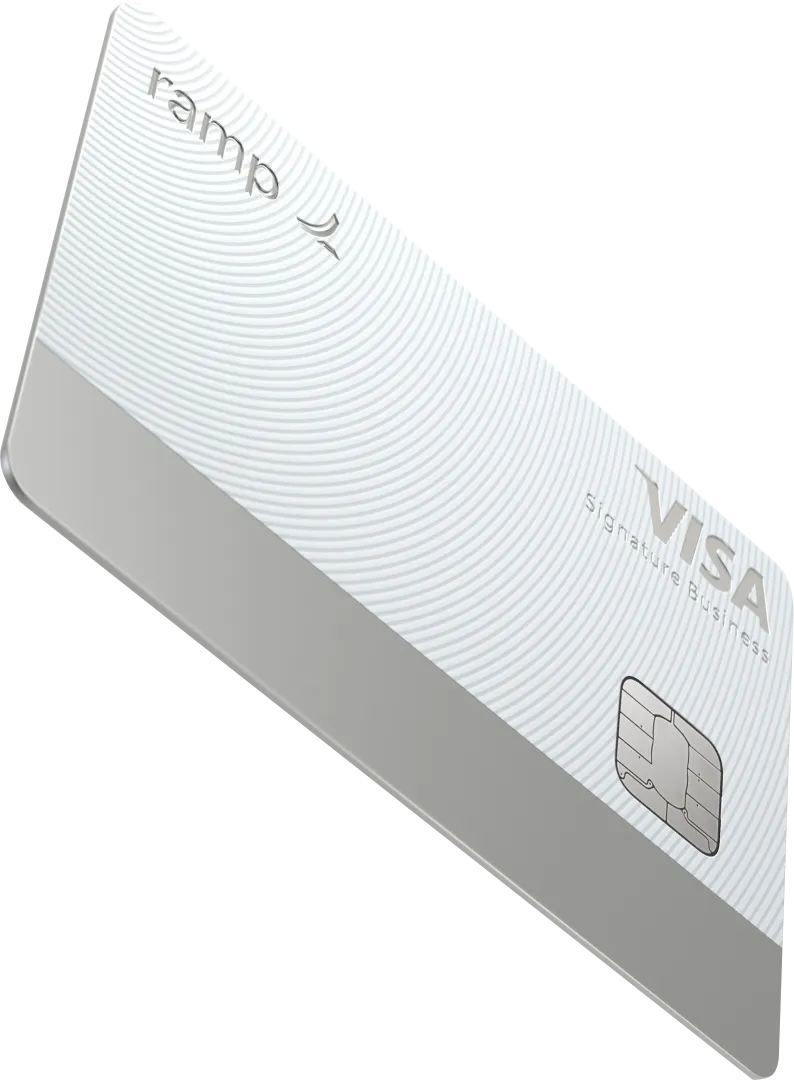
Discover Ramp's corporate card for modern finance
How to set up a corporate credit card program
Setting up a corporate credit card program starts with choosing a provider that fits your business needs, then developing clear policies and training employees on how to use their cards. These steps help you maximize benefits, maintain control, and prevent misuse as the program scales.
Step 1: Evaluate your needs and eligibility
Before comparing providers, assess whether your company qualifies for a corporate card program and what type of program fits your needs.
Traditional corporate card programs set high bars for eligibility. American Express, for example, requires at least $4 million in annual revenue, along with strong business credit and several years of operating history. Other issuers may require audited financial statements, minimum employee counts, or specific industry qualifications.
You'll typically need to provide business registration documents, bank statements, and revenue figures during the application process.
If your company doesn't meet those thresholds, you still have options. Some modern providers use alternative underwriting models based on company financials or sales data rather than personal credit scores. This approach makes corporate card programs accessible to startups and growth-stage companies that have strong revenue momentum but limited operating history.
Consider whether you need cards for a small executive team or across your entire organization. The answer will shape your requirements for spending controls, approval workflows, and reporting features.
Step 2: Choose the right corporate card provider
Begin by evaluating providers based on the features that matter most to your company. Look at costs such as annual fees and foreign transaction charges, the quality of reporting dashboards, and the strength of customer support. Rewards structures also differ, so select one that aligns with your spending patterns.
Ask about credit limits, fraud protection practices, card-issuance timelines, and references from companies similar to yours. Strong integrations with platforms like QuickBooks, NetSuite, or Xero can also reduce manual entry and improve financial visibility.
How to maximize your credit limit
If you're an e-commerce business, consider providers like Ramp that can underwrite your credit limit using sales data from platforms such as Stripe, Shopify, and Amazon. This may help you qualify even without extensive revenue history.
Step 3: Establish your corporate card policy
Your corporate card policy defines how employees should use their cards and sets clear expectations. Essential components include who is eligible for a card, the consequences for policy violations, and guidelines for submitting receipts and documentation.
Set spending limits that reflect employee roles and responsibilities, such as different thresholds for junior staff, managers, and executives. Outline which expenses are allowed and which are prohibited, including restrictions on personal purchases, cash advances, and gift cards. Provide rules for handling accidental personal charges and clarify any pre-approval thresholds for larger expenses.
Step 4: Train employees and roll out
Training ensures employees understand how to use their cards responsibly from day one. Consider phasing the rollout by department or role, and provide reference guides with examples of common expenses and FAQs.
Offer live training sessions on policy details, receipt capture, and expense submission, and supplement them with short videos and written instructions. Follow-up sessions after 30 and 90 days can surface issues early and help refine your program based on real-world feedback.
Corporate card policy best practices
A well-crafted policy balances employee autonomy with financial oversight, creating guidelines that protect your company while enabling productive work.
Setting clear usage guidelines
Clear usage guidelines help employees understand what they can charge and how to stay within policy. Most companies permit expenses related to business travel, client entertainment, office supplies, and software subscriptions. These categories provide structure without limiting employees who regularly spend as part of their roles.
- Business travel: Airfare, hotels, ground transportation, parking, and meals for work trips
- Client entertainment: Restaurant meals, event tickets, and hospitality with a documented business purpose
- Office supplies: Equipment, furniture, software subscriptions, and materials needed for daily operations
- Professional development: Conference registrations, training courses, industry memberships, and educational materials
Documentation requirements help finance teams verify expenses efficiently. For example, you may require receipts for purchases over $25 and ask employees to submit them within 5 business days using digital photos or emailed confirmations. Personal purchases should be prohibited, and your policy should outline how to report accidental charges and reimburse the company quickly to keep the program consistent and fair.
Implementing approval workflows
Approval workflows help control spending by ensuring larger or unusual purchases receive the right level of review. For example, you might require manager approval for expenses above a certain threshold or for categories outside normal business use. These workflows can be handled through email or built directly into your expense management software.
Regular manager reviews strengthen oversight and help teams stay within budget. Monthly check-ins can surface issues early, while quarterly reviews with finance give the company a broader understanding of spending patterns. For one-off or atypical purchases, a clear exception process allows employees to request approval with an explanation of the business need.
Compliance and monitoring
Consistent monitoring keeps your corporate card program compliant and helps deter misuse. Many companies review a sample of monthly transactions to confirm receipts, merchant categories, and descriptions are accurate, while annual audits reveal broader trends or policy gaps that need attention.
Your policy should clearly outline consequences for violations, from warnings and retraining to temporary suspension or, in serious cases, termination. Because business needs evolve, review your card policy annually and communicate updates through email and brief refresher training so cardholders stay aligned with current expectations.
Managing and optimizing your program
Once your corporate card program is in place, ongoing management helps you maintain oversight and identify areas for improvement. Regular reviews of spending patterns, employee usage, and policy alignment keep the program efficient as your business evolves.
Expense management integration
Connecting cards to expense management software eliminates manual data entry and speeds up expense submission. Direct integrations push transactions into systems like Ramp, Concur, or Divvy within minutes of purchase, allowing employees to attach receipts and submit expenses quickly. A Forrester study commissioned by Ramp found that automating expense reporting saved employees a total of 2,280 hours per year.
Automation can also categorize transactions, flag potential policy violations, and route approval requests to the right manager.
Real-time reporting gives finance teams a clear view of spending by department, employee, or category. Alerts help managers monitor limits or unusual activity, and dashboards make it easier to compare current spend against budgets. Together, these tools help your company stay on top of expenses without relying on manual review.
Automation and real-time visibility
Modern corporate card platforms offer features that make it easier to manage spending and support employees in the field. Mobile apps allow users to view transactions, freeze or unfreeze cards, adjust limits, and approve requests from anywhere. Receipt capture tools ensure documentation stays connected to each transaction.
Virtual cards provide an additional layer of control for online purchases. You can generate single-use or merchant-specific card numbers to reduce fraud risk and better manage recurring subscriptions. These features also simplify vendor management and give finance teams more control over high-volume online purchases.
Tracking program performance
Monitoring performance metrics helps you understand whether your program is delivering the expected value. Common metrics include expense processing time, policy compliance rates, employee adoption, and program cost per transaction. Tracking these numbers highlights where processes are working and where adjustments may be needed.
Spending analysis can uncover opportunities to negotiate better rates, adjust limits, or update policy language. Regular quarterly reviews with stakeholders help keep your program aligned with business goals, while annual evaluations give you a chance to reassess providers, renegotiate terms, or expand card access as your company grows.
Common challenges and solutions
Running a corporate card program comes with operational hurdles, from getting employees on board to preventing fraud. Anticipating these challenges helps you build a program that scales without creating extra work for your finance team.
Employee adoption issues
Employees may resist new processes because they're worried about oversight or simply unfamiliar with corporate card systems. Clear communication about the benefits, such as eliminating out-of-pocket expenses and reducing paperwork, helps ease those concerns. Sharing feedback from early adopters and providing quick reference guides can build confidence and encourage better habits.
Privacy worries also surface when employees fear their spending will be monitored too closely. Explaining what data is collected, why it matters, and how it protects employees from liability helps reduce hesitation. Incentives like recognition for high compliance or consistent receipt submission can also motivate proper card usage across teams.
Fraud prevention and security
Fraud risks include stolen cards, compromised card numbers, duplicate vendor billing, and intentional misuse. Preventive measures such as spending limits, merchant category blocks, real-time alerts, and virtual card numbers for online transactions reduce exposure and help finance teams identify suspicious activity quickly.
A clear response plan ensures issues are handled efficiently. Employees should know how to report lost cards immediately, and finance teams should investigate questionable transactions within 24 hours. Tracking metrics such as fraud incident rates, time to detect charges, and recovery rates helps you evaluate the effectiveness of your controls and identify areas that may need stronger safeguards.
Modern card platforms add several layers of protection beyond these fundamentals:
- Real-time transaction alerts: Finance teams and cardholders get notified the moment a charge occurs, so suspicious activity gets flagged within seconds
- Virtual card numbers: You can issue single-use or merchant-locked credentials for online purchases, reducing the risk of compromised card data
- Merchant category restrictions: Block entire spending categories, like gambling or personal retail, at the card level
- Automatic card freezing: If a card shows unusual patterns, the platform can shut it down before additional charges go through
Connecting your card platform to your accounting system also enables anomaly detection. The software flags transactions that fall outside normal spending patterns, so your team can review them quickly.
Who offers corporate credit cards?
There are two primary sources for corporate credit cards: traditional banks and software-based financial providers. Each serves different business needs, with banks emphasizing credit history and software providers focusing on accessibility and modern controls.
Traditional banks
Traditional banks typically design their corporate card offerings for larger companies with strong credit histories and higher annual revenue. These cards often come with more stringent eligibility requirements because banks take on greater risk by offering higher credit limits. They may also charge annual fees and foreign transaction fees for international spending.
Examples of bank-backed corporate cards include:
- American Express Corporate Card
- Chase Ink Business Preferred Card
- Citi Commercial Card
- Capital One Spark Cash Plus
These cards don't always offer the same depth of spend controls or software integrations that modern finance teams expect, which can limit real-time visibility.
Software providers
Software-oriented providers offer corporate cards with more flexible eligibility criteria, making them accessible for startups and small to medium-sized businesses. Many use real-time financial data and connected bank accounts to make underwriting decisions, enabling faster approval and easier onboarding.
Examples of software-backed corporate cards include:
- Ramp corporate card
- Brex card
These providers prioritize usability, offering real-time spend tracking, integrations with accounting platforms, automated expense management, and tools for managing recurring subscriptions. Their tech-forward approach simplifies application, improves visibility, and supports more hands-on spend management than most traditional bank programs.
Simplify your corporate card program with Ramp
Legacy corporate cards often lack modern spend controls and require rigid qualification criteria, while business credit cards typically rely on personal guarantees. Ramp offers a more flexible alternative: a charge card with built-in pre-spend controls, no interest, no APR, and no personal guarantee required.
Ramp’s corporate credit card is combined with software for managing approvals, vendor payments, recurring subscriptions, and spending limits across teams. You get real-time visibility and control over every dollar before it's spent, without adding extra tools.
To qualify for a Ramp Card as a U.S. business, you'll need:
- A registered corporation, LLC, or LP
- An EIN number
- $25,000 or more in a business bank account
- Personal contact details as the business owner
Startups and growth-stage companies that don't meet traditional revenue thresholds can still qualify through Ramp's sales-based underwriting, which evaluates your business using data from platforms like Stripe, Shopify, and Amazon. Ramp offers cashback rewards on purchases, and the platform compounds that value with savings insights, price intelligence, and automated policy enforcement.
Try an interactive demo to see how Ramp gives you control over every dollar before it's spent.

FAQs
Most traditional corporate card programs set minimum revenue thresholds. American Express, for example, requires at least $4 million in annual revenue, strong business credit, and several years of operating history. Some modern providers use alternative underwriting models based on company financials or sales data, making programs accessible to smaller and growth-stage companies.
Yes. LLCs can apply for corporate credit cards, though eligibility depends on the provider's requirements. Some providers require a minimum revenue threshold or operating history. LLCs that don't meet traditional corporate card requirements may qualify for business credit cards or modern charge card programs with alternative underwriting.
The best corporate credit card program depends on your company's size, spending patterns, and needs. Key factors to evaluate include spending controls, expense management integration, rewards structure, credit limits, and whether the program requires a personal guarantee. Modern charge card programs often offer stronger controls and automation than traditional bank-issued corporate cards.
To obtain a corporate credit card, you'll typically need to apply through a bank or fintech provider. The application process requires business financial documentation, including revenue figures and bank statements. Traditional programs may take weeks to approve, while some modern providers offer faster approvals.
It depends on the liability model. Individual liability corporate cards may appear on your personal credit report and affect your credit score. Corporate liability cards generally don't impact personal credit since the company is responsible for repayment. Programs that require no personal guarantee offer the strongest separation between business and personal credit.
Ramp is available to businesses registered in the United States and Canada, and cards can be used for purchases in over 200 countries through the Visa network. U.S. businesses need at least $25,000 in a business bank account to qualify; Canadian businesses need at least CA$25,000 across their connected accounts and must be registered in a supported province. See Ramp’s Canadian eligibility requirements for the full details.


“I assumed I would have to choose between speed and control. What I found is that you can have both. A well-designed system takes friction out, for the finance function and for everyone else.”
Justin Webster
CFO, Denver Broncos

“A well-run district should not have to choose between getting work done at the school site and keeping control of the dollars behind it. We're not hiring more people to do more jobs, so we have to be smarter about the process. With Ramp, the purchase, the receipt, and the record stay together from the start. ”
Nick Brizeno
Director of Purchasing, San Marcos Unified School District

“In senior living, scale only works if the communities still feel personal. We needed the back office to carry more of the complexity, not the people serving residents. Ramp helped us build that infrastructure, so the experience in the community could stay human.”
Ryan Cole
CFO, Agemark Senior Living

“AI is moving faster than the finance context around it. Prices change, models change, and the value is not always obvious from an invoice. We needed enough detail to know which bets deserved more investment — and which ones did not.”
Greg Cooley
Controller, AngelList

“Invoices, cards, tokens. The categories change but the principle doesn't: know where the money is going, remove the work around it, and make sure the spend is worth it.”
Maciej Mylik. Finance
ElevenLabs

“We weren’t trying to retrofit an old finance system. We had a blank canvas, and Ramp gave us the foundation to build a global finance function of the future.”
Justin Dourado
Director of Finance, Othership

“There's just no surprises anymore. No more waiting two months to find out how a job did. We know how it's doing as it's happening.”
Erich Kuss
Financial Systems Manager, Infinity Home Services

“More token spend isn’t proof that AI is working. Less isn’t proof that it isn’t. What matters is whether we’re buying the right level of intelligence for the work. Ramp lets us make that judgment in the same place we manage every other type of spend.”
Cody Nutt
Senior Director of Business Systems, Daxko
