
- How Brex, American Express, and Ramp compare at a glance
- Corporate cards and rewards
- Spend controls and policy enforcement
- Expense management and AP integration
- Pricing and total cost of ownership
- Accounting integrations and month-end close
- Brex vs American Express vs Ramp: full comparison
- Which platform fits your team?
- See why teams are choosing Ramp
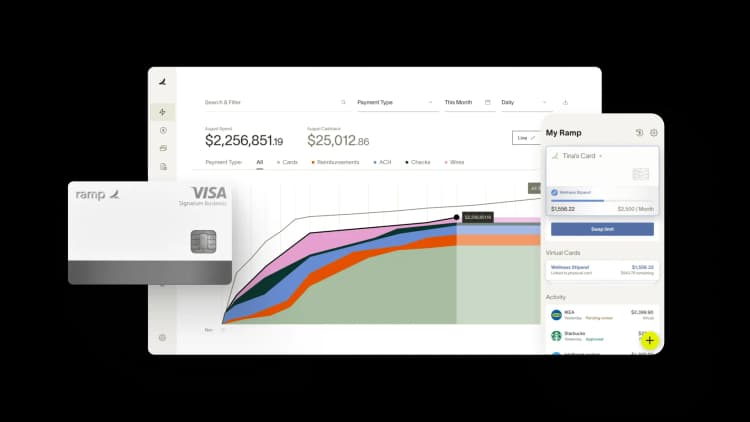
Brex, American Express, and Ramp take three different approaches to corporate cards. Amex offers a wide portfolio of travel-rewards cards with established brand recognition. Brex pairs cards with built-in spend management. Ramp combines corporate cards with expense management, accounts payable, and accounting automation in a single platform.
The real question is which approach solves the bigger problem: managing spend across your entire finance operation, not just at the point of purchase. This guide breaks down how Brex, Amex, and Ramp compare on rewards, controls, expense management, pricing, and accounting integrations so you can pick the right fit for your team.
How Brex, American Express, and Ramp compare at a glance
The table below highlights how the three platforms differ across pricing, features, and capabilities.
| Feature | Brex | American Express | Ramp |
|---|---|---|---|
| Best for | Companies wanting high-limit cards with built-in spend management | Companies wanting a traditional charge or credit card with established rewards programs | Companies managing spend across cards, expenses, and AP |
| Annual fee | $0 (Essentials); $12/user/month (Premium) | Varies by card ($0–$895) | $0 (Free); $15/user/month + platform fee (Plus) |
| Rewards structure | Points (1x base, up to 8x on select categories) | Membership Rewards points or cash back | Cashback on purchases |
| Personal guarantee required | No | Often yes | No |
| Expense management | Full platform | Cards integrate with third-party expense tools | Full platform |
| Accounts payable | Full platform | Cards integrate with third-party AP tools | Full platform |
| Accounting integrations | QuickBooks Online, NetSuite, Xero | Connects via partner integrations | QuickBooks Online, NetSuite, Sage Intacct, Xero |
Next, we break down each feature to show how the platforms differ in practice.
Corporate cards and rewards
Card programs differ in how predictable rewards are and how much administrative work they create.
American Express
American Express offers a wide portfolio of business cards, each with its own fee structure and rewards program. The Business Platinum Card carries an $895 annual fee and earns Membership Rewards points with multipliers on flights booked directly with airlines and prepaid hotels booked through Amex Travel. The Blue Business Cash Card has no annual fee and offers 2% cash back on the first $50,000 in purchases each year.
One thing to keep in mind: most Amex business cards require a personal guarantee. That means if your company can't pay the balance, you're personally on the hook. Your personal credit score can take a hit, and in some cases, personal assets could be at risk.
Brex
Brex evaluates company cash balance and funding history during underwriting. For venture-backed startups, this often translates to higher credit limits without a personal guarantee.
Brex uses a points system with a 1x base rate and category multipliers. You can earn up to 8x points on rideshares and 4x on restaurants. The value you get from those points depends on how you redeem them, with travel redemptions tending to stretch further than cash.
Ramp
Ramp provides unlimited physical and virtual corporate cards with no annual card fees. Ramp offers cashback on purchases, so you know exactly what you're getting.
Beyond rewards, Ramp lets you set granular controls at the card level. You can restrict specific merchants, cap spending amounts, or block entire categories. Instead of just handing out cards and hoping for the best, you're building your expense policy directly into each card.
Spend controls and policy enforcement
Cards differ in whether spend rules apply at the moment of purchase or only after the transaction posts.
American Express
Amex provides card-level limits and employee card management through its online portal. Spending limits and transaction review happen through the portal, with the ability to flag or dispute charges after they post.
Brex
Brex offers proactive controls. You can set category restrictions, vendor blocks, and budget-based spending limits that apply before transactions complete. If an employee tries to spend outside an approved category or exceed their department budget, the system can block the purchase in real time.
Ramp
Ramp's real-time controls automatically lock cards when someone attempts an out-of-policy purchase. The transaction simply declines.
The Plus tier also includes a workflow simulator. Before rolling out a new policy, you can test it against historical transactions to see what would have been blocked. This helps you avoid accidentally declining legitimate purchases.
Real-world results back this up. Piñata achieved 95% receipt compliance with Ramp (a 58% improvement) through automated reminders and controls that enforced policy at the point of purchase.
Expense management and AP integration
A card by itself is just a payment method. The platform around it determines how much manual reconciliation work your finance team ends up doing.
American Express
Amex cards integrate with expense and AP tools like Concur and Expensify through partner integrations. Expense management and accounts payable functionality come from those connected platforms, which means managing multiple data sources and dealing with potential sync issues between them.
This setup works well if you already have established systems in place.
Brex
Brex includes built-in expense management with budget controls, receipt matching, and approval workflows. Employees submit expenses through the mobile app, and the system automatically matches receipts to transactions.
Brex also offers accounts payable functionality, so you can manage vendor payments alongside card spend in one place. This reduces the number of tools your finance team has to juggle.
Ramp
Ramp's cards are part of a broader platform that includes expense management, accounts payable software, and accounting automation. Once you're set up, Bill Pay by Ramp handles vendor invoices in the same system you use to manage card spend.
Auto-categorization and continuous reconciliation mean transactions get coded and matched as they occur, not in a batch at month-end. Snapdocs cut monthly reconciliation from 5–6 hours to under 30 minutes (a 91% improvement) after consolidating onto Ramp.
Pricing and total cost of ownership
The headline price of a card rarely tells the whole story. Annual fees, per-employee fees, and reward redemption rates all affect what you actually pay.
American Express
Annual fees vary significantly across the Amex portfolio. The Business Platinum carries an $895 annual fee with premium travel perks and lounge access. The Business Gold runs $375/year with category multipliers on common business expenses, and the Blue Business Cash has no annual fee with straightforward cash back. Some cards also charge additional fees for employee cards beyond a set threshold.
Brex
Brex's Essentials tier is free and covers basic card functionality. The Premium tier costs $12 per user per month and adds advanced controls, integrations, and priority support.
While the card itself has no annual fee, per-user pricing can add up quickly as your team grows.
Ramp
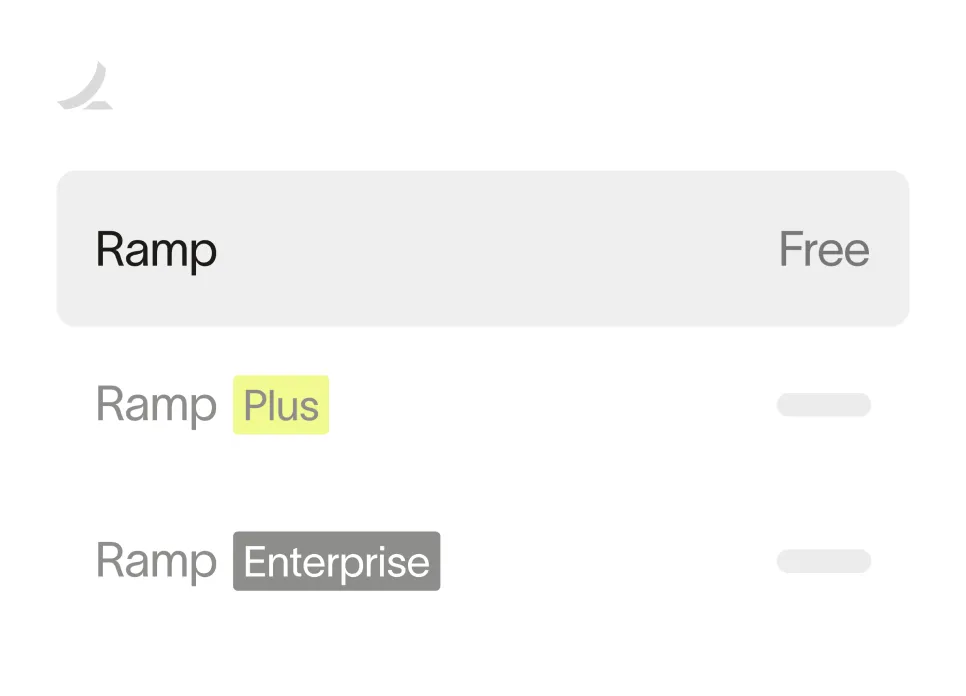
Ramp's free tier includes cards, expense management, and basic AP functionality. The Plus tier costs $15 per user per month, plus a platform fee, and adds features like the workflow simulator and priority support.
Cashback on purchases helps offset platform costs. For many teams, the time saved through automated reconciliation and reduced manual work exceeds subscription fees.
Ready to take control of your finances?
Learn about Ramp’s pricing plans and start saving today.
Accounting integrations and month-end close
The way card data flows into your books determines whether close takes hours or days.
American Express
Amex transaction data flows into accounting platforms through partner connectors or manual exports. This adds steps to your close process and can create opportunities for data entry errors along the way.
Brex
Brex offers integrations with QuickBooks Online, NetSuite, and Xero. Transactions sync automatically, and receipt matching reduces manual reconciliation work.
The integrations handle most common workflows well, though complex multi-entity setups may require additional configuration.
Ramp
Ramp provides sync with QuickBooks Online, NetSuite, Sage Intacct, and Xero. Continuous reconciliation means transactions get coded and matched throughout the month rather than piling up for a batch process at close.
AI-powered receipt matching automatically links receipts to transactions, reducing the time spent chasing down missing documentation. Custom field mapping lets you align Ramp's categories with your existing chart of accounts.
Brex vs American Express vs Ramp: full comparison
| Feature | Brex | American Express | Ramp |
|---|---|---|---|
| Card types | Physical and virtual | Physical (virtual varies by card) | Physical and virtual |
| Credit limit basis | Cash balance and funding | Personal credit and business history | Cash balance and business metrics |
| Personal guarantee | No | Often required | No |
| Annual card fee | $0 | $0–$895 depending on card | $0 |
| Platform pricing | Free (Essentials); $12/user/month (Premium) | Card fees only | Free; $15/user/month + platform fee (Plus) |
| Rewards | Points (variable redemption value) | Points or cash back (varies by card) | Cashback on purchases |
| Real-time spend controls | Yes | Card-level limits, post-transaction review | Yes |
| Expense management | Full platform | Through partner integrations | Full platform |
| Accounts payable | Full platform | Through partner integrations | Full platform |
| Receipt matching | Yes | Through partner integrations | Yes (AI-powered) |
| QuickBooks integration | Yes | Through partner connectors | Yes |
| NetSuite integration | Yes | Through partner connectors | Yes |
| Sage Intacct integration | No | Through partner connectors | Yes |
| Xero integration | Yes | Through partner connectors | Yes |
| Travel booking | Yes | Through partner programs | Yes |
| Mobile app | Yes | Yes | Yes |
Which platform fits your team?
Your choice depends on what problem you're actually trying to solve.
If your priority is established card products with travel perks and Membership Rewards flexibility, American Express may be a good option. The Business Platinum Card offers airport lounge access, hotel status, and an established rewards program with broad partner coverage. You'll pay for those benefits through annual fees and potentially personal liability.
If your priority is high credit limits without a personal guarantee, Brex may be a good fit. The underwriting model works well for venture-backed companies with strong cash positions but limited credit history. The points system rewards typical startup spending, such as software subscriptions and rideshares.
If your priority is consolidating cards, expense management, and accounts payable into a single platform, Ramp is a good solution. You get one spend management platform that handles spend from swipe to close. The cashback structure provides predictable value, and automated controls reduce policy violations before they happen.
See why teams are choosing Ramp
Finance teams at over 85,000 companies use Ramp to manage spend across cards, expenses, and AP. WizeHire cut monthly close time from 12 days to 5 days after consolidating onto the platform. Sandboxx saved 10 hours per month after replacing Amex, Expensify, and Bill.com with Ramp.
The difference isn't just about features. It's about how those features work together. When your cards, expenses, and vendor payments live in one system, you eliminate the reconciliation work that eats up your team's time.
Try an interactive demo to see how Ramp works, or explore customer stories to see results from companies like yours.


“I assumed I would have to choose between speed and control. What I found is that you can have both. A well-designed system takes friction out, for the finance function and for everyone else.”
Justin Webster
CFO, Denver Broncos

“A well-run district should not have to choose between getting work done at the school site and keeping control of the dollars behind it. We're not hiring more people to do more jobs, so we have to be smarter about the process. With Ramp, the purchase, the receipt, and the record stay together from the start. ”
Nick Brizeno
Director of Purchasing, San Marcos Unified School District

“In senior living, scale only works if the communities still feel personal. We needed the back office to carry more of the complexity, not the people serving residents. Ramp helped us build that infrastructure, so the experience in the community could stay human.”
Ryan Cole
CFO, Agemark Senior Living

“AI is moving faster than the finance context around it. Prices change, models change, and the value is not always obvious from an invoice. We needed enough detail to know which bets deserved more investment — and which ones did not.”
Greg Cooley
Controller, AngelList

“Invoices, cards, tokens. The categories change but the principle doesn't: know where the money is going, remove the work around it, and make sure the spend is worth it.”
Maciej Mylik. Finance
ElevenLabs

“We weren’t trying to retrofit an old finance system. We had a blank canvas, and Ramp gave us the foundation to build a global finance function of the future.”
Justin Dourado
Director of Finance, Othership

“There's just no surprises anymore. No more waiting two months to find out how a job did. We know how it's doing as it's happening.”
Erich Kuss
Financial Systems Manager, Infinity Home Services

“More token spend isn’t proof that AI is working. Less isn’t proof that it isn’t. What matters is whether we’re buying the right level of intelligence for the work. Ramp lets us make that judgment in the same place we manage every other type of spend.”
Cody Nutt
Senior Director of Business Systems, Daxko
