
- How Brex, Mercury, and Ramp compare at a glance
- How corporate cards and spend controls compare
- Banking and treasury capabilities
- Expense management and accounts payable features
- Pricing structures and rewards programs
- Brex vs. Mercury vs. Ramp: Full comparison
- Which platform fits different company stages?
- See why finance teams choose Ramp
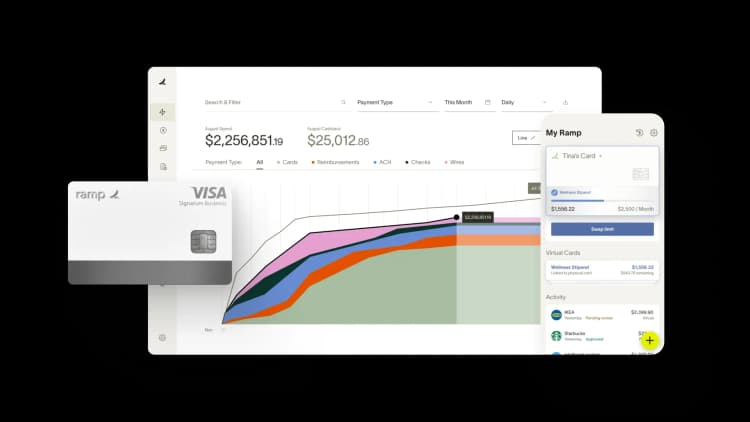
Brex, Mercury, and Ramp show up in nearly every finance stack conversation for startups and growing companies — but they're not interchangeable. Brex built its reputation on high-limit corporate cards, Mercury is fundamentally a banking platform, and Ramp combines cards, expenses, AP, and accounting automation into one spend management system.
Choosing between them depends on whether you're solving for banking, rewards, or operational efficiency. This guide breaks down how each platform handles corporate cards, expense management, pricing, and company stage fit so you can pick the right tool for your team.
How Brex, Mercury, and Ramp compare at a glance
The table below highlights how the three platforms differ across pricing, features, and capabilities.
| Brex | Mercury | Ramp | |
|---|---|---|---|
| Best for | Companies wanting cards with high limits and startup-friendly rewards | Companies wanting business banking and cards in one place | Companies managing spend across cards, expenses, and AP |
| Pricing | Essentials free; Premium $12/user/mo; Enterprise custom | Free checking; Plus plans available | Free tier; Plus $15/user/mo; Enterprise custom |
| Cards | Physical + virtual with category controls | Physical + virtual with basic controls | Physical + virtual with granular controls |
| Banking/Treasury | Yes (checking, treasury, vault with up to $6M FDIC) | Yes (checking, savings, treasury) | Yes (treasury, FDIC, investment accounts) |
| AP/Bill pay | Available | Available | Built-in |
| Expense management | Full platform | Basic | Full platform |
Next, we break down each feature to show how the platforms differ in practice.
How corporate cards and spend controls compare
Each platform approaches corporate cards differently, and the differences reflect their broader priorities.
Brex
Brex made its name offering high credit limits to startups, often based on your cash balance rather than personal credit history. The cards come with category-level controls and a points-based rewards program with category multipliers. Brex also charges $25 per trip when you book travel through their platform.
Mercury
Mercury's cards connect directly to your bank accounts. The IO card program offers 1.5% cashback, though you'll want to check the balance requirements. The spending controls are more basic, but they work fine if your main goal is having cards tied to your banking.
Ramp
Ramp's corporate cards give you control at the merchant, category, and vendor level. You can issue unlimited physical and virtual cards, set spending limits for employees or teams, and block purchases from specific merchants. Ramp offers cashback on purchases, and the money goes straight back to your company rather than into a complicated points system. For international teams, Ramp's Enterprise tier includes local currency cards.
Banking and treasury capabilities
All three platforms offer some form of banking or treasury, though the depth and focus differ.
Brex
Brex offers a business account with checking, a treasury investment account, and a vault feature providing up to $6 million in FDIC coverage through 24 partner banks. It's a solid banking option, though the platform's core strength remains cards and spend management rather than banking.
Mercury
Mercury built its entire platform around banking. You get checking accounts, savings accounts, and treasury management services. Through partner banks, Mercury offers FDIC insurance coverage up to $5 million, which is significantly higher than the standard $250,000 limit. The platform also pays competitive interest rates on idle cash, which matters when you're sitting on runway.
Ramp
Ramp offers treasury with a business account that earns interest on operating cash through FDIC-insured institutions,¹ plus an investment account for higher yields on idle cash.² There are no fees, minimum deposits, or transfer caps, and the treasury product handles cash management alongside the rest of the platform—cards, expenses, AP, and accounting all in one place.
Expense management and accounts payable features
Expense management depth varies significantly across the three platforms.
Brex
Brex offers solid expense management with budget controls, receipt matching, and AP capabilities. The platform handles core workflows well, though it lacks proactive policy enforcement and AI-powered automation. Brex has increasingly focused on enterprise and global features, which may be more than mid-market teams actually require.
Mercury
Mercury's expense tracking ties to card transactions, but it's not a dedicated expense management platform. You can categorize spending and pull basic reports. However, you won't find automated approval workflows, policy enforcement, or the kind of receipt matching that dedicated expense tools provide. For simple needs, Mercury's approach works. For growing finance operations, you'll likely outgrow it.
Ramp
Ramp's expense management enforces your spending policies before purchases happen, not after. The system uses AI to match receipts to transactions automatically, so you spend less time chasing employees for documentation. Beyond expenses, Ramp includes full accounts payable automation, procurement workflows, and accounting integrations that sync transactions directly to your general ledger.
Pricing structures and rewards programs
All three platforms offer free tiers, though what's included at each level varies.
Brex
Brex's Essentials plan is free and covers basic card and expense functionality. Premium costs $12 per user per month and unlocks features like advanced budgets and custom expense policies. The $25 per trip travel fee applies regardless of which plan you're on. Brex's points system requires understanding redemption tiers and transfer partners to get maximum value, which adds complexity for most finance teams.
Mercury
Mercury's core banking is free, and that's the main value proposition. The IO card program with 1.5% cashback requires maintaining certain balance thresholds. Treasury services and other features may have associated fees depending on your account type.
Ramp
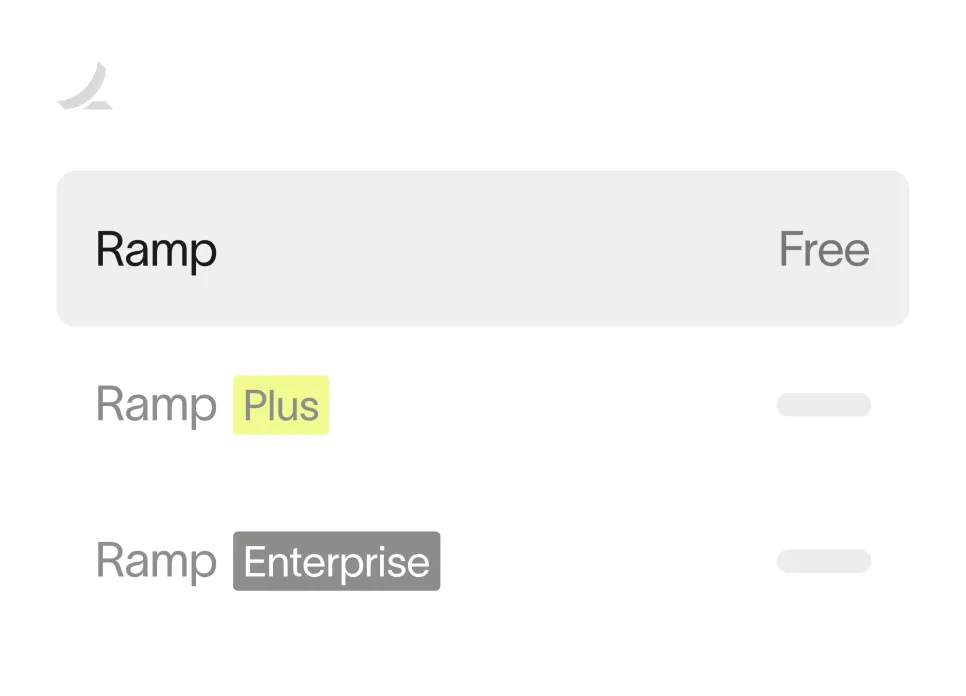
Ramp's free tier includes corporate cards, basic expense management, and bill pay. The Plus tier costs $15 per user per month and adds advanced features like custom approval workflows, accounting automation, and priority support. Ramp offers cashback on purchases, with no point valuations or redemption tiers to figure out.
When Piñata switched from Brex to Ramp, their finance team saved 20 hours per month and improved receipt compliance to 95%.
Ready to take control of your finances?
Learn about Ramp’s pricing plans and start saving today.
Brex vs. Mercury vs. Ramp: Full comparison
| Feature | Brex | Mercury | Ramp |
|---|---|---|---|
| Cards | Physical + virtual with category controls | Physical + virtual with basic controls | Physical + virtual with granular controls |
| Cashback/Rewards | Points-based with category multipliers | 1.5% cashback (IO cards) | Cashback on purchases |
| Expense management | Full platform | Basic | Full platform with proactive enforcement |
| AP/Bill Pay | Available | Available | Built-in |
| Banking/Treasury | Yes (checking, treasury, vault) | Yes (checking, savings, treasury) | Yes (treasury, FDIC, investment accounts) |
| Accounting sync | Available | Limited | Native (QBO, NetSuite, Sage, Xero) |
| Pricing | Free; $12/user Premium; $25/trip travel | Free checking; Plus varies | Free tier; $15/user Plus |
Which platform fits different company stages?
Your company's stage and priorities point toward different platforms.
Early-stage startups often choose Mercury because it consolidates banking and cards in one place. The free checking account and clean interface appeal to founders who want simplicity. As finance operations grow more complex, though, many teams find themselves adding other tools to fill gaps in expense management and AP.
Venture-backed, high-growth companies have historically chosen Brex for its high credit limits and startup-friendly underwriting. If you're scaling quickly and want significant credit capacity, Brex's cash-based credit limit approach can be attractive. The global capabilities also matter for companies expanding internationally.
Ramp works across all company stages. The free tier serves early-stage companies well, Plus scales with growing teams, and Enterprise handles complex, multi-entity organizations. When you're hiring your first controller, working with auditors, or facing requirements from banks and investors, you want more than cards and basic expense tracking. Ramp's combination of spend controls, automated workflows, and accounting integrations addresses what growing finance teams actually do day to day.
See why finance teams choose Ramp
When Piñata switched from Brex to Ramp, they saved 20 hours a month and pushed receipt compliance to 95%. That's the kind of shift that happens when your cards, expenses, AP, and accounting live in one platform instead of three. Whether you're an early-stage startup or a scaling enterprise, Ramp grows with you.
Try an interactive demo to see how Ramp works, or explore more customer stories from teams that made the switch.
¹ Ramp Business Corporation is a financial technology company and is not a bank. Bank deposit services provided by First Internet Bank of Indiana, Member FDIC.
² Portfolios managed by Moment Advisors, LLC. Investing involves risk, including possible loss of principal. Asset allocation does not guarantee profit or protect against loss. Past performance does not guarantee future results. Securities products offered by Apex Clearing Corporation, member FINRA, SIPC. The Investment Account is not insured by the FDIC, not a deposit product, and may lose value.


“I assumed I would have to choose between speed and control. What I found is that you can have both. A well-designed system takes friction out, for the finance function and for everyone else.”
Justin Webster
CFO, Denver Broncos

“A well-run district should not have to choose between getting work done at the school site and keeping control of the dollars behind it. We're not hiring more people to do more jobs, so we have to be smarter about the process. With Ramp, the purchase, the receipt, and the record stay together from the start. ”
Nick Brizeno
Director of Purchasing, San Marcos Unified School District

“In senior living, scale only works if the communities still feel personal. We needed the back office to carry more of the complexity, not the people serving residents. Ramp helped us build that infrastructure, so the experience in the community could stay human.”
Ryan Cole
CFO, Agemark Senior Living

“AI is moving faster than the finance context around it. Prices change, models change, and the value is not always obvious from an invoice. We needed enough detail to know which bets deserved more investment — and which ones did not.”
Greg Cooley
Controller, AngelList

“Invoices, cards, tokens. The categories change but the principle doesn't: know where the money is going, remove the work around it, and make sure the spend is worth it.”
Maciej Mylik. Finance
ElevenLabs

“We weren’t trying to retrofit an old finance system. We had a blank canvas, and Ramp gave us the foundation to build a global finance function of the future.”
Justin Dourado
Director of Finance, Othership

“There's just no surprises anymore. No more waiting two months to find out how a job did. We know how it's doing as it's happening.”
Erich Kuss
Financial Systems Manager, Infinity Home Services

“More token spend isn’t proof that AI is working. Less isn’t proof that it isn’t. What matters is whether we’re buying the right level of intelligence for the work. Ramp lets us make that judgment in the same place we manage every other type of spend.”
Cody Nutt
Senior Director of Business Systems, Daxko
