How are receipts handled when a charge is refunded?

- Common refund scenarios
- Handling receipts with refunds
- How receipts and refunds are managed on Ramp
- Common questions about receipt handling for refunds
- Best practices
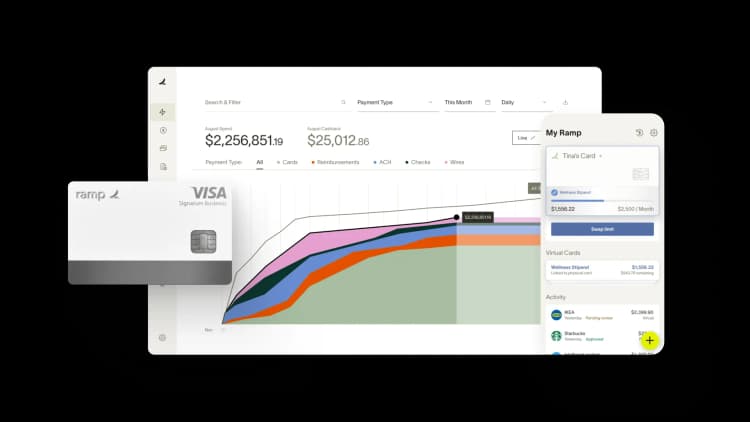
Receipts always remain attached to the original charge, even if the transaction is later refunded. This preserves the original documentation for audits and reporting. Refunds typically return funds to the original payment method, but the receipt stays linked to the initial transaction for compliance purposes. On Ramp, refunds are recorded as related transactions, and the original receipt remains connected to both the charge and the refund, so you don’t need to re-upload or re-match documentation.
Common refund scenarios
- Partial refunds: If a vendor issues a partial refund, the original receipt stays attached to the initial charge, and the refund appears as a related transaction
- Full refunds: When a transaction is fully refunded, the receipt remains tied to the original charge so auditors can see proof of the original purchase
- Multiple refunds: If multiple partial refunds are issued, each one ties back to the same original charge and receipt
- Refunds after close: If a refund posts in a later period, the receipt stays with the original transaction, and the refund is tracked as a new entry in that period
Example: A $200 conference registration is charged, and a receipt is uploaded. The vendor later refunds $100 for a canceled workshop. The $200 charge remains documented with the receipt, and the $100 refund is displayed as a related transaction in Ramp. Refunds generally return to the original payment method, but the documentation remains anchored to the initial charge.
What if there’s no receipt?
If no receipt was uploaded at the time of the original charge, the refund will still link back to that transaction, but you’ll need to add supporting documentation before closing the books. Many businesses require identification or issue store credit for no-receipt returns, but from an accounting perspective, the refund should still reference the original charge to preserve a clear audit trail.
Handling receipts with refunds
Receipt handling for refunds follows a simple principle: receipts must remain permanently attached to the original transaction, regardless of subsequent refunds. From an accounting perspective, the refund is recorded as a reversal or related entry, not as a replacement for the original charge.
- The receipt should always remain tied to the initial charge
- When a refund posts, the system should link it back to the original transaction automatically
- Refund records should include a reference to the receipt for context, even if no new receipt is provided
- The audit log should show the relationship between the charge, the refund, and the supporting documentation
Example: A $150 software subscription is charged, and a receipt is uploaded. The vendor later issues a $50 refund. The $150 charge remains documented with the receipt, and the $50 refund is shown as a related transaction. Auditors see both the charge and the refund tied to the same documentation.
Key takeaway: Refunds don’t replace receipts. They create linked transactions that preserve the original documentation and maintain a clear audit trail.
How receipts and refunds are managed on Ramp
In Ramp, receipts automatically stay attached to original charges even after refunds, maintaining complete audit trails across all integrated systems.
Ramp vs. traditional receipt handling methods
| Feature | Ramp | Traditional processes |
|---|---|---|
| Receipt attachment | Automatically stays tied to original charge | Often requires manual re-upload or tracking |
| Refund linking | Automatically matched to original transaction | Manual reconciliation required |
| Audit trail visibility | Complete charge-refund relationship shown instantly | May require searching across systems |
| Accounting sync | Receipt continuity maintained in NetSuite and QuickBooks | Documentation often fragmented |
| Processing timeline visibility | Refund timing clearly tracked (typically 3–5 business days) | Limited or delayed status visibility |
- Automatic linkage: Receipts uploaded to the original charge remain attached if a refund posts later
- Refund visibility: The refund appears as a separate transaction but is clearly tied to the original charge in Ramp’s dashboard
- ERP sync: When syncing to QuickBooks, NetSuite, or another ERP, the original receipt remains visible and linked to both the charge and the refund. This keeps the transactions connected in your general ledger and supports clean reconciliation during month-end close.
- Audit trail: Ramp preserves the relationship between the charge, refund, and receipt, ensuring full visibility during audits
Common questions about receipt handling for refunds
Do I need a new receipt for a refund?
No. The original receipt remains the primary documentation for the transaction. The refund creates a linked entry that references the existing receipt rather than requiring a new upload.
What happens to receipts for partial refunds?
The original receipt stays attached to the full charge amount. The partial refund appears as a separate transaction that links back to the original documentation.
How long should receipts be retained after refunds?
Receipts should be kept for the same retention period as standard transactions, typically up to 7 years for tax compliance, regardless of whether refunds occur.
Best practices
- Keep receipts attached to original transactions: Always maintain the receipt on the initial charge rather than moving it to the refund record. This preserves audit clarity.
- Review refunds within 48 hours of posting: Timely review helps ensure refunds are correctly matched to transactions and prevents reconciliation errors
- Use automated linking whenever possible: Automated systems reduce manual work and minimize the risk of documentation gaps
- Maintain consistent retention policies: Refunded transactions should follow the same record-keeping timelines as any other expense
Critical compliance note
IRS documentation requirements generally require businesses to retain expense receipts for up to seven years. Refunds do not change this requirement, and the original documentation must remain accessible throughout the retention period.


“I assumed I would have to choose between speed and control. What I found is that you can have both. A well-designed system takes friction out, for the finance function and for everyone else.”
Justin Webster
CFO, Denver Broncos

“A well-run district should not have to choose between getting work done at the school site and keeping control of the dollars behind it. We're not hiring more people to do more jobs, so we have to be smarter about the process. With Ramp, the purchase, the receipt, and the record stay together from the start. ”
Nick Brizeno
Director of Purchasing, San Marcos Unified School District

“In senior living, scale only works if the communities still feel personal. We needed the back office to carry more of the complexity, not the people serving residents. Ramp helped us build that infrastructure, so the experience in the community could stay human.”
Ryan Cole
CFO, Agemark Senior Living

“AI is moving faster than the finance context around it. Prices change, models change, and the value is not always obvious from an invoice. We needed enough detail to know which bets deserved more investment — and which ones did not.”
Greg Cooley
Controller, AngelList

“Invoices, cards, tokens. The categories change but the principle doesn't: know where the money is going, remove the work around it, and make sure the spend is worth it.”
Maciej Mylik. Finance
ElevenLabs

“We weren’t trying to retrofit an old finance system. We had a blank canvas, and Ramp gave us the foundation to build a global finance function of the future.”
Justin Dourado
Director of Finance, Othership

“There's just no surprises anymore. No more waiting two months to find out how a job did. We know how it's doing as it's happening.”
Erich Kuss
Financial Systems Manager, Infinity Home Services

“More token spend isn’t proof that AI is working. Less isn’t proof that it isn’t. What matters is whether we’re buying the right level of intelligence for the work. Ramp lets us make that judgment in the same place we manage every other type of spend.”
Cody Nutt
Senior Director of Business Systems, Daxko
