
- Best business gas credit cards by type
- Understanding different types of business gas cards
- Why your business needs a dedicated gas credit card
- Fleet cards vs. business gas credit cards
- How business gas cards compare to personal gas credit cards
- How to choose the right business gas card
- The best business gas credit cards for 2026
- How to apply for a business gas card
- Easy-approval business gas cards
- Take control of your fuel spending with Ramp
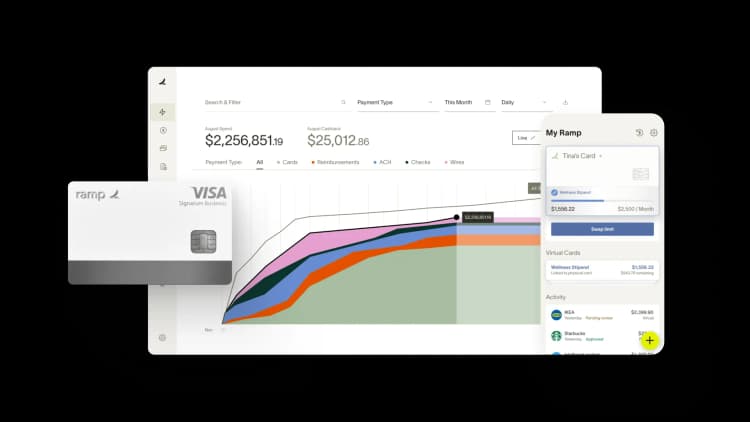
Fuel is one of those unavoidable business expenses that adds up fast. The card you choose can make the difference between earning cashback and overpaying with little visibility into where that money goes.
Whether you're fueling a few company vehicles, reimbursing employees for regular travel, or managing a growing fleet, the right business gas credit card helps you cut fuel costs, simplify tracking, and control who's spending, where, and on what.
Note: The cashback percentages, limits, fees, and other figures mentioned in this article are for illustrative purposes only. They do not represent guaranteed or expected rates. Actual terms, credit limits, rewards, and approval criteria vary by card issuer and may change at any time. Readers should verify current details directly with each issuer before applying.
Best business gas credit cards by type
If you want a quick answer, here's how the top business gas and fleet cards compare based on how different companies actually use fuel:
| Business type | Best card | Key benefit | Gas reward rate | Approval type | Annual fee |
|---|---|---|---|---|---|
| Small fleets (3–20 vehicles) | Ramp Business Credit Card | Built-in spend tracking + average 5¢/gallon savings | Cashback on purchases | No personal credit check, EIN only | $0 |
| High-volume fuel users | Shell Small Business Card | Up to 6¢/gallon at Shell stations | Up to 6¢/gallon discount | Standard credit check | $0 |
| Mixed business spending | U.S. Bank Triple Cash | 3% back on gas + office supplies | 3% cashback | Standard credit check | $0 |
| New businesses | WEX Fleet FlexCard | No credit check, wide acceptance | Per-gallon discounts (varies) | EIN only, no credit check | $0 |
| Costco members | Costco Anywhere Visa | 4% back on gas worldwide | 4% cashback | Standard credit check | $0 (with Costco membership) |
Want a deeper look at each option? Jump straight to our full reviews of the top business gas cards below.
How we evaluated the best business gas credit cards
To determine the best business gas credit cards, we evaluated each option across four core criteria: fuel rewards or savings, spending controls, approval requirements, and overall usability for growing businesses.
We prioritized cards that make fuel spending easier to track and manage, not just those with the highest advertised rewards. That meant weighing tradeoffs between flexibility, acceptance, reporting depth, and how well each card supports real-world business operations.
We also assessed each card based on who it's best suited for: small teams reimbursing employee fuel expenses, businesses managing multiple vehicles, or companies building business credit without relying on personal guarantees.
Understanding different types of business gas cards
Business gas cards generally fall into two categories: business gas credit cards and fleet fuel cards. Both help manage fuel spending, but they're designed for different types of businesses and levels of oversight.
Business gas credit cards work like traditional business credit cards, offering cashback or rewards on fuel purchases while also earning rewards on other categories such as travel or office supplies. They're widely accepted and are often the better fit for smaller teams or businesses that want flexibility beyond fuel.
Fleet fuel cards are built specifically for companies managing multiple vehicles or drivers. These cards typically include features like driver IDs, fuel-only purchase restrictions, and detailed reporting to help monitor usage, prevent misuse, and control costs across vehicles or job sites.
If your priority is maximizing rewards and broad acceptance, a business gas credit card is usually the better choice. If you need tighter controls and deeper visibility into fuel usage, a fleet card may be the stronger option. A more detailed comparison appears later in this guide.
Why your business needs a dedicated gas credit card
The average small business with a fleet of 5 vehicles spends $3,000 to $5,000 per month on fuel, and much of that cost goes uncategorized or untracked when run through personal cards or general-purpose business accounts. Without a dedicated gas card, you're leaving money on the table and losing visibility into one of your largest recurring expenses.
A gas credit card for business solves both problems. It separates fuel spending from other transactions, gives you real-time visibility into who's buying what, and pairs that control with rewards or per-gallon discounts. Ramp's platform takes this further by automating receipt matching, enforcing spend policies at swipe, and syncing every fuel transaction directly with your accounting software.
Here's what the best business credit cards for gas help you do:
Get immediate control over fuel spending
- Prevent misuse with fuel-only purchase restrictions and real-time alerts
- Eliminate manual receipt collection with automated expense tracking
- Reduce fuel costs through cashback rewards or per-gallon discounts
- Simplify tax prep with clearly categorized fuel expenses
Unlock long-term operational benefits
- Build business credit separate from personal finances
- Present a more professional experience for employees on the road
- Improve cash flow with predictable billing and payment terms
- Scale spending controls easily as your team or fleet grows
Unlike general business credit cards, gas cards are built specifically for fuel oversight. Many let you set limits by driver or vehicle, restrict purchases to fuel or maintenance categories, and track usage across teams or locations.
They also generate detailed spend reports, automate receipt matching, and make it easier to allocate fuel costs by department, project, or vehicle. For businesses that rely on vehicles to operate, a gas card turns fuel from a messy expense into a predictable, trackable cost.
Fleet cards vs. business gas credit cards
Fleet cards and business gas credit cards both help manage spending, but they're built for different operating needs. The right choice depends on how many vehicles you manage, how much control you need, and whether fuel is your primary expense.
| Feature | Business gas credit cards | Fleet fuel cards |
|---|---|---|
| Best for | Small teams, mixed spending, flexible rewards | Multiple vehicles, strict fuel oversight |
| Rewards model | Cashback or points on gas and other expenses | Per-gallon discounts or rebates |
| Acceptance | Widely accepted anywhere major cards are used | Accepted at specific networks or most gas stations |
| Spending controls | Category limits and basic controls | Driver IDs, fuel-only limits, transaction rules |
| Reporting depth | Expense-level tracking | Vehicle- and driver-level reporting |
Business gas credit cards function like traditional business credit cards, with elevated rewards on fuel purchases and broad acceptance across gas stations and merchants. They're often easier to manage for smaller teams and businesses that want flexibility beyond fuel, including rewards on travel, dining, or office expenses.
Fleet fuel cards are designed for businesses operating multiple vehicles or managing field teams. They offer tighter controls, deeper reporting, and fuel-specific restrictions that help prevent misuse and monitor consumption at the driver or vehicle level.
In short:
- Choose a business gas credit card if you want flexible rewards, broad acceptance, and simpler expense management
- Choose a fleet card if you need strict controls, detailed fuel reporting, and oversight across multiple vehicles
Some businesses use both. A fleet card can handle vehicle-specific fuel spending, while a business gas credit card covers reimbursed fuel purchases, travel, and other day-to-day expenses.
Do business gas cards build business credit?
Yes, many business gas credit cards report payment activity to business credit bureaus, which can help establish or strengthen your business credit profile over time. Fleet cards may also report to business credit bureaus, but reporting practices vary by provider.
If building business credit is a priority, look for cards that explicitly state they report to business credit bureaus and don't rely solely on personal credit history.
How business gas cards compare to personal gas credit cards
Business gas credit cards are issued to your business entity, not to you personally. That distinction matters because it determines who carries the liability, what reporting you get, and how much control you have over employee spending. A personal gas card gives you rewards at the pump, but it won't generate expense reports, integrate with your accounting software, or let you issue cards to employees with preset spending limits.
Here are the key differences between small business gas credit cards and personal gas cards:
| Feature | Personal gas credit card | Business gas credit card |
|---|---|---|
| Liability | Individual cardholder | Business entity (may or may not require a personal guarantee) |
| Expense tracking | Manual categorization | Automated reporting and accounting integrations |
| Employee cards | Not available | Issue cards with per-employee spend limits and category restrictions |
| Rewards structure | Consumer-focused categories (groceries, dining) | Business-focused categories (gas, office supplies, travel) |
| Credit reporting | Reports to personal credit bureaus | Often reports to business credit bureaus, helping build a separate business credit profile |
Expense tracking is where business gas cards pull ahead. Personal cards lump fuel purchases in with everything else, which means you're manually sorting transactions at month-end. A gas credit card for business automatically tags fuel spending, syncs with tools like QuickBooks or NetSuite, and produces reports that make tax prep and budgeting easier.
Employee card management is another gap. If your team members fuel company vehicles, a personal card forces you to either hand over your own card or process reimbursements. Business gas cards let you issue dedicated cards to each driver with per-card limits, fuel-only restrictions, and real-time alerts.
If you're spending more than $500 a month on fuel and have employees making purchases on your behalf, a business gas card is almost always the better choice. The reporting, controls, and liability separation pay for themselves quickly.
How to choose the right business gas card
The best gas card for your business depends on more than just rewards. It should match how your team fuels, how you manage spending, and which features actually save time and money. Here's what to evaluate.
Control and track fleet spending
If you're losing money because you can't see where fuel dollars are going, prioritize cards built for oversight. Look for real-time alerts, fuel-only restrictions, and detailed reporting. Options like the Ramp Business Credit Card and WEX Fleet FlexCard provide full transaction visibility and help prevent unauthorized purchases.
Maximize rewards on necessary spending
If fuel is an unavoidable expense, rewards matter. Focus on cards with strong gas reward rates, simple redemption, and no annual fees. Cards like the Costco Anywhere Visa and U.S. Bank Triple Cash turn regular fuel spending into predictable savings.
Establish business credit and legitimacy
New businesses often need tools that help build business credit without relying heavily on personal credit. Prioritize cards with business credit reporting, EIN-based approval, and minimal personal guarantees. Secured business credit cards and select charge cards can help establish credit while maintaining spend controls.
Most standard business gas credit cards require a personal FICO score of 670 or higher and at least 1–2 years of operating history. If you don't meet those thresholds, business gas cards with EIN-only approval offer a practical alternative. Cards like the Ramp Business Credit Card and WEX Fleet FlexCard evaluate business financials rather than personal credit, which means you can start building a business credit profile without putting your personal score on the line.
Both EIN-only cards and secured cards can help build business credit, provided the issuer reports to commercial credit bureaus such as Dun & Bradstreet, Experian Business, or Equifax Business. Check the issuer's reporting practices before applying to make sure your on-time payments actually count toward your business credit profile.
Simplify operations and reduce admin
If managing expenses takes too much time, automation is key. Choose cards with automatic expense categorization, accounting integrations, and mobile apps that make it easy to track purchases on the go. Features like automated receipt matching and real-time notifications can significantly reduce administrative work.
Security features to consider
- Real-time transaction alerts and fuel-only limits
- Driver ID verification or odometer tracking
- Location-based restrictions to reduce misuse
- Per-card vendor restrictions with automated policy enforcement (Ramp blocks 3.5% of transactions at swipe for policy violations, catching unauthorized purchases before they create any accounting work)
Are fuel cards worth it for small businesses?
Yes. Fuel cards can significantly reduce administrative work for small businesses by automatically tracking and categorizing fuel purchases, which eliminates manual receipt collection and reimbursement workflows.
When combined with fuel rewards or per-gallon discounts that can lower costs by 3–6¢ per gallon, these cards often deliver savings that outweigh any setup effort. If you spend $500 or more per month on fuel, the efficiency gains alone can justify the switch.
Fuel cards also give you better control as your business grows. Features like spending limits, real-time alerts, and transaction visibility help maintain cash flow discipline and prevent misuse before it becomes a problem.
Calculate your break-even point
You can estimate whether a business gas card pays for itself with a simple formula. If you spend $1,000 per month on fuel and earn 3% back, that's $360 per year in savings from rewards alone. Add the hours you save on manual receipt collection, expense categorization, and reimbursement processing, and most businesses recoup the cost of switching within the first month. Even at $500 per month in fuel spend, a 3% reward rate returns $180 per year before factoring in time savings and reduced errors.
How much fuel spending makes a business gas card worth it?
For most businesses, spending around $500 or more per month on fuel is enough to justify a dedicated gas card. At that level, fuel rewards, per-gallon discounts, and time saved on expense tracking often outweigh any setup effort.
Businesses with higher fuel spend or multiple drivers tend to see even greater value from spending controls and real-time visibility.
The best business gas credit cards for 2026
The best business gas credit card isn't one-size-fits-all. The right option depends on how much fuel you buy, how many vehicles or employees you're managing, and whether you care more about rewards, controls, or reporting.
Below is our detailed breakdown of the top business gas and fleet cards, selected for their rewards, savings, approval requirements, and best fit for different business needs. Whether you need a fuel card for business fleet management, a commercial gas card with broad acceptance, or the best fuel cards for small business simplicity, one of these options should fit.
Ramp Business Credit Card

- Advanced tracking and management tools for fuel expenses
- No fees or interest charges
- Savings on fuel purchases
- Not available to sole proprietors or unincorporated businesses
Best for: Businesses that need centralized spend controls, automated expense tracking, and clean accounting integration across multiple drivers
The Ramp Business Credit Card is a strong fit for teams that care as much about controlling fuel spend as they do about earning rewards. Instead of optimizing purely for cashback rates, Ramp emphasizes visibility, policy enforcement, and automation, which makes it especially effective for businesses with multiple drivers or employees expensing fuel.
Ramp allows you to restrict cards to fuel-only purchases, monitor transactions in real time, and automatically match receipts to expenses. That reduces manual cleanup at the end of the month and helps finance teams spot issues as they happen rather than after the fact.

Why Ramp wins for control and tracking
Ramp is designed to eliminate guesswork around company spending. Real-time alerts, customizable spend limits, and detailed reporting make it easier to enforce policies and understand exactly how fuel dollars are being used across your business.
Ramp also separates business spending from personal credit. Approval is based on business financials rather than personal credit scores, which makes it a good option for incorporated businesses with steady cash flow that want modern controls without fees or interest charges.
Costco Anywhere Visa Business Card by Citi

- High cashback rate on gas purchases
- No annual fee with a Costco membership
- Includes dining and travel rewards
- Rewards are redeemable only once a year
- Requires a Costco membership
Best for: Costco members with high fuel spend who want the highest available gas rewards rate with no annual fee
The Costco Anywhere Visa Business Card stands out for its gas rewards rate, which is among the highest available for business cards. For businesses that consistently spend on fuel and can maximize the rewards cap, it delivers strong value with minimal effort.
Where this card shines is straightforward rewards. Gas purchases earn a high percentage back, and the card is accepted broadly, which makes it easy to use across locations. It can also be a good fit for teams that mix fuel spending with travel or dining, since those categories earn elevated rewards as well.
Few business cards match this card's gas rewards rate without charging an annual fee. For Costco members who already pay for a membership, the return on fuel spend can be substantial.
That said, the tradeoffs matter. Rewards are issued once per year as a certificate that can only be redeemed at Costco, which limits flexibility. The card also lacks the spending controls, reporting, and automation features that finance teams often need as they grow.
U.S. Bank Business Triple Cash Rewards World Elite Mastercard®

- High cashback rates in practical business categories
- Includes an annual SaaS credit
- Long 0% intro APR period
- High APR after the intro period
- Limited elevated cashback categories
Best for: Businesses with mixed spending across fuel, office supplies, and everyday expenses that want one simple rewards card
The U.S. Bank Business Triple Cash Rewards card works well if you want to earn solid rewards on fuel without committing to a fuel-only or fleet-specific card. It's a practical option if gas is one of several major expense categories rather than the primary one.
The strength of this card is balance. It rewards fuel purchases while also covering common operational costs like office supplies and dining, which makes it easier to earn consistently across day-to-day spending. That simplicity can be appealing if you don't want to juggle multiple cards for different categories.
Why it wins for flexible rewards: This card turns multiple core business expenses into predictable returns, not just fuel. If you have diversified spend, that flexibility often matters more than maximizing a single category.
The tradeoff is control. Compared with cards built specifically for fuel oversight, this option offers fewer spending restrictions, reporting tools, and automation features. It's best suited for teams that value straightforward rewards over detailed tracking.
Bank of America Business Advantage Customized Cash Rewards Credit Card

- Customizable cashback categories
- Introductory 0% APR on purchases
- No annual fee
- Cashback categories capped at $50,000 annually
- 3% foreign transaction fee
Best for: Seasonal businesses or companies with fluctuating expenses that want to choose their top rewards category
The Bank of America Business Advantage Customized Cash Rewards card is a good fit if your expenses shift throughout the year. Instead of locking you into a single rewards structure, it lets you choose which category earns the highest return, including gas.
That flexibility is the main appeal. If fuel is a priority some months and other categories matter more at different times, this card adapts without requiring you to open multiple accounts. If you're still dialing in your spending patterns, that can be more useful than a rigid rewards structure.
Why it wins for customization: The ability to change your highest-earning category gives you control over how rewards are earned as your business evolves. It's especially useful for seasonal operations or businesses experimenting with different cost structures.
The downside is that rewards are capped, and the card doesn't include the fuel-specific controls or reporting features found in dedicated gas or fleet cards. It's best used as a flexible rewards tool rather than a primary fuel-management solution.
Chase Ink Business Cash Credit Card

- High cashback rates in key categories
- Generous $750 welcome bonus
- No annual fee
- Spending caps on elevated cashback categories
- 3% foreign transaction fee
Best for: Office-focused businesses that also need gas rewards and want a generous welcome bonus
The Chase Ink Business Cash Credit Card is a strong option if you spend heavily on office supplies, internet, cable, and phone services but still want to earn rewards on fuel purchases.
The card's value comes from how well its bonus categories align with common operating expenses. While gas earns a solid return, it's not the headline feature. Instead, this card works best when fuel is part of a broader mix of spending that includes office and utility costs.
Why it wins for everyday business expenses: Chase Ink Business Cash turns routine operational spending into meaningful rewards, which can add up quickly if you have ongoing office and service expenses.
The limitation is flexibility. Bonus categories are capped, and the card doesn't offer the fuel-specific controls or reporting tools that dedicated gas or fleet cards provide. It's best used as a general-purpose rewards card rather than a fuel-management tool.
Shell Small Business Card

- No annual fee
- Flexible fuel savings structure
- Detailed fuel tracking and management tools
- Fuel discounts limited to Shell stations
- Higher savings require large fuel purchases
Best for: Businesses with predictable routes near Shell stations that want straightforward per-gallon fuel savings
The Shell Small Business Card is a practical choice if your routes or operations regularly pass Shell locations. Instead of traditional rewards, it offers straightforward per-gallon discounts that can add up quickly for high-volume fuel users.
The appeal here is simplicity. If you purchase large amounts of fuel at Shell stations, you can reduce costs without tracking categories or redeeming rewards. The card also includes basic spending limits and reporting tools, which provide more oversight than reimbursing employees for fuel purchases.
Why it wins for fuel savings at Shell: If you can concentrate your fueling at Shell stations, the per-gallon discount model delivers consistent, easy-to-understand savings without the complexity of points or cashback programs.
The tradeoff is flexibility. Discounts apply only at Shell locations, which makes this card less suitable if you have unpredictable routes or teams that fuel across multiple brands.
Marriott Bonvoy Business American Express Card

- High points rate for gas and travel-related expenses
- Free Night Award and Elite Night Credits annually
- No foreign transaction fees
- $125 annual fee
- Points-based rewards require redemption through Marriott Bonvoy
Best for: Travel-heavy teams that want to earn hotel rewards on fuel and business spending
The Marriott Bonvoy Business American Express Card is best suited if you travel frequently and prefer hotel rewards over straightforward cashback. While it earns points on gas purchases, fuel rewards are a secondary benefit rather than the primary reason to carry the card.
Where this card stands out is in long-term travel value. If you stay at Marriott properties regularly, you can combine points earned from fuel, dining, and other expenses with hotel benefits like elite status and free night awards. For the right user, those perks can outweigh simple cashback.
Why it wins for travel value: This card turns everyday business spending, including fuel, into hotel rewards that are most valuable when redeemed for Marriott stays. For teams already loyal to the brand, the benefits compound quickly.
The limitation is flexibility. Rewards are points-based, not cash, and the card carries an annual fee. It also lacks fuel-specific controls, reporting, or automation, making it a poor fit if you're looking to actively manage fuel spend.
WEX Fleet FlexCard

- Broad acceptance at U.S. gas stations
- Supports business credit building
- Flexible payment options
- Discount rate depends on the fuel provider
- Extended payment terms incur additional fees
Best for: Fleet operators that need strict fuel controls, broad station acceptance, and driver-level reporting
The WEX Fleet FlexCard is designed for businesses that manage multiple vehicles and want detailed oversight of fuel spending. Rather than focusing on traditional rewards, it prioritizes control, security, and reporting across drivers and locations.
The card is accepted at most major gas stations, which makes it easier to support fleets with varied routes. Features like driver IDs, purchase restrictions, and transaction-level reporting help you monitor fuel usage closely and reduce misuse. If you need vehicle-level visibility, this kind of oversight is often more valuable than earning cashback.
Why it wins for fleet management: WEX offers some of the strongest fuel controls available, making it easier to enforce policies and track fuel spending by driver or vehicle. That level of detail is especially useful if you have a larger or distributed fleet.
The tradeoff is rewards flexibility. Discounts can vary by fuel provider, and the card doesn't offer cashback across non-fuel categories. It's best used as a dedicated fleet tool rather than a general-purpose business card.
How to apply for a business gas card
Once you've identified the card that fits your fuel needs, oversight requirements, and budget, the next step is applying for a credit card. While requirements vary by issuer, the process is generally straightforward:
1. Check eligibility
Most business gas cards require a valid EIN and basic business information. Some issuers run a personal credit check or require a personal guarantee, while others evaluate business financials such as cash flow or bank balances instead.
2. Complete the application
Applications are typically completed online. You'll be asked for your legal business name, EIN, contact information, and business bank account details. Some providers may also request ownership or entity information.
3. Get approved and set up controls
If approved, activate your card and configure spending limits, purchase categories, and employee cards as needed. If your provider supports it, connect accounting software or expense tools to automate tracking from day one.
4. Start using your card
Begin fueling and monitoring expenses. Many gas and fleet cards offer real-time transaction alerts, receipt capture, and fuel-only controls, which are especially useful for teams with multiple vehicles or drivers.
Easy-approval business gas cards
The easiest business gas cards to get approved for are prepaid cards, which require no credit check at all, and secured cards, which need only a cash deposit. If neither of those fits, some issuers use alternative underwriting based on business cash flow instead of personal credit.
The tradeoff for easy-approval cards is usually fewer rewards or more limited features. Here are the most common options and when they make sense.
Prepaid fuel cards
Prepaid gas cards don't require a credit check because you load funds onto the card in advance. They're useful if you want basic spend control without taking on credit risk. However, prepaid cards typically don't offer rewards or help build business credit, and acceptance may be limited to specific fuel networks.
Secured business credit cards
Secured cards require a cash deposit and are designed to help build or rebuild credit. Some secured business cards offer modest rewards on gas purchases, but they're better suited for long-term credit building than for maximizing fuel savings or managing fleets.
Business cards with alternative underwriting
Some business gas cards evaluate factors like cash flow or bank balances instead of relying on personal credit. These options can work well for incorporated businesses with steady finances but limited credit history. For example, the Ramp Business Credit Card evaluates business financials rather than personal credit scores and does not require a personal guarantee.
| Card type | Example | Credit check required | Builds business credit |
|---|---|---|---|
| Prepaid fuel cards | Gas station prepaid cards | No | No |
| Secured business credit cards | OpenSky Secured Visa | No (deposit required) | Yes |
| Alternative underwriting | Ramp Business Credit Card | No personal credit check | Yes |
| Alternative underwriting | WEX Fleet FlexCard | No personal credit check | Yes |
Take control of your fuel spending with Ramp
Most businesses don't overspend on gas because they're fueling too often. They overspend because:
- They lack visibility into who's buying what, where, and when
- They can't enforce policies or set limits in real time
- Reconciling receipts is messy and time-consuming
- They're using a rewards card built for consumers, not companies
These aren't credit card problems, but operational ones. And the right gas card should solve them.
That's why Ramp designed its business credit card around control, not just cashback. With tools like built-in spend controls, real-time alerts, receipt matching, and automated reporting, Ramp helps finance teams take back control without adding admin work.
There are plenty of cards that reward you for spending. Ramp helps you spend less in the first place and know exactly where every dollar went.
Try the Ramp corporate credit card.
*Information about each card has not been confirmed by the providers mentioned. Details may change as providers update their terms and conditions.

FAQs
The Costco Anywhere Visa Business Card offers one of the highest gas reward rates at 4% back on eligible gas purchases worldwide. For a balance of rewards, controls, and no annual fee, the Ramp Business Credit Card pairs cashback with automated expense tracking and real-time spend controls.
It depends on your priorities. For fleet management with strict fuel controls, the WEX Fleet FlexCard offers driver-level restrictions and broad station acceptance. For general small business use, a business gas credit card like the U.S. Bank Triple Cash or Costco Anywhere Visa provides flexible rewards alongside everyday spending categories.
Fleet cards restrict purchases to fuel and vehicle expenses at specific station networks and include per-driver controls, odometer tracking, and vehicle-level reporting. Business gas credit cards work like general-purpose business cards with elevated gas rewards, broad acceptance, and the ability to earn on non-fuel categories.
Prepaid fuel cards require no credit check or approval. Secured business credit cards need only a cash deposit. Some fleet cards and charge cards, like the Ramp Business Credit Card, use alternative underwriting based on business cash flow and bank balances rather than personal credit scores.
Yes. Several fleet and gas station cards, including options from Shell, Chevron, and ExxonMobil, accept EIN-only applications without requiring a personal guarantee or personal credit check. Some charge cards like Ramp also evaluate business financials rather than personal credit.


“Invoices, cards, tokens. The categories change but the principle doesn't: know where the money is going, remove the work around it, and make sure the spend is worth it.”
Maciej Mylik. Finance
ElevenLabs

“There's just no surprises anymore. No more waiting two months to find out how a job did. We know how it's doing as it's happening.”
Erich Kuss
Financial Systems Manager, Infinity Home Services

“More token spend isn’t proof that AI is working. Less isn’t proof that it isn’t. What matters is whether we’re buying the right level of intelligence for the work. Ramp lets us make that judgment in the same place we manage every other type of spend.”
Cody Nutt
Senior Director of Business Systems, Daxko

“Most banks treat the back office as a cost to keep down. We treat ours as a return to compound, which is why we run it on Ramp. Now we put our clients on Ramp, too.”
Patrick Gaughen
President & COO, Hingham Institution for Savings

“Browserbase builds infrastructure so AI agents can do real work. Ramp is doing the same for finance. It’s not another tool. It’s a system purpose-built for AI-driven finance, and that’s why we chose Ramp as our financial operating system from day one.”
Paul Klein IV
Founder & CEO, Browserbase

“We used to pay up to $20k a year for our AP platform. With Ramp, we’re earning back well over that amount. That's money that belongs to the mission now, not to the back-office software.”
Heidi Coffer
Chief Financial Officer, Boys & Girls Clubs of San Francisco

“The tricky thing about corporate travel policy is timing. We didn't need a stricter policy. We needed the policy to show up earlier. With Ramp Travel, it finally does.”
Keith Frantz
Director of Enterprise Risk Management, Prosper

“We're accountable to our funders, our partners, and the families we serve. That accountability starts with how we manage every dollar. Ramp makes it easy for our team to spend wisely, track in real time, and keep overhead low so more resources reach the families navigating infertility.”
Rachel Fruchtman
CFO, Jewish Fertility Foundation
