How to open a business bank account for an LLC

- Do you need a separate business bank account for your LLC?
- What you need before you apply
- Can you open a business bank account with just an EIN?
- Step-by-step: How to open the account
- Choosing the right account type for your LLC
- What to look for in a business bank account for an LLC
- Getting your LLC's bank account open
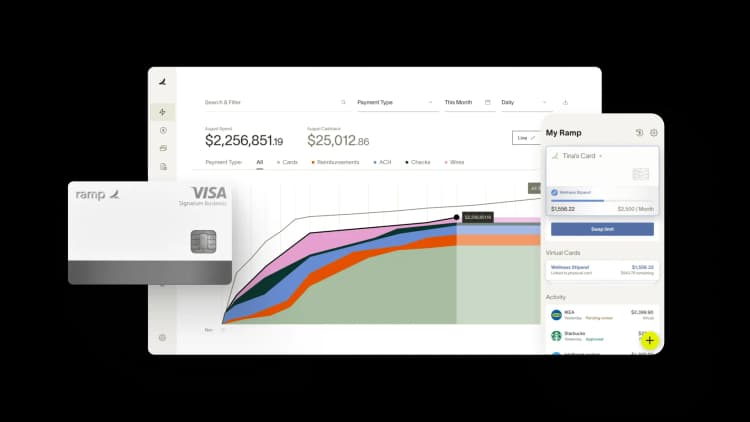
To open a business bank account for your LLC, you need three documents: your IRS Employer Identification Number (EIN) confirmation letter, your state-approved Articles of Organization, and (usually) your LLC's Operating Agreement, plus a government ID for anyone who'll have signing authority. Most banks can process an application in under 15 minutes once you have those ready. The harder part isn't the paperwork. It's understanding what business banking actually involves so you pick the right account instead of the first one you find.
This article is a step-by-step guide to the documents, account types, and decisions that protect the liability shield you formed your LLC to get.
Do you need a separate business bank account for your LLC?
Yes. For an LLC, a separate bank account isn't a nice-to-have: it's what protects the liability shield you formed the LLC to get in the first place.
When you form an LLC, you're creating a legal wall between your personal assets and your business's debts and liabilities. That wall only holds up if you actually treat the business as a separate entity, starting with how you handle a business bank account versus a personal one. If you deposit client payments into your personal checking account, pay business expenses off a personal credit card, or otherwise mix business and personal money, a court can invoke a legal doctrine called "piercing the corporate veil." That doctrine disregards your LLC's liability protection entirely and holds you personally responsible for business debts.
Beyond the legal risk, a mixed account makes LLC tax rates unnecessarily painful to sort out. Every personal coffee run becomes a transaction you have to manually exclude at tax time.
There's one common point of confusion worth clearing up: This rule is different for sole proprietors, who aren't legally required to separate business and personal funds since there's no liability shield to protect in the first place (though it's still good practice, and choosing a business credit card as a sole proprietorship follows similar logic).
If you're not sure which structure you're operating under, LLC vs. corporation breaks down the legal and tax differences, and keeping your finances separate from the start makes several LLC tax benefits easier to claim later.
What you need before you apply
Before you start an application, gather these documents:
| Document | What it is | Why the bank needs it |
|---|---|---|
| EIN confirmation letter (CP-575 or 147C) | IRS-issued proof of your Employer Identification Number | Confirms your LLC's tax ID |
| Articles of Organization | State-stamped document proving your LLC is registered and active | Confirms your LLC legally exists |
| Operating Agreement | Internal document naming members and their authority | Confirms who's allowed to open the account and sign for the LLC |
| Government-issued ID | Driver's license or passport for each signer | Confirms the identity of the person(s) opening the account |
| Business license (if applicable) | Local or state permit | Required by some banks depending on your industry and location |
Bring your EIN documentation even if you think you remember the number. Banks require the official confirmation letter, not just the number itself. If you haven't applied yet, getting an EIN doesn’t cost anything, and some banks will also ask for a certificate of good standing confirming your LLC is still active with the state.
Can you open a business bank account with just an EIN?
In most cases, an EIN alone is not sufficient because banks typically require ownership and identity verification documentation. An EIN identifies your business for tax purposes, but it doesn't establish who owns or controls it. Federal law requires banks to verify ownership before opening an account, so you'll still need your formation documents and a government ID alongside the EIN. The same limitation shows up with business credit cards with EIN only, since lenders run into the same verification requirement.
The one exception: Single-member LLCs and sole proprietors can open a business account using a Social Security number instead of an EIN. Most banks recommend getting an EIN anyway, since it adds a layer of separation between your business and personal identity.
Step-by-step: How to open the account
- Gather your documents. EIN confirmation letter, Articles of Organization, Operating Agreement, and ID for every signer.
- Decide who needs signing authority. Multi-member LLCs should confirm this in the Operating Agreement before applying. Banks will ask.
- Compare account options. Look at fees, minimum balance requirements, transaction limits, and how the bank handles Automated Clearing House (ACH) transfers, wires, and card payments (more on what to prioritize below).
- Apply online or in person. Most banks and business-banking platforms now offer online applications that take 10–15 minutes.
- Fund the account. Some banks require an opening deposit. Others don't.
- Update your records. Add the new account to your bookkeeping software and start routing all business income and expenses through it exclusively. Maintaining separate business finances may support future credit applications and business financial reporting.
Choosing the right account type for your LLC
Your LLC needs two things from a bank account: a place to hold operating cash and pay bills, and a way to pay yourself. How you set that up depends on your structure.
Checking vs. savings. A business checking account handles day-to-day transactions: vendor payments, payroll, and incoming client payments. A savings or high-yield account is where you park cash you don't need immediately, so it earns something instead of sitting idle. You might use both: checking for day-to-day operations, plus a separate account for tax reserves or a cash cushion.
Paying yourself from LLC funds. Most LLCs default to sole proprietorship or partnership tax treatment. That means you pay yourself through an "owner's draw" (a transfer from the business account to your personal account, not a paycheck with tax withholding). If you've elected S-corp taxation, you'll need to run payroll instead.
Either way, the transfer should come from your dedicated LLC account, never from a shared or personal one. Mixing the two is exactly the pattern that puts your liability protection at risk.
What to look for in a business bank account for an LLC
Once you've got your documents in order, the decision comes down to a handful of criteria: fees and minimums, payment speed, how much reconciliation the bank automates for you, and deposit protection. A rundown of the best business checking accounts on the market shows how much these criteria vary by provider.
Ramp Checking Account* is built around those specific criteria, and it's available to the more than 85,000 businesses that run on Ramp. There are no fees or minimums: free to open, free to maintain, no balance requirement. Ramp offers free instant payments via Real-Time Payments (RTP), plus unlimited free same-day ACH transfers and wires¹ for bill payments—pick the method, skip the fee.
On the operations side, Ramp automates a large share of bank transfers for customers using its Cash Manager tools and keeps Ramp payments reconciled without manual matching, so less of your LLC's bookkeeping depends on manual entry. Eligible deposits may receive aggregate FDIC insurance coverage above standard per-bank limits through IntraFi's ICS network², subject to program requirements and applicable FDIC rules. Worth checking the coverage figure against whatever your LLC typically holds in reserve.
2 Ramp is a financial technology company, not an FDIC-insured depository institution. Banking services are provided by First Internet Bank of Indiana, Member FDIC. Subject to the terms of the applicable ICS Deposit Placement Agreement, First Internet Bank of Indiana, Member FDIC, will place deposits at FDIC-insured institutions through IntraFi's ICS service. A list identifying IntraFi network banks appears at https://www.intrafi.com/network-banks.Certain conditions must be satisfied for "pass-through" FDIC deposit insurance coverage to apply. To meet the conditions for pass-through FDIC deposit insurance, deposit accounts at FDIC-insured banks in IntraFi's network that hold deposits placed using an IntraFi service are titled, and deposit account records are maintained, in accordance with FDIC regulations for pass-through coverage.
If you're weighing business credit cards for your LLC at the same time, it's worth choosing a bank account and card that share the same platform. It cuts down on the number of places your LLC's money and transaction data live.
Getting your LLC's bank account open
Opening a business bank account for your LLC takes an afternoon once your paperwork is in order. The part worth spending more time on is picking an account that matches how your LLC actually operates: low fees, fast payments, and enough automation that reconciliation isn't a monthly chore. And if the account you pick stops fitting as your LLC grows, switching business bank accounts later is more straightforward than most owners expect. Ramp Checking Account is built for exactly that combination, with no fees or minimums to get in the way.
*Ramp Business Corporation is a financial technology company and is not a bank. Checking Account deposit services provided by First Internet Bank of Indiana, Member FDIC.
¹ Ramp Bill payments are subject to their own terms and conditions. See thePayments Addendum for details.
² Customers with a Ramp Checking Account can use the ICS service provided by IntraFi Network LLC. Subject to the terms of the applicable ICS Deposit Placement Agreement, First Internet Bank of Indiana, member FDIC, will place deposits at FDIC-insured institutions through IntraFi's ICS service. A list identifying IntraFi network banks appears athttps://www.intrafi.com/network-banks. Certain conditions must be satisfied for "pass-through" FDIC deposit insurance coverage to apply. To meet the conditions for pass-through FDIC deposit insurance, deposit accounts at FDIC-insured banks in IntraFi's network that hold deposits placed using an IntraFi service are titled, and deposit account records are maintained, in accordance with FDIC regulations for pass-through coverage. Deposits are insured by the FDIC up to the maximum allowed by law; deposit insurance only covers deposits in the Ramp Checking Account in the event of the failure of the FDIC-insured bank.
The information provided in this article does not constitute accounting, legal, or financial advice and is for general informational purposes only. Please contact an accountant, attorney, or financial advisor to obtain advice with respect to your business.

FAQs
The best account depends on your LLC's cash flow and how much manual bookkeeping you want to do. Look for no monthly fees or minimum balance requirements, fast ACH and wire transfers, automated reconciliation, and FDIC protection that covers your typical balance. There's no single "best" bank, just a set of criteria that fits how your LLC actually moves money.
Yes. Separating business and personal finances is what preserves the liability protection an LLC is designed to provide. Without a clear separation, a court can pierce the corporate veil and hold you personally liable for business debts.
You'll take an owner's draw (a direct transfer from your business account to your personal account). That's because LLCs taxed as sole proprietorships or partnerships don't run traditional payroll for owners. If you've elected S-corp tax treatment, you'll need to pay yourself a salary through payroll instead.
In most cases, an EIN alone is not sufficient because banks typically require ownership and identity verification documentation.


“I assumed I would have to choose between speed and control. What I found is that you can have both. A well-designed system takes friction out, for the finance function and for everyone else.”
Justin Webster
CFO, Denver Broncos

“A well-run district should not have to choose between getting work done at the school site and keeping control of the dollars behind it. We're not hiring more people to do more jobs, so we have to be smarter about the process. With Ramp, the purchase, the receipt, and the record stay together from the start. ”
Nick Brizeno
Director of Purchasing, San Marcos Unified School District

“In senior living, scale only works if the communities still feel personal. We needed the back office to carry more of the complexity, not the people serving residents. Ramp helped us build that infrastructure, so the experience in the community could stay human.”
Ryan Cole
CFO, Agemark Senior Living

“AI is moving faster than the finance context around it. Prices change, models change, and the value is not always obvious from an invoice. We needed enough detail to know which bets deserved more investment — and which ones did not.”
Greg Cooley
Controller, AngelList

“Invoices, cards, tokens. The categories change but the principle doesn't: know where the money is going, remove the work around it, and make sure the spend is worth it.”
Maciej Mylik. Finance
ElevenLabs

“We weren’t trying to retrofit an old finance system. We had a blank canvas, and Ramp gave us the foundation to build a global finance function of the future.”
Justin Dourado
Director of Finance, Othership

“There's just no surprises anymore. No more waiting two months to find out how a job did. We know how it's doing as it's happening.”
Erich Kuss
Financial Systems Manager, Infinity Home Services

“More token spend isn’t proof that AI is working. Less isn’t proof that it isn’t. What matters is whether we’re buying the right level of intelligence for the work. Ramp lets us make that judgment in the same place we manage every other type of spend.”
Cody Nutt
Senior Director of Business Systems, Daxko
