Best vendor management software alternatives

- What is vendor management software?
- Best vendor management software alternatives
- How to choose the right vendor management system
- Features to look for in vendor management software
- Benefits of using a vendor management platform
- Vendor management solutions by company size
- How vendor management software connects with your finance stack
- Simplify vendor management with Ramp
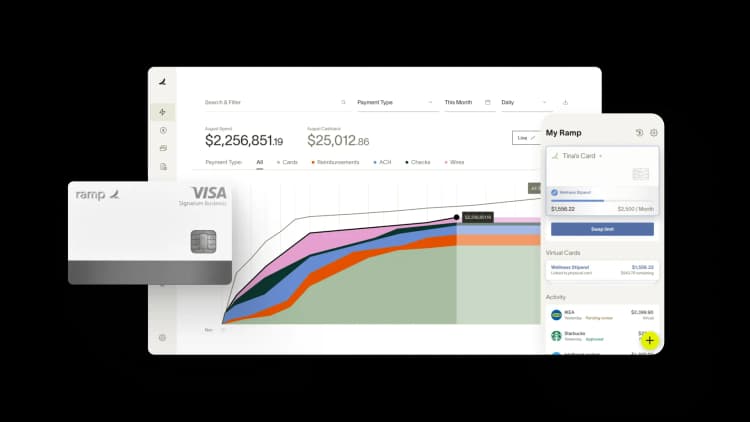
Vendor management software centralizes supplier data, automates approvals, and gives finance teams a clear view of spending. Once you're juggling dozens of suppliers, contracts, W-9s, and payment schedules, the manual approach starts costing you time, money, and compliance headaches.
The right platform can shave hours off your week and reduce the risk of missed renewals or duplicate payments.
What is vendor management software?
Vendor management software, also called a vendor management system (VMS), is a tool that centralizes supplier data, contracts, and communications in one system. It helps finance teams track vendor performance, monitor compliance, and control spending across the entire supplier lifecycle.
Best vendor management software alternatives
The best vendor management platform depends on your company size, existing tech stack, and biggest pain point, whether that's payments, compliance, or visibility. Here are six strong options to consider:
| Software | Best for | Key strength | Minimum price |
|---|---|---|---|
| Ramp | Mid-market companies | Unified finance platform | Free |
| Beeline | Contingent workforce management | External partner automation | Custom |
| Gatekeeper | Contract lifecycle management | Vendor + contract in one tool | Custom |
| Precoro | Growing businesses | Flexible spend controls | $499/month |
| SAP Fieldglass | Enterprise services procurement | Specialized vendor sourcing | Custom |
| Tipalti | Global payables automation | International payments | $99/month |
Ramp: Streamlined procure-to-pay processes

Ramp's procurement software focuses on automating the procure-to-pay process to give you comprehensive control over your business spending. Employees submit purchase requests, purchase orders are generated automatically, and invoices are matched and paid without manual chasing.
It also connects directly to accounting platforms like NetSuite and QuickBooks, so vendor and spend data stay in sync without extra data entry. Ramp is designed to eliminate approval bottlenecks and prevent out-of-policy spending, creating a smooth and efficient procurement experience.
Key features:
- Intake procurement requests with embedded AI and capture every detail, document, and contract up front
- Build customized approval workflows that can integrate with communication tools like Slack and Microsoft Teams. Direct requests to the appropriate approvers based on predefined conditions to speed up the approval process through automated workflows.
- Centralize your procurement discussions within Ramp to simplify collaboration, allowing team members to comment, tag, and receive notifications directly within purchase requests or orders
- Generate purchase orders in Ramp automatically, providing a transparent view of pending invoices and spending commitments
- Get alerted for overbilling and invoice variances, and set up threshold tolerances
- Integrate Ramp with accounting systems like NetSuite and QuickBooks. This allows for detailed coding of purchase order line items and matching invoices to purchase orders, enhancing financial control and oversight.
- Gain early visibility into organizational spending. Ramp helps control costs and prevent financial overspends by centralizing the capture of procurement requests, ensuring greater transparency and operational efficiency.
Limitations:
- While Ramp offers a strong solution for managing purchase orders and invoices, it may not be the best fit for businesses that require extensive supplier sourcing capabilities. Ramp's platform primarily focuses on streamlining the procurement process once suppliers are established, rather than assisting with initial sourcing and vetting new suppliers.
- You can't natively track inventory in Ramp. However, you can sync details about your inventory items and receiving status from your ERP.
Ideal company size: Startups through mid-market and enterprise
Pricing: Free; Ramp Plus starts at $15 per user per month; enterprise pricing available
Beeline: Best for efficiently managing external partners and consultants

Beeline is built for managing a diverse range of external partners, including contingent workers, consultants, and temporary staff.
This platform is designed to simplify your vendor management by automating the assessment and selection processes, which can lead to significant cost reductions and efficiency improvements.
Key features:
- Harness detailed insights into your global workforce to make informed decisions using Beeline's global workforce intelligence feature
- Enhance the procurement of services with Beeline's integrated management tools designed for services procurement
- Access and manage a broader talent pool directly, enhancing your sourcing capabilities through Beeline's direct sourcing and talent pools feature
- Monitor all resources and their deployment across projects with resource tracking capabilities
- Employ security protocols to protect your data across all interactions with Beeline's emphasis on data security
- Use Beeline's extended workforce connectivity feature to build connectivity and collaboration
Limitations:
- Users have noted that Beeline's reporting tools can be rigid and not as adaptable as needed for their specific processes, indicating inflexible reporting
- The analytics provided by Beeline don't meet all user expectations, suggesting a need for more detailed or customizable analytics options, which may indicate limited analytics capabilities
Ideal company size: Mid-market to enterprise
Pricing: Beeline doesn't publish their pricing information. Contact them directly for a quote.
Gatekeeper: Best for simplified vendor and contract lifecycle management

Gatekeeper covers vendor and contract lifecycle management end to end, catering to various teams, including legal, procurement, finance, operations, and vendor management.
This software simplifies the management of business agreements with vendors, suppliers, and other external partners by integrating essential features that support operations and ensure compliance.
Key features:
- Use Gatekeeper's vendor and contract management feature to manage the entire life cycle of contracts and vendor relationships, from initiation to renewal or termination
- Enhance transparency and communication by using Gatekeeper's customizable branded vendor portal, which allows vendors to access and manage their information
- Use balanced scorecards provided by Gatekeeper for a holistic view of vendor performance and compliance
- Facilitate secure and compliant digital signing of contracts with Gatekeeper's compliant eSignature tool
- Integrate Gatekeeper with other systems using its developer-friendly APIs that support a range of software ecosystems
- Automate contract creation and execution processes, reducing manual input and speeding up workflows with Gatekeeper's touchless contract management feature
Limitations:
- Functional enhancements can take significant time to implement in Gatekeeper, indicating delayed minor fixes
- Gatekeeper limits the ability to archive or delete old vendor contracts, which can clutter the system, causing issues with archiving contracts
- Gatekeeper's time stamps don't automatically adjust with clock changes, potentially leading to discrepancies due to non-responsive time stamps
- Implementations of Gatekeeper may face challenges in converting documents from Word to PDF formats
Ideal company size: Mid-market to enterprise
Pricing: Gatekeeper doesn't publish their pricing information. You'll need to contact them for a custom quote.
Precoro: Best for effective spend and vendor management

Precoro is a spend management system designed to enhance the efficiency of how your business handles spending. It supports businesses of all sizes, from small firms to large enterprises, in managing their vendor relationships and financial transactions more effectively.
This platform offers various pricing tiers, making it accessible for an array of business sizes.
Key features:
- Simplify the entire process of creating, collecting, and managing purchase requests to ensure efficient transaction handling
- Build smoother operations across business functions by using Precoro's comprehensive integrations with major software like QuickBooks, Slack, and NetSuite
- Automate and control your supplier and stock management processes to maintain optimal levels of inventory and supplier engagement
- Use Precoro's advanced corporate spend management tools to optimize spending patterns and save costs
- Generate custom reports to get insightful analytics on purchasing data, helping you make informed decisions
- Maintain accurate and up-to-date inventory records with Precoro's inventory upload and maintenance tools
- Add or invite suppliers and customize roles, approval conditions, and document fields to suit your organizational needs
Limitations:
- Workflows for receipts and purchase orders in Precoro are clunky and not very intuitive
- Admins face limitations in editing invoice drafts in Precoro, which can hinder process flexibility
- Constraints in customizing the supplier base in Precoro, which may not meet the needs of all businesses
- Filter fields in Precoro need subheadings, making it difficult to navigate and use them effectively
- Purchase orders cannot be viewed as images in Precoro, which might affect the clarity and ease of reviewing these documents
Ideal company size: Small business to enterprise
Pricing: Core plan starts at $499 per month; Automation plan costs $999 per month; Enterprise plan offers custom pricing
SAP Fieldglass: Best for managing vendors offering specialized services

SAP Fieldglass is powerful vendor management software tailored for businesses that want to manage vendors providing specialized services. This platform excels in helping organizations find, vet, and contract the right vendors, allowing for scalability in supplier management.
Key features:
- Integrate with ERPs to enhance operational efficiency across various business processes
- Manage and optimize financial flows and supply chain operations with supply chain, financial, and spend management tools
- Use human capital management functionalities to align human resource processes with business needs
- Gain insights across the entire value chain, enhancing customer interactions and experiences with CRM software and customer experience solutions
- Perform detailed planning and analysis to improve decision-making and business agility
Limitations:
- Implementing SAP Fieldglass can be costly, which might be a significant consideration for some businesses due to its high implementation costs
- Integrating SAP Fieldglass with existing tools is difficult. This could complicate transitions for businesses that already have established systems.
- Users find SAP Fieldglass slow or cumbersome, particularly when updating worker details
- SAP Fieldglass requires complex, manual verification processes, which can be time-consuming and less efficient
Ideal company size: Enterprise
Pricing: You'll need to contact SAP Fieldglass directly for a custom quote.
Tipalti: Best for comprehensive payables automation

Tipalti is renowned for its extensive payables automation capabilities. It's an excellent choice for businesses seeking an all-encompassing solution that covers supplier onboarding, procurement, purchase order management, invoice processing, tax compliance, and global payments.
It's well-suited for companies that manage traditional invoice-based accounts payable workflows and digital businesses that need to automate mass payments to partner networks without invoices.
Key features:
- Allow suppliers to upload invoices directly via email or an online Supplier Hub, and use OCR scanning, automated validation rules, and machine learning to input, auto-code, and continually refine the invoice scanning process
- Manage multiple subsidiaries or global business units with distinct accounts payable processes while providing consolidated views and reporting
- Ease the onboarding process by shifting the responsibility to the suppliers through Tipalti's customizable, white-labeled supplier portal
- Support international payments in over 120 currencies and provide more than 6 international payment methods with Tipalti's global payout capabilities
- Customize multi-entity structures and offer unique payables workflows tailored to each entity
- Enhance Tipalti's functionality with its extensive ERP integrations with systems such as NetSuite, QuickBooks, and Sage Intacct
Limitations:
- Tipalti doesn't include a built-in reporting dashboard, which might be a drawback for businesses that rely heavily on analytics and detailed reports
- Users have experienced difficulties syncing certain integrations with Tipalti, which could affect the system's efficiency
Ideal company size: Mid-market to enterprise
Pricing: Starts at $99 per month for Accounts Payable; Mass Payments is available for $249 per month
How to choose the right vendor management system
Choosing the right vendor management system comes down to matching software capabilities to your specific pain points, integrations, and budget.
1. Identify your business needs
Start by counting how many vendors you actively manage and identifying your biggest pain point. Is it chasing W-9s? Missing contract renewals? Slow approvals? Late payments?
Match those pain points to software strengths. If compliance is your weak spot, prioritize risk management features. If payments are the bottleneck, look at tools like Ramp or Tipalti.
2. Evaluate integration requirements
Your vendor management software has to play well with your existing ERP, accounting system, and payment tools. Poor integrations create duplicate data entry and reconciliation headaches.
Make a list of every system the tool needs to sync with, such as NetSuite, QuickBooks, Sage, Oracle, or others, and confirm native integrations before you buy.
3. Compare pricing and ROI
Subscription cost is only part of the equation. Factor in implementation time, user training, and the hours you'll save through automation.
Some platforms charge per user, others per transaction or vendor. Model the total cost against the time your team currently spends on manual vendor tasks to calculate real ROI.
4. Assess security and compliance features
Vendor data includes sensitive banking details, tax IDs, and contracts, so security isn't optional. Confirm the vendor holds SOC 2 Type II certification and offers data encryption at rest and in transit.
Audit trail capabilities matter too, especially for regulated industries or companies preparing for a financial audit.
5. Test with a demo or free trial
Sales demos show the best-case scenario. Hands-on testing shows what the tool is actually like to use every day.
Get your AP clerks, procurement leads, and controllers into the trial. They'll catch usability issues that decision-makers may miss.
Features to look for in vendor management software
The best vendor management platforms share a core set of features that automate manual work and give finance teams better visibility.
Vendor onboarding and lifecycle management
Look for tools that automate W-9 and banking info collection, verify tax IDs, and track vendor status from onboarding through offboarding. A solid vendor database keeps every record searchable and current.
Contract and SLA management
Your platform should store contracts in a central repository, track renewal dates, and monitor service level agreements. This is a must-have for anyone dealing with recurring vendors or high-value agreements.
Risk assessment and compliance monitoring
Automated risk scoring and compliance document collection cut down audit prep time. The best tools flag expired insurance certificates, missing tax forms, or vendors in high-risk jurisdictions.
Automated workflows and approvals
Configurable approval chains route vendor requests, POs, and invoices to the right people. This eliminates the email back-and-forth that slows down procurement.
Invoice and payment management
Invoice-to-PO matching, scheduled payments, and real-time payment status tracking are table stakes. Multi-currency support matters if you pay international vendors.
Performance tracking and reporting
Look for dashboards that measure delivery times, quality scores, and spend by vendor. That data becomes leverage in renewal negotiations.
Integration with ERP and accounting systems
Your vendor management tool should sync vendor data with your general ledger and other finance apps. Direct integrations prevent duplicate entry and keep your books accurate.
Benefits of using a vendor management platform
A good vendor management platform pays for itself in time saved and errors avoided. Here's what you gain:
- Centralized vendor information: A single source of truth for contacts, contracts, and compliance documents
- Reduced manual work: Automated data entry, reminders, and approval routing
- Better spend visibility: Total spend by vendor across every department and cost center
- Improved compliance: Automatic document collection and expiration alerts
- Stronger vendor relationships: Consistent communication and faster, more reliable payments
These advantages compound over time, turning vendor management from a reactive chore into a smooth, scalable process that grows with your business.
Vendor management solutions by company size
The right vendor management tool depends heavily on how many vendors you manage and how complex your operations are. Use these tiers to find the right fit.
Small business vendor management tools
Small businesses should prioritize affordability and quick setup. Open-source vendor management software or tools with free tiers can work well if you're managing fewer than 50 vendors and don't need heavy automation.
Mid-market vendor management platforms
Mid-market companies need more automation, deeper integrations, and stronger approval controls. Platforms like Ramp deliver powerful functionality without the complexity or cost of enterprise systems, and typically serve businesses managing 50 to 500 vendors.
Enterprise vendor management systems
Enterprises need global payment capabilities, advanced security, deep customization, and multi-entity support. If you're managing 500+ vendors across multiple business units or countries, look at SAP Fieldglass, Tipalti, or Gatekeeper.
How vendor management software connects with your finance stack
Your vendor management software is only as valuable as its ability to plug into the rest of your finance stack. Look for native integrations across these categories:
- Accounting software: QuickBooks, NetSuite, Sage Intacct, and Xero
- ERP systems: SAP, Oracle, and Microsoft Dynamics
- Payment platforms: ACH, wire, virtual cards, and international payments
- Expense management: Receipt capture, spend policies, and corporate cards
Ramp takes a different approach by combining vendor management, expense management, bill pay, and accounting automation in a single platform. That means you don't have to duct-tape together multiple tools or pay for integrations that break every few months.
Simplify vendor management with Ramp
Choosing the right vendor management software plays a big role in optimizing your supply chain and boosting operational efficiency. When you're deciding, it's worth looking beyond mainstream options. Alternative software can bring unique features, stronger integrations, scalable solutions, and reliable support that's genuinely tailored to your business.
Ramp's procurement software streamlines the procure-to-pay process with automated workflows and collaboration tools that integrate smoothly with popular accounting systems, helping you gain better control over spending and simplify procurement along the way. It scales with your business, giving you an edge in an evolving market.
Beyond automating approvals, Ramp centralizes your vendor information, including contracts, payment details, and compliance documents, so your team always has a single source of truth. Its price intelligence tools also benchmark your vendor spend against real transaction data, helping you spot overpayments and negotiate better deals as your vendor list grows.
Want to see how it works? Try an interactive demo and see the platform in action.

FAQs
Vendor management software focuses on maintaining supplier relationships, compliance, and performance after a vendor is selected. Procurement software handles the sourcing and purchasing process itself. The two often overlap, and many modern platforms, including Ramp, cover both.
Open source vendor management software can work for small teams with technical resources to handle setup and maintenance. Most commercial alternatives offer better support, integrations, and security, which usually outweighs the cost savings.
Most vendor management platforms offer CSV import tools and onboarding support to move existing vendor data from spreadsheets or legacy systems. Plan for a cleanup pass before importing to remove duplicates and outdated records.
Many vendor management solutions include payment automation, but capabilities vary widely. Some only track invoices, while others, like Ramp and Tipalti, handle ACH, wire, check, and card payments directly from the platform.
At a minimum, look for SOC 2 Type II compliance, data encryption in transit and at rest, and role-based access controls. These protect sensitive vendor banking details, tax IDs, and payment information from unauthorized access.


“I assumed I would have to choose between speed and control. What I found is that you can have both. A well-designed system takes friction out, for the finance function and for everyone else.”
Justin Webster
CFO, Denver Broncos

“A well-run district should not have to choose between getting work done at the school site and keeping control of the dollars behind it. We're not hiring more people to do more jobs, so we have to be smarter about the process. With Ramp, the purchase, the receipt, and the record stay together from the start. ”
Nick Brizeno
Director of Purchasing, San Marcos Unified School District

“In senior living, scale only works if the communities still feel personal. We needed the back office to carry more of the complexity, not the people serving residents. Ramp helped us build that infrastructure, so the experience in the community could stay human.”
Ryan Cole
CFO, Agemark Senior Living

“AI is moving faster than the finance context around it. Prices change, models change, and the value is not always obvious from an invoice. We needed enough detail to know which bets deserved more investment — and which ones did not.”
Greg Cooley
Controller, AngelList

“Invoices, cards, tokens. The categories change but the principle doesn't: know where the money is going, remove the work around it, and make sure the spend is worth it.”
Maciej Mylik. Finance
ElevenLabs

“We weren’t trying to retrofit an old finance system. We had a blank canvas, and Ramp gave us the foundation to build a global finance function of the future.”
Justin Dourado
Director of Finance, Othership

“There's just no surprises anymore. No more waiting two months to find out how a job did. We know how it's doing as it's happening.”
Erich Kuss
Financial Systems Manager, Infinity Home Services

“More token spend isn’t proof that AI is working. Less isn’t proof that it isn’t. What matters is whether we’re buying the right level of intelligence for the work. Ramp lets us make that judgment in the same place we manage every other type of spend.”
Cody Nutt
Senior Director of Business Systems, Daxko
