CME expense management: Why spreadsheets fail and cards don't

- Why CME spend is harder to manage than a normal travel budget
- What counts against a CME budget, and what doesn't
- What CME expense management needs to cover
- CME budget tracking: per-provider view
- Build a CME policy your providers will actually follow
- Put the CME budget on the card
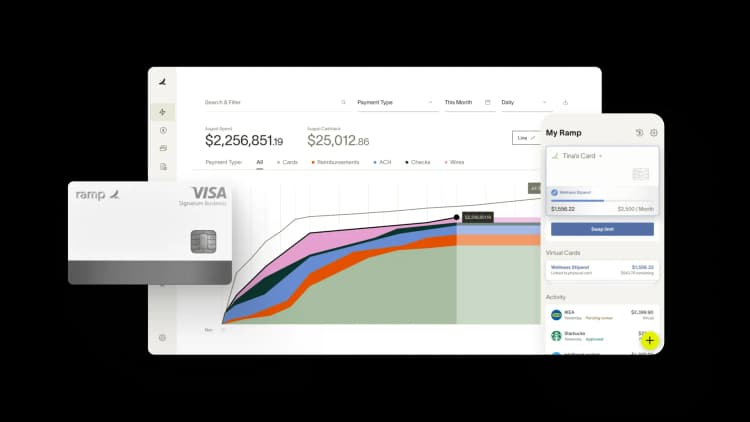
Every licensed provider gets an annual CME allowance, and you're probably still tracking it by hand against a spreadsheet that's out of date the moment a conference invoice lands.
Continuing medical education (CME) expense management means tracking each provider's annual education allowance—typically $3,000 to $10,000—against real spending on conference fees, travel, materials, and meals. It also means reconciling that spending before licensure renewal.
Why CME spend is harder to manage than a normal travel budget
CME spend doesn't follow a single calendar. Providers attend conferences on their own schedule, register months in advance, and submit expenses whenever they get around to it. Your practice administrator ends up reconciling per-provider budgets against a spreadsheet that's always one conference behind, unlike a standard operating budget that follows a predictable cadence.
Making expense reporting mobile and fast matters here specifically because clinicians have the least time and lowest tolerance for administrative process of almost any buyer segment—the same principle behind any good receipt scanning workflow. That visibility gap widens when travel gets booked outside your standard system. A provider books a flight or hotel directly, pays out of pocket, and files for reimbursement weeks later—by which point the CME allowance has often already been quietly overspent.
What counts against a CME budget, and what doesn't
Most CME allowances cover conference and course registration fees, associated travel and lodging, and meals during the trip, often capped at a per diem. They also typically cover materials or subscriptions tied directly to license renewal requirements. What typically doesn't count: general professional membership dues unrelated to a specific course, travel companion costs, or personal extension of a trip beyond the conference dates.
These boundaries matter for tax treatment, not just budget math. Reimbursing CME expenses tax-free under an accountable plan requires a clear business connection, prompt substantiation, and timely return of any excess. Miss that window, and the excess becomes taxable wages subject to employment tax withholding.
Writing these boundaries down explicitly, and tying them to your travel and expense policy, removes the ambiguity that turns CME reconciliation into a negotiation at year-end.
What CME expense management needs to cover
A per-provider budget that updates in real time. Every licensed provider has a distinct CME allowance that needs to track against actual conference fees, travel, materials, and meals as they happen. Two providers can sit in the same conference session and draw against completely separate allowances, with no risk of one erasing the other's balance.
A card that enforces the limit instead of just reporting it. Issue a virtual card per provider with their annual CME limit built in, and conference fees, travel, and materials code to the right provider automatically. Once the balance hits zero, the card declines the next charge instead of relying on someone to notice a spreadsheet.
Receipt capture that works from a conference hallway. Mobile and SMS receipt capture matches the purchase to the transaction the moment it happens.
Travel booking that ties directly to the expense record. CME travel should reconcile in the same platform as the card spend. Ramp Travel and general corporate travel management principles both apply, adapted to a CME-specific budget ceiling per provider.
Balance visibility before the allowance runs out, not after. Providers and administrators should see the remaining CME balance in real time, with alerts at 75%, 90%, and 100% of the allowance—not a surprise at year-end reconciliation.
An audit trail that flags exceptions instead of requiring a manual review. Every CME charge should carry its own receipt, provider, and category automatically, so an auditor or licensing board can trace any expense without your practice administrator digging through email.
CME budget tracking: per-provider view
Expense type | Manual tracking today | Automated per-provider tracking |
|---|---|---|
Conference registration | Provider pays personally, submits for reimbursement | Charged to the provider's CME-limited virtual card directly |
Travel and lodging | Booked outside standard travel workflow | Booked and reconciled in the same platform as card spend |
Meals and incidentals | Receipts collected after the trip, if at all | Captured via SMS or mobile at the point of purchase |
Annual reconciliation | Spreadsheet review at year-end | Real-time view of spend against the per-provider budget |
Budget visibility | Overspend discovered at year-end reconciliation | Alerts at 75%, 90%, and 100% of the allowance |
Audit documentation | Practice administrator searches email if audited |
Build a CME policy your providers will actually follow
A clear, simply worded expense policy that ties directly to your CME allowance structure gets followed more consistently than a long compliance document providers skim once. That's the same principle behind any strong expense policy and travel and expense management approach. State the annual allowance, what counts against it, and how receipts get submitted—then enforce it through the card limit itself.
The policy works best when it settles edge cases up front: whether a spouse's travel counts, whether conference-dinner alcohol counts as a meal expense, and what qualifies as an eligible course versus general professional development.
Loop in a few physicians while you draft it. They'll flag scenarios your finance team wouldn't think to ask about, and they're more likely to follow a policy they helped shape.
Tie the policy to your annual budget cycle so CME allocations get reviewed alongside every other line item.
Put the CME budget on the card
Every problem this piece covers—overspent allowances, missing receipts, tax exposure on excess reimbursements—traces back to the same root cause: the budget living somewhere other than the card.
A per-provider virtual card with the annual CME limit built in turns budget tracking into something the system enforces automatically.
See how Ramp's expense management tools keep CME spend visible throughout the year.

FAQs
CME allowances typically range from $3,000 to $10,000 per licensed provider annually, depending on specialty mix and conference attendance.
Give each provider a card with their CME limit built in, and capture receipts via SMS or mobile at the point of purchase.
Yes — booking CME travel and tracking the resulting expenses in the same platform means travel costs reconcile against the provider's CME budget automatically.
General professional membership dues unrelated to a specific course, a travel companion's costs, and any personal extension of a trip beyond the conference dates are commonly excluded — confirm against your own written policy and state CME requirements.
Yes—expenses reimbursed under an accountable plan with a clear business connection, prompt substantiation, and timely return of any excess aren't taxable income to the provider. Miss any of those three requirements, and the amount becomes taxable wages subject to employment tax withholding.


“I assumed I would have to choose between speed and control. What I found is that you can have both. A well-designed system takes friction out, for the finance function and for everyone else.”
Justin Webster
CFO, Denver Broncos

“A well-run district should not have to choose between getting work done at the school site and keeping control of the dollars behind it. We're not hiring more people to do more jobs, so we have to be smarter about the process. With Ramp, the purchase, the receipt, and the record stay together from the start. ”
Nick Brizeno
Director of Purchasing, San Marcos Unified School District

“In senior living, scale only works if the communities still feel personal. We needed the back office to carry more of the complexity, not the people serving residents. Ramp helped us build that infrastructure, so the experience in the community could stay human.”
Ryan Cole
CFO, Agemark Senior Living

“AI is moving faster than the finance context around it. Prices change, models change, and the value is not always obvious from an invoice. We needed enough detail to know which bets deserved more investment — and which ones did not.”
Greg Cooley
Controller, AngelList

“Invoices, cards, tokens. The categories change but the principle doesn't: know where the money is going, remove the work around it, and make sure the spend is worth it.”
Maciej Mylik. Finance
ElevenLabs

“We weren’t trying to retrofit an old finance system. We had a blank canvas, and Ramp gave us the foundation to build a global finance function of the future.”
Justin Dourado
Director of Finance, Othership

“There's just no surprises anymore. No more waiting two months to find out how a job did. We know how it's doing as it's happening.”
Erich Kuss
Financial Systems Manager, Infinity Home Services

“More token spend isn’t proof that AI is working. Less isn’t proof that it isn’t. What matters is whether we’re buying the right level of intelligence for the work. Ramp lets us make that judgment in the same place we manage every other type of spend.”
Cody Nutt
Senior Director of Business Systems, Daxko
