
- How Expensify, SAP Concur, and Ramp compare at a glance
- Expense policy enforcement and automation
- Corporate cards and spend controls
- Pricing and total cost of ownership
- Accounting integrations and month-end close
- Travel management capabilities
- Expensify vs. SAP Concur vs. Ramp: full comparison
- Which platform fits your team?
- See why teams are choosing Ramp
Expensify, SAP Concur, and Ramp show up in nearly every expense management evaluation, but they solve fundamentally different problems. Expensify started as a receipt scanner. SAP Concur built its reputation on enterprise travel. Ramp brings cards, expenses, AP, and accounting automation together in a single platform.
The right choice depends on whether you're trying to simplify receipt capture for a small team, manage complex global travel policies, or prevent overspending before it happens. This guide breaks down how the three platforms compare across the areas that matter most.
How Expensify, SAP Concur, and Ramp compare at a glance
The table below highlights how the three platforms differ across pricing, features, and capabilities.
| Expensify | SAP Concur | Ramp | |
|---|---|---|---|
| Best for | Companies prioritizing simple expense reporting and receipt scanning | Companies with complex travel management requirements | Companies managing spend across cards, expenses, and AP |
| Pricing | Free (individual); Collect $5/user/month; Control $9–36/user/month | Usage-based starting ~$7/report; custom quotes | Free tier; Plus $15/user/month; Enterprise custom |
| Corporate cards | Available on paid plans with basic controls | No native cards; third-party integrations | Physical + virtual with granular controls |
| AP/Bill pay | Not a core feature | Available as separate module | Built-in |
| Travel booking | Flights, hotels, cars, trains (per-booking fee) | Most comprehensive travel platform | Flights + hotels with policy controls |
Next, we break down each feature to show how the platforms differ in practice.
Expense policy enforcement and automation
The biggest difference between the three platforms is when they catch policy violations.
Expensify
Expensify takes a reactive approach. You set up group policies with category and tag rules, and configure the system to decline certain types of spend. SmartScan OCR captures receipt data automatically. However, Expensify doesn't offer suggested policy rules, and cards won't auto-lock when employees exceed their limits. Enforcement happens when someone reviews the expense report, not when the purchase occurs.
SAP Concur
SAP Concur provides the most granular approval workflow customization. Large enterprises with complex organizational structures often appreciate this flexibility. The trade-off is that Concur's policies focus on expense reports rather than real-time prevention, and initial setup takes significant configuration time.
Ramp
Ramp prevents out-of-policy spending at the point of purchase. With Ramp's expense management, cards auto-lock when limits are hit. The system flags out-of-policy transactions in real time and suggests policy rules for common issues like excessive tipping or weekend spending. You don't discover violations weeks later during reconciliation; you prevent them before they happen. ABB Optical Group's compliance team saw this directly: Their audit timeline dropped from two months to one to two days after switching to Ramp, with error rates falling 85-90%.
Corporate cards and spend controls
Two of the three platforms issue their own cards, while Concur relies on third-party integrations.
Expensify
Expensify's cards are available on Collect and Control plans. Controls are more basic. You can set fixed and monthly limits, but merchant category controls aren't available. Cashback ranges from 1% on Collect to up to 2% on Control plans, though the higher rate requires $250,000+ in monthly spend. If you want to issue cards internationally, you'll need a US bank account.
SAP Concur
SAP Concur doesn't issue cards directly. Instead, it integrates with American Express, HSBC, and other providers. This means you won't have direct spend controls at the point of purchase, and there's no cashback.
Ramp
Ramp's corporate cards come in both physical and virtual card formats. You can set controls at the merchant, category, or vendor level, and there's no limit on how many cards you can issue. Ramp offers cashback on purchases, and you can choose from local currency cards in USD, CAD, EUR, GBP, AUD, SGD, and JPY. Enterprise customers can also issue cards internationally.
Pricing and total cost of ownership
Pricing structures vary widely, and the sticker price doesn't always reflect the total cost.
Expensify
Expensify's free tier works for individuals tracking personal expenses. Collect plans start at $5 per user per month, while Control plans range from $9 to $36 per user per month. To get the lowest Control pricing, you'll need an annual commitment and route at least 50% of spending through Expensify cards. Travel bookings come with per-booking fees on top of the subscription.
SAP Concur
SAP Concur uses usage-based pricing starting around $7 per expense report for the Expense module. There's no public pricing page, so you'll need to contact sales for a quote. Users frequently mention the pricing structure can be confusing.
Ramp
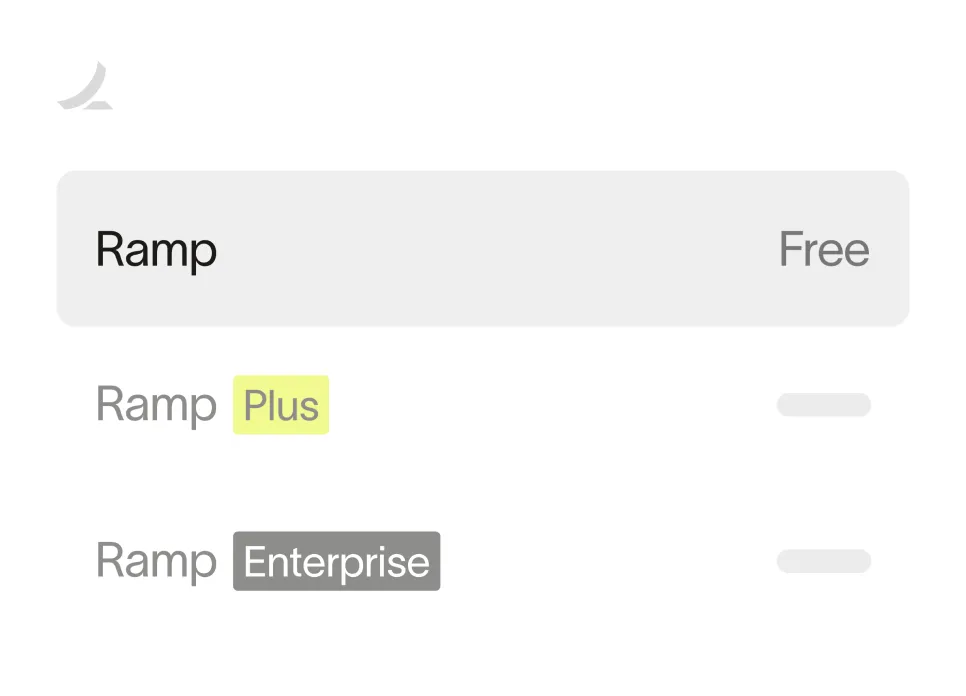
Ramp offers a free tier with core expense management and corporate card features. The Plus plan costs $15 per user per month plus a platform fee based on team size, and adds features like workflow simulation and multiple travel policies. Enterprise pricing is custom. Ramp offers cashback on purchases, which helps offset subscription costs.
Ready to take control of your finances?
Learn about Ramp’s pricing plans and start saving today.
Accounting integrations and month-end close
How quickly you close the books often depends on how well your expense platform syncs with your accounting software.
Expensify
Expensify integrates with major accounting platforms and offers strong mobile receipt submission through SmartScan OCR. The mobile receipt-capture experience is consistently praised in user reviews. Some users report occasional sync issues, though the overall integration experience is solid for smaller teams.
SAP Concur
SAP Concur integrates deeply with SAP's ecosystem. If you're already running SAP for ERP, the connection is native and robust. For other ERPs, you'll typically need middleware to connect the systems. Receipt matching in Concur can require more manual steps.
Ramp
Ramp's accounting automation natively syncs with QuickBooks, NetSuite, Sage Intacct, and Xero. Transactions are coded as they happen rather than batched at month-end. Auto-receipt matching eliminates most manual reconciliation work, so you don’t have to chase down receipts and match them to transactions yourself. Snapdocs saw this play out directly: After consolidating three disconnected tools onto Ramp, their monthly reconciliation dropped from five to six hours to under thirty minutes.
Travel management capabilities
Travel management is where these three platforms diverge most sharply.
Expensify
Expensify handles flights, hotels, cars, and trains through its travel feature. Per-booking fees apply, and travel policy controls are limited. Expensify works better when travel is occasional rather than constant.
SAP Concur
SAP Concur offers a comprehensive travel solution: granular controls across every booking category, deep integration between travel and expense data, and support for complex global policies. If travel management is your primary requirement, Concur may be a good fit. That depth comes with complexity, though. Setup and ongoing management require significant time and expertise.
Ramp
Ramp's travel booking covers flights and hotels with granular policy controls. You can set maximum airfare amounts, hotel rates, booking class restrictions, and lead time requirements. Plus plans support multiple travel policies by role, department, or location. When someone books an out-of-policy trip, it automatically routes through an approval workflow.
Expensify vs. SAP Concur vs. Ramp: full comparison
| Expensify | SAP Concur | Ramp | |
|---|---|---|---|
| Policy enforcement | Reactive + some rules | Reactive (report-based) | Proactive (prevents at purchase) |
| Card issuance | Yes (paid plans) | No (third-party) | Physical + virtual, unlimited |
| Cashback | 1% (Collect); up to 2% (Control) | None | Yes |
| Pricing | Free (individual); $5–36/user | Usage-based, ~$7/report | Free tier; Plus $15/user/mo |
| AP/Bill Pay | Not core | Separate module | Built-in |
| Travel | Flights, hotels, cars, trains (per-booking fee) | Most comprehensive | Flights + hotels with policy controls |
| Accounting sync | Available | Best with SAP; middleware for others | Native (QBO, NetSuite, Sage, Xero) |
Which platform fits your team?
The right choice depends on what problem you're actually trying to solve.
If you want to prevent overspending before it happens, consolidate cards and expenses in one spend management platform, and close books faster with native accounting integrations, Ramp covers the most ground. The free tier gets you started without budget approval, and the platform scales from early-stage teams to complex multi-entity organizations.
If your priority is simple receipt scanning and expense reporting for a small team, and you're comfortable with basic card controls, Expensify's straightforward interface may be a good fit. The mobile app is particularly strong for capturing receipts on the go.
If you're a large enterprise with complex global travel requirements, deep SAP integration needs, and the budget for extensive customization, SAP Concur's comprehensive travel platform may justify the complexity and cost.
See why teams are choosing Ramp
Finance teams at companies like ABB Optical Group and Snapdocs switched from legacy expense tools to Ramp and saw immediate results: audit timelines dropping from months to days, reconciliation shrinking from hours to minutes. If you're evaluating expense management platforms, the biggest question isn't which feature list is longest—it's whether you want separate tools or one platform that handles the full picture.
Try an interactive demo to see how Ramp works, or explore more customer stories from finance teams that made the switch.


“I assumed I would have to choose between speed and control. What I found is that you can have both. A well-designed system takes friction out, for the finance function and for everyone else.”
Justin Webster
CFO, Denver Broncos

“A well-run district should not have to choose between getting work done at the school site and keeping control of the dollars behind it. We're not hiring more people to do more jobs, so we have to be smarter about the process. With Ramp, the purchase, the receipt, and the record stay together from the start. ”
Nick Brizeno
Director of Purchasing, San Marcos Unified School District

“In senior living, scale only works if the communities still feel personal. We needed the back office to carry more of the complexity, not the people serving residents. Ramp helped us build that infrastructure, so the experience in the community could stay human.”
Ryan Cole
CFO, Agemark Senior Living

“AI is moving faster than the finance context around it. Prices change, models change, and the value is not always obvious from an invoice. We needed enough detail to know which bets deserved more investment — and which ones did not.”
Greg Cooley
Controller, AngelList

“Invoices, cards, tokens. The categories change but the principle doesn't: know where the money is going, remove the work around it, and make sure the spend is worth it.”
Maciej Mylik. Finance
ElevenLabs

“We weren’t trying to retrofit an old finance system. We had a blank canvas, and Ramp gave us the foundation to build a global finance function of the future.”
Justin Dourado
Director of Finance, Othership

“There's just no surprises anymore. No more waiting two months to find out how a job did. We know how it's doing as it's happening.”
Erich Kuss
Financial Systems Manager, Infinity Home Services

“More token spend isn’t proof that AI is working. Less isn’t proof that it isn’t. What matters is whether we’re buying the right level of intelligence for the work. Ramp lets us make that judgment in the same place we manage every other type of spend.”
Cody Nutt
Senior Director of Business Systems, Daxko
