Corporate card for ambulatory surgical centers: Why implant spend is so hard to control

- Why ASC spend is harder to control than a typical practice's
- What implant vendor sprawl actually costs an ASC
- What a corporate card needs to do for implant and supply spend
- Implant vendor management: the workflow
- Setting up vendor-scoped virtual cards
- Writing a spend policy that respects surgeon preference
- How this compares to procurement-heavy alternatives
- Get implant and supply spend under control before the swipe
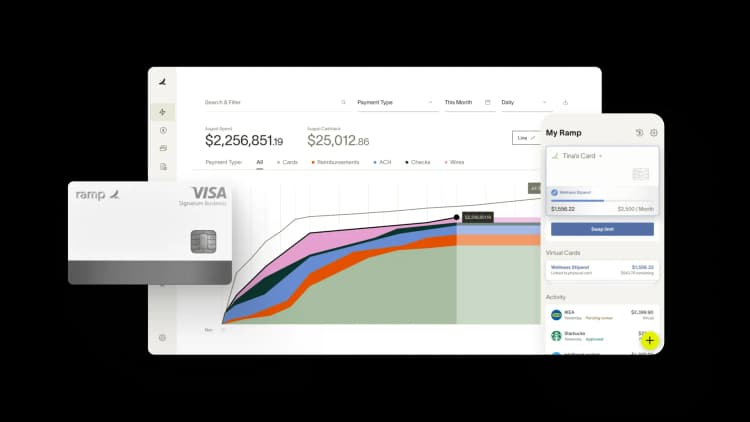
Surgical preference cards, lot-tracked implants, and a dozen supply vendors make ASC spend hard to control after the fact. The right corporate card controls it before the swipe.
An ambulatory surgical center (ASC) needs a card that issues limits by vendor and provider, not just by employee. A single spine or joint surgeon can represent $200,000 to $500,000 in annual implant spend with almost no price discipline applied to it.
The spread between what two surgeons pay for a functionally identical implant can run 30% to 40%, according to Becker's ASC. A card built for that reality locks spend to the right vendor and surgeon before the purchase clears, not after the monthly statement arrives.
Why ASC spend is harder to control than a typical practice's
You run higher-stakes, higher-volume purchasing than a standard physician office, and the numbers back that up. Surgical preference cards routinely include supplies that never get used: industry research puts unused items at close to 40% of what's listed on a typical surgical preference card, according to SupplyLasso. Unnecessary surgical supply waste overall runs 15% to 25% of total supply spend.
That waste compounds because you likely accumulate vendors one relationship at a time, without ever auditing the full vendor list against volume or price. Multi-vendor management gets harder every time a new supplier gets added without review. Add FDA lot-tracking requirements on implants—units that typically run $300 to $2,000 or more each—and manual reconciliation becomes a full-time job for whoever runs your business office.
What implant vendor sprawl actually costs an ASC
Run the math on a single spine surgeon doing 150 cases a year at an average implant cost of $2,500 per case. That's $375,000 in annual implant spend from one provider. At a conservative 15% supply waste rate, $56,000 of that never should have been purchased in the first place.
Multiply that across every surgeon operating at your center and the number gets large fast, but it rarely shows up as a single line item. It's spread across dozens of vendor invoices a month, which is exactly why it survives a standard month-end review. Catching it requires controls at the point of purchase, not a retrospective audit of invoices that have already been paid.
What a corporate card needs to do for implant and supply spend
Card-level limits by vendor and provider. Ramp lets you issue cards by provider, location, or vendor category and enforce controls on every swipe. A virtual card scoped to a single implant distributor with a monthly cap catches overspend at the point of purchase—the same logic behind any strong spend control setup.
Receipt and packing-slip capture at the point of purchase. Your business office shouldn't chase surgeons or scrub techs for documentation on a $1,500 implant 3 weeks after the case. Ramp captures receipts via SMS or mobile at the point of purchase and matches each one to the transaction, location, and cost center automatically.
Vendor invoice processing that catches duplicates before they clear. Ramp's Bill Pay extracts line items, payment terms, and amounts from vendor invoices, flags duplicate invoices across 60 fraud signals, and routes approvals by location manager or practice administrator. Invoice fraud risk rises with vendor count, which an ASC accumulates fast.
A single view of vendor spend across the center. Ramp's dashboards show spend rolling up by location, provider, and vendor in real time—the kind of enterprise-wide spend visibility larger healthcare organizations already expect.
Implant vendor management: the workflow
Step | Without card-level controls | With a vendor-scoped virtual card |
|---|---|---|
Surgeon selects implant | Selection follows surgeon preference, not negotiated pricing | Card is scoped to your negotiated vendor list; off-formulary purchases get flagged before they clear |
Purchase happens | Charge posts with no line-item detail until the invoice arrives | Card transaction ties immediately to provider, procedure, and cost center |
Documentation | Business office emails the surgical team for receipts and lot numbers | Receipt captured via SMS at the point of purchase, matched automatically |
Reconciliation | Manual matching against preference cards and case logs | Spend already coded and synced to your accounting system by close |
Setting up vendor-scoped virtual cards
Start with your top five vendors by dollar volume, not your full vendor list. For each, set a monthly cap based on trailing 12-month spend plus a growth buffer, and assign the card to the specific surgeon or department driving that relationship. Review caps quarterly against actual case volume—a static limit set once and forgotten defeats the purpose of card-level control.
Writing a spend policy that respects surgeon preference
Surgeons choose implants based on clinical judgment, so a workable policy sets the vendor and price ceiling within which that choice happens, not the implant itself. That's the same logic as any well-built expense policy: clear rules, enforced automatically, with an easy path for legitimate exceptions. State which vendors are pre-approved per implant category, what triggers a review, and who approves an exception—then enforce the vendor list through the card itself.
How this compares to procurement-heavy alternatives
Procurement platforms built around three-way PO matching work well for centers with a dedicated purchasing function. Ramp's card-first approach fits centers that want controls enforced the moment a provider or vendor swipes, with Ramp Procurement available as an added layer once your center standardizes formal purchase requests. Vendor management tools layer on top of either approach once your vendor list needs centralized due diligence.
Get implant and supply spend under control before the swipe
Every number in this piece—the 30% to 40% price spread between surgeons, the $56,000 a single surgeon's caseload can leak—comes down to spend that isn't controlled until after it's already happened. Ramp fixes that by putting the limit on the card itself, before the purchase clears.
Set up a corporate card scoped to your top implant vendors, or see how Ramp for Healthcare covers the rest of your center's spend.

FAQs
Issue vendor-scoped virtual cards with monthly or per-case limits tied to your negotiated implant pricing.
Capture the packing slip or receipt at the point of purchase via SMS or mobile upload, then match it to the transaction automatically.
For centers without a dedicated purchasing team, a card with vendor- and provider-level controls covers most day-to-day supply and implant spend.
Quarterly, at minimum, and any time case volume, surgeon count, or service lines change.


“I assumed I would have to choose between speed and control. What I found is that you can have both. A well-designed system takes friction out, for the finance function and for everyone else.”
Justin Webster
CFO, Denver Broncos

“A well-run district should not have to choose between getting work done at the school site and keeping control of the dollars behind it. We're not hiring more people to do more jobs, so we have to be smarter about the process. With Ramp, the purchase, the receipt, and the record stay together from the start. ”
Nick Brizeno
Director of Purchasing, San Marcos Unified School District

“In senior living, scale only works if the communities still feel personal. We needed the back office to carry more of the complexity, not the people serving residents. Ramp helped us build that infrastructure, so the experience in the community could stay human.”
Ryan Cole
CFO, Agemark Senior Living

“AI is moving faster than the finance context around it. Prices change, models change, and the value is not always obvious from an invoice. We needed enough detail to know which bets deserved more investment — and which ones did not.”
Greg Cooley
Controller, AngelList

“Invoices, cards, tokens. The categories change but the principle doesn't: know where the money is going, remove the work around it, and make sure the spend is worth it.”
Maciej Mylik. Finance
ElevenLabs

“We weren’t trying to retrofit an old finance system. We had a blank canvas, and Ramp gave us the foundation to build a global finance function of the future.”
Justin Dourado
Director of Finance, Othership

“There's just no surprises anymore. No more waiting two months to find out how a job did. We know how it's doing as it's happening.”
Erich Kuss
Financial Systems Manager, Infinity Home Services

“More token spend isn’t proof that AI is working. Less isn’t proof that it isn’t. What matters is whether we’re buying the right level of intelligence for the work. Ramp lets us make that judgment in the same place we manage every other type of spend.”
Cody Nutt
Senior Director of Business Systems, Daxko
