Expense management for home health agencies: Why receipts get lost in the field

- Why home health expense tracking breaks down
- What a home health agency needs from an expense platform
- Building an expense policy for a distributed field staff
- What to do when your EVV system and expense tracking don't talk to each other
- On documentation and audit trails
- Get receipts while your staff are still in the field
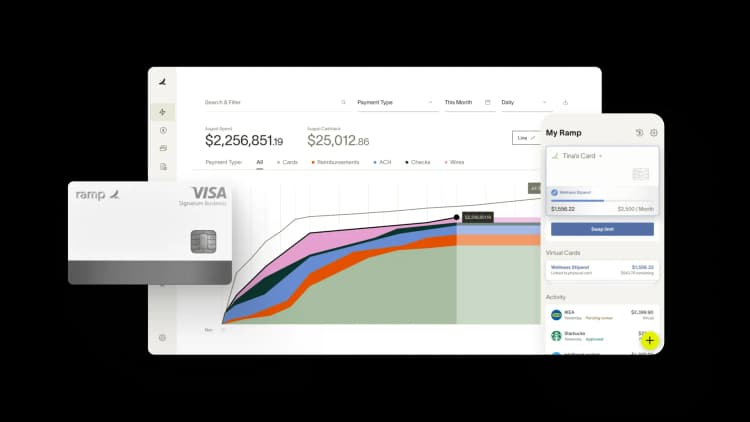
Field-based clinical staff drive between visits, buy supplies on the way, and rarely have time to file an expense report. The fix is capturing the receipt at the point of purchase, not chasing it afterward.
You lose expense documentation because the person doing the spending is a clinician in a car, not someone at a desk. Expense management for a home health agency has to work where your staff already are: mobile, moving between visits, and focused on the patient in front of them.
Why home health expense tracking breaks down
Your clinical staff purchase mileage, supplies, and incidentals across a service area that can span dozens of miles between visits, with no central office to route documentation through. Standard expense report tools assume someone sits down at a computer to submit and code every purchase.
That mismatch shows up in three ways: mileage reimbursement calculated on inconsistent self-reported logs, medical supply purchases made on personal cards and reimbursed weeks later, and receipts that never make it back to the office at all.
What a home health agency needs from an expense platform
Mileage tracking that doesn't rely on a manual log. Paper mileage logs introduce errors on every trip, even though the IRS mileage log requirements are the same for any business. Ramp's mileage reimbursement calculator applies the current IRS medical mileage rate automatically, and our mileage reimbursement guide covers the policy side.
Receipt capture that meets your staff in the field. Providers capture receipts via SMS, mobile, or email at the point of purchase, and Ramp matches each one to the right transaction—the kind of receipt automation and receipt scanning workflow built for people who don't have time to file a report.
Card-level policy enforcement by location or role. Set spend controls by location, vendor category, or role, and enforce them on every swipe. Virtual card spend controls work the same way regardless of platform.
A single, auditable trail per transaction. Every transaction carries a receipt, memo, code, and approval history captured at the point of spend. Receipt compliance rules vary by payer and state, but the underlying discipline holds regardless.
Task | Manual process today | Automated with Ramp |
|---|---|---|
Mileage logging | Staff self-report trip mileage in a spreadsheet | Rate applied automatically per trip |
Supply purchase | Staff pay out of pocket, submit reimbursement later | Card purchase codes to location and cost center at time of sale |
Receipt collection | Office manager emails staff repeatedly for missing receipts | Receipt captured via SMS at the point of purchase |
Policy enforcement | Violations caught during monthly review | Spend controls enforced on every swipe |
Building an expense policy for a distributed field staff
A written policy that assumes staff have time to read a manual before every purchase decision won't get followed by someone documenting visits between patients. The workable version fits on one page: what's reimbursable, per-trip or per-diem limits, and how to submit documentation. That's the same logic in our broader expense policy best practices, applied to a mobile workforce.
Enforce the policy through card limits rather than after-the-fact review wherever possible. A field nurse with a card capped at your approved supply categories doesn't need to remember the policy—the card enforces it.
What to do when your EVV system and expense tracking don't talk to each other
You probably run Electronic Visit Verification (EVV) and expense tracking as two separate systems. That means mileage and visit data live in different places than the receipts and card transactions tied to that same visit. Reconciling the two manually eats a business office's week.
The practical fix isn't necessarily a single integrated system (most EVV platforms don't natively support expense workflows). It's making sure your expense platform captures enough context per transaction—location, date, provider—that matching it to a visit record afterward is a lookup, not a reconstruction project.
On documentation and audit trails
Good expense records are the difference between a clean close and a week of reconstruction. Ramp captures a documented audit trail on every transaction at the point of spend—receipt, memo, GL code, and approval history attached to the charge itself rather than assembled afterward. When your business office needs to produce documentation for a given visit, date, or cost center, the record already exists.
Get receipts while your staff are still in the field
Every friction point this piece covers—inconsistent mileage logs, missing receipts, an unread policy, mismatched EVV data—traces back to the same root cause. None of it gets captured at the point of spend, so someone has to reconstruct it later. Field-based clinical work doesn't leave time for expense reports.
See how Ramp's expense management captures receipts and mileage at the point of purchase.

FAQs
Use a mileage calculator that applies the current IRS medical mileage rate automatically rather than a manual log.
Capture receipts via SMS or mobile at the point of purchase instead of requiring staff to file an expense report later.
Not directly — most EVV platforms don't support expense workflows. What helps is an expense platform that captures enough context per transaction (location, date, provider) that matching a charge to a visit record is a lookup rather than a reconstruction project.
Per-trip mileage documentation standards, supply purchase limits by role, and a clear process for submitting receipts without requiring a desk or a laptop.


“I assumed I would have to choose between speed and control. What I found is that you can have both. A well-designed system takes friction out, for the finance function and for everyone else.”
Justin Webster
CFO, Denver Broncos

“A well-run district should not have to choose between getting work done at the school site and keeping control of the dollars behind it. We're not hiring more people to do more jobs, so we have to be smarter about the process. With Ramp, the purchase, the receipt, and the record stay together from the start. ”
Nick Brizeno
Director of Purchasing, San Marcos Unified School District

“In senior living, scale only works if the communities still feel personal. We needed the back office to carry more of the complexity, not the people serving residents. Ramp helped us build that infrastructure, so the experience in the community could stay human.”
Ryan Cole
CFO, Agemark Senior Living

“AI is moving faster than the finance context around it. Prices change, models change, and the value is not always obvious from an invoice. We needed enough detail to know which bets deserved more investment — and which ones did not.”
Greg Cooley
Controller, AngelList

“Invoices, cards, tokens. The categories change but the principle doesn't: know where the money is going, remove the work around it, and make sure the spend is worth it.”
Maciej Mylik. Finance
ElevenLabs

“We weren’t trying to retrofit an old finance system. We had a blank canvas, and Ramp gave us the foundation to build a global finance function of the future.”
Justin Dourado
Director of Finance, Othership

“There's just no surprises anymore. No more waiting two months to find out how a job did. We know how it's doing as it's happening.”
Erich Kuss
Financial Systems Manager, Infinity Home Services

“More token spend isn’t proof that AI is working. Less isn’t proof that it isn’t. What matters is whether we’re buying the right level of intelligence for the work. Ramp lets us make that judgment in the same place we manage every other type of spend.”
Cody Nutt
Senior Director of Business Systems, Daxko
